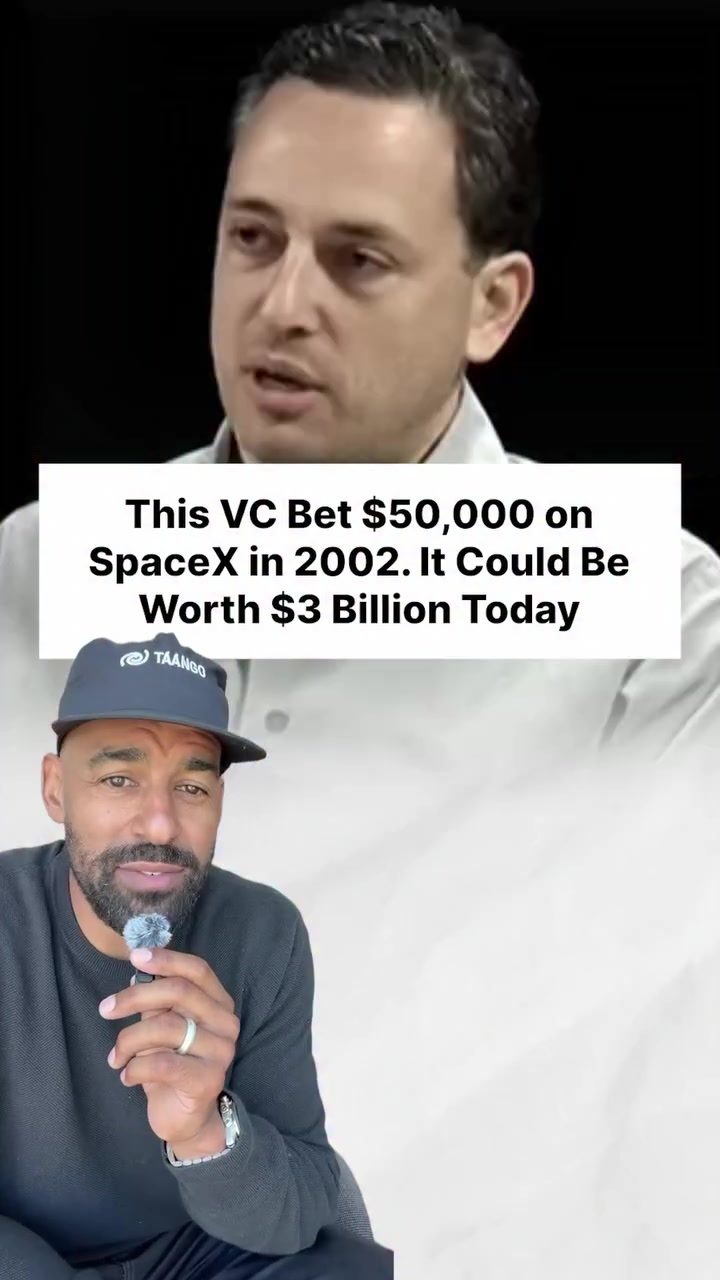
Venture Capital and the Power of Early-Stage Investing
In 2002, David Sacks, co-founder of Craft Ventures and former COO of PayPal, made a significant investment in SpaceX. At that time, the company was valued at a mere $27 million. A $50,000 investment at this early stage could potentially be worth over $3 billion today. This is not a stroke of luck; it’s a strategic application of power law investing, a concept well-understood in the venture capital world.
Context: The Power of Early-Stage Investing
Power law investing is a strategy in which a small number of highly successful investments drive the majority of returns. This means that a few big wins can more than make up for many losses. In the case of early-stage investments, the potential for extraordinary returns is significant. However, the key lies in identifying the right opportunities and timing the investment correctly.
At Fiat Ventures, the investment philosophy is clear: every check written aims for a 100x return. This is not a 2x or 10x return; it’s 100 times the initial investment. Achieving such high returns requires backing ideas that are not just innovative, but audacious and often deemed impossible by conventional wisdom. Most of these ambitious ventures will fail, but the few that succeed can rewrite the rules of what’s possible.
The Entry Point and the Model
The entry point is crucial in venture capital. A $1 million investment in a company valued at $27 million, which is now worth $1.75 trillion, is a classic example of the power of early-stage investing. The potential return on investment is staggering, illustrating why the entry point is everything in this game.
Most people overlook the true nature of high-risk, high-reward investments. SpaceX, for instance, was not an obvious bet. It was a private rocket company competing with NASA and every government on Earth. This is the kind of audacious, seemingly impossible venture that can rewrite the rules of an industry. The founders behind such ventures are often seen as maniacal or delusional, but their vision and determination can lead to groundbreaking success.
Identifying the Right Founders
A key part of power law investing is identifying the founders who are crazy enough to attempt the impossible but calculated enough to actually build it. These are the entrepreneurs who look insane at first glance but end up proving everyone wrong. They build something so revolutionary that most rational people would walk away from the pitch. It’s the job of venture capitalists to find these founders and back them before the world catches on to their vision.
The Role of Venture Capitalists
Venture capitalists like David Sacks play a pivotal role in this ecosystem. They aren’t investing in obvious businesses; they’re looking for the next big thing, the ideas that shouldn’t exist but do. They back founders who are delusional enough to attempt the impossible, calculated enough to build it, and visionary enough to see a future that others can’t. This is the essence of venture capital at its highest level.
Practical Tips for Aspiring Venture Capitalists
For those looking to enter the world of venture capital, here are some practical tips:
-
Focus on Early-Stage Investments: The potential for massive returns is highest in the early stages. Look for companies that are just starting out and have the potential to disrupt entire industries.
-
Identify High-Risk, High-Reward Opportunities: Not all investments will succeed, but the few that do can make up for many losses. Focus on audacious ideas that have the potential to rewrite the rules of an industry.
-
Look for the Right Founders: Success often hinges on the founders. Look for entrepreneurs who are passionate, visionary, and determined enough to make the impossible possible.
-
Understand the Entry Point: Timing is crucial. A small investment at the right entry point can yield massive returns. Be prepared to invest early and be patient.
-
Be Prepared for Failure: Most ventures will fail, but that’s part of the model. The goal is to identify the few that will succeed and cover all the losses.
Important Takeaways
The world of venture capital is fraught with risks, but the potential rewards are immense. Early-stage investments, especially in audacious and innovative ideas, can yield returns that far outweigh the risks. The key lies in identifying the right opportunities and the right founders. For those willing to take the leap, the rewards can be truly transformative.
Conclusion
Venture capital is not for the faint-hearted. It requires a keen eye for identifying potential, a willingness to take risks, and the patience to wait for returns. The story of David Sacks’ investment in SpaceX is a testament to the power of early-stage investing and the potential for extraordinary returns. For those looking to enter this exciting and challenging world, the key is to focus on the right opportunities and the right founders, and be prepared for both success and failure.
Watch the Reel
Questions readers ask
Who is David Sacks and why is he notable in the context of SpaceX?
David Sacks is the co-founder of Craft Ventures and the former COO of PayPal. He made a significant early investment in SpaceX in 2002, which has led to a massive return of potentially over $3 billion today. He is notable for his early investment strategy in SpaceX as an early-stage investor.
What is power law investing and how does it relate to SpaceX's success?
Power law investing is a strategy where a small number of highly successful investments drive the majority of returns, making up for many losses. In the context of SpaceX, David Sacks' early investment is an example of this strategy, as his $50,000 investment has potentially yielded a 100x return. This approach highlights the high-risk, high-reward nature of early-stage investing in tech startups.
Why is early-stage investing in startups considered high-risk, high-reward?
Early-stage investing in startups is considered high-risk because many startups fail, leading to potential losses. However, it is also high-reward because successful startups, like SpaceX, can generate extraordinary returns. The key is identifying promising companies early in their development, such as SpaceX, which was valued at just $27 million in 2002.
What was SpaceX's value when David Sacks invested in 2002?
In 2002, when David Sacks made his $50,000 investment, SpaceX was valued at a mere $27 million. This early investment allowed him to leverage the rocket company's growth into the multi-billion dollar company it is today, showcasing how getting in early can lead to massive payoffs.
How does the success of SpaceX investments compare to other tech startup investments?
The success of SpaceX investments, particularly David Sacks' early investment, stands out as an exceptional example of high-risk, high-reward investing. While many tech startups may not reach the same level of success, the potential for massive returns exists, making early-stage investments in ambitious, disruptive ideas particularly attractive.
What can investors learn from David Sacks' investment in SpaceX?
Investors can learn the importance of identifying ambitious, disruptive ideas and investing at the right time. David Sacks' investment in SpaceX demonstrates the potential for extraordinary returns when investing early in a successful startup. This strategy involves understanding and leveraging the power of early-stage investing to target companies like SpaceX.
Related deep dives
Similar reads based on topic and creator.



Recent articles
Fresh deep dives from the latest Reels we unpacked.



Comments
Be the first to comment.