The Public Market Unreadiness of OpenAI
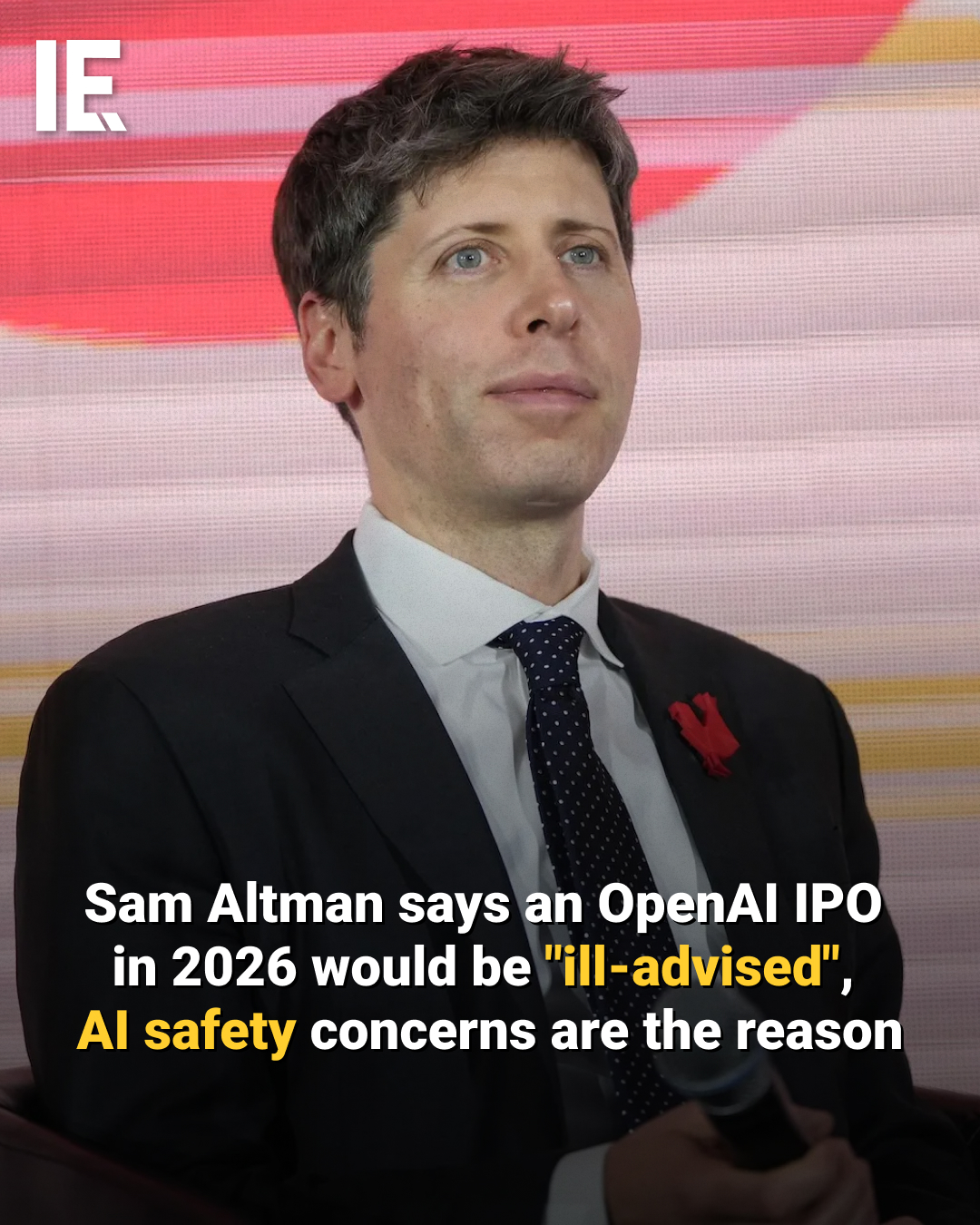
An OpenAI IPO in 2026 is a hot topic for investors, but Sam Altman, CEO of OpenAI, raised a red flag to a packed conference room on the idea. "It would be ill-advised", Altman declared. The main concerns? AI safety—something Altman sees as covering both the public in general and the company itself to a degree not yet adequately understood.
An initial public offering (IPO) transforms a private company into a public one by selling stock. Private companies may choose to go public to raise capital from public investors, which could accelerate expansion and creativity. But what makes Altman so hesitant in 2026 OpenAI IPO?
Why It’s Not Just About Money
With AI increasingly part of our lives, AI safety has become a key ethical and public policy issue. Safety failures in AI systems can result in physical harm and costs. Although, Altman’s statement suggests that there’s more at stake than just potential physical or financial risks. Altman is equally worried about protecting OpenAI from regulatory actions if AI safety measures fail. The AI industry is already fraught with risks from accelerating developments. This comes in the forms of data privacy, the potential for job loss, and the threat of misinformation. The integration of AI into such a vast array of sectors makes the potential for misuse an ongoing concern. Altman’s worries about AI safety raise questions about how OpenAI can assure investors, regulators, and the public that it is prioritizing safety.
The AI Safety Challenge
The AI landscape evolves rapidly, complicating the task of creating regulations. One of the biggest hurdles is the unpredictability of AI safety risks. In traditional industries, risks are typically well-defined and can be managed with clear processes. But AI is different. AI systems can be unpredictable, evolving in ways that developers might not anticipate. An AI system with 1000 parameters can perform similarly to one with a million, but the latter could be more vulnerable to making unexpected errors. This vulnerability compounds the AI safety challenge, as Altman points out. Current regulations focus on specific identified risks that AI might exacerbate, but don’t yet account for the unpredictable risks of new developments. Altman’s warning suggests that OpenAI is worried about the public perception of AI safety and the possibility of restrictive regulatory actions. AI safety risks go beyond the physical threats. There is also a significant reputational risk. One major AI failure could lead to a loss of trust in AI systems. This is important, because public trust is central to AI research and innovation. Current regulations focus on managing identified AI risks, but they don’t yet address the unpredictable risks posed by new AI developments. This could result in new risks that weren’t anticipated when the regulations were written. Without any risk, the AI safety challenge becomes part of the bigger picture in which OpenAI operates.
The Regulatory Framework
AI systems must abide by existing regulations, but the speed of development of AI systems means these regulations are consistently in flux. In the U.S., the Federal Trade Commission has issued guidelines for the use of AI and data privacy. These guidelines warn against harm from biased or erroneous AI decisions, so OpenAI has a duty to mitigate these risks. If an AI system fails to perform as expected, it may be subject to regulatory action. Altman points to the concern: this makes an AI safety risk a compliance risk. This is not just an issue for OpenAI. Regulatory oversight of AI is such a complex issue that it’s not going to be solved within Altman’s lifetime. Anticipating regulatory actions, and being ready to respond to them is a key part of the AI development process. In the short term, AI developers must ensure their systems comply with existing regulations, but the rapid pace of development and the evolving nature of AI make this more challenging.
AI Governance
AI governance is a complex and rapidly evolving area. This is particularly challenging in the context of an IPO, where OpenAI would have to open its governance processes to public scrutiny. Moreover, the potential reputational risks mean that OpenAI must be ready to respond to public concerns about AI safety. AI governance has many layers, and it is a continually evolving field. The laws around data privacy and AI are evolving as well. AI governance refers to the principles, guidelines, and regulations that govern the development, deployment, and use of AI systems. Altman’s stance suggests he’s aware of the AI governance challenge. The public needs assurance that all risks are being managed as part of the AI development process. This is especially important if the company is seeking capital from public investors.
Protecting OpenAI
How can OpenAI—and all AI developers—better manage AI safety risks? It's not so much about what we cannot know, but about what we must be prepared to know. In the short term, AI developers must ensure their systems comply with AI regulations. While AI developers can mitigate many of the risks associated with AI, it’s impossible to address all of them with current knowledge. In the long term, AI developers and the public need to work together to address AI governance and AI safety risks. AI developers need to be transparent about risks and how they are managing them. This may require new regulations, but it also requires public input. After all, we’re all stakeholders in the AI systems of the future. If there was one question Altman’s statement raises, it’s how do we protect not just the AI systems but the people developing and using them? Although, Altman doesn’t address this directly, progress is being made. Investors, regulators, and the public all need to be reassured that AI systems are safe, and that companies are taking steps to mitigate the risks. This means that we need to be talking about AI safety, not just in the language of compliance, but in terms of what we can do to manage it. This is the only way that we can expect to manage the risks of AI—we need to keep talking about it, and we need to address the risks together.
How Users Can Participate in AI Safety
For investors, regulators, and the public who want to engage in the AI safety conversation, OpenAI offers a public marketplace for AI developers and innovators to share their thoughts and ideas about AI safety. OpenAI is a leader in the tech industry. The primary question Altman brings up about AI safety is the best approach to feedback. It shows the open forum for AI safety that the company wants to host. Part of the AI safety conversation involves being able to share ideas and thoughts on how to ensure that AI systems are safe. Public discussions and research are important aspects of AI safety. The AI Safety Fund is another example of how OpenAI is working to improve AI safety. It supports further research in AI safety, and provides resources for AI developers and researchers. Feedback from the public can also help OpenAI improve its AI systems. As Altman points out, the public must be involved in the development of AI systems, and that means that they need to be involved in the conversation about AI safety. Transparency with the public is a critical factor to reassure them of the safety of AI systems. Public forums and online communities can be great places to keep the conversation going. Organizations like the Electronic Frontier Foundation (EFF) and the Future of Life Institute are also working to improve AI safety. There are many ways to stay involved in the AI safety conversation.
Watch the Reel
Questions readers ask
What specific AI safety concerns does Sam Altman have that make him wary of an OpenAI IPO in 2026?
Sam Altman is primarily concerned about the unpredictable nature of AI safety risks. He worries about potential physical harm and financial risks, as well as the reputational damage that could occur if AI systems fail. Additionally, he is concerned about regulatory actions that could impact OpenAI if safety measures are not adequately managed.
How does the unpredictable nature of AI systems complicate safety regulations?
AI systems can evolve in ways that developers might not anticipate, making it difficult to create regulations that can account for all potential risks. Traditional industries have well-defined risks, but AI's unpredictable nature means that regulations need to be constantly updated to address new challenges.
What are the broader implications of AI safety failures beyond physical harm?
Beyond physical harm, AI safety failures can lead to significant financial losses, reputational damage, and a loss of public trust. This loss of trust is particularly concerning because it could hinder further AI research and innovation, which relies heavily on public support and investment.
Why is public trust crucial for AI innovation and research?
Public trust is central to AI research and innovation because it influences investment, regulatory support, and societal acceptance. Without public trust, AI development could face significant hurdles, including stricter regulations and reduced funding, which would slow down progress in the field.
How does OpenAI plan to address the challenges posed by the unpredictable nature of AI systems?
While the article doesn't detail specific plans, it's clear that OpenAI is aware of the challenges. They are likely focusing on developing robust safety measures and advocating for adaptive regulatory frameworks that can evolve with the technology. This proactive approach is crucial for maintaining public trust and ensuring the responsible development of AI.
What role do regulations play in mitigating AI safety risks, and why are they challenging to implement?
Regulations are essential for managing identified AI risks, but they struggle to keep up with the rapid pace of AI development. The unpredictability of AI systems means that regulations often fall behind, failing to address new and emerging risks. This gap can lead to potential safety failures and public mistrust, making it a significant concern for companies like OpenAI.
Can OpenAI go public before 2026 if they address Sam Altman's concerns effectively?
The article doesn't provide a specific timeline for when OpenAI could go public if they address Altman's concerns. However, it suggests that resolving AI safety issues and gaining public trust are critical steps before considering an IPO. If OpenAI can demonstrate robust safety measures and regulatory compliance, they might be able to go public sooner.
Related deep dives
Similar reads based on topic and creator.




Recent articles
Fresh deep dives from the latest Reels we unpacked.


Comments
Be the first to comment.