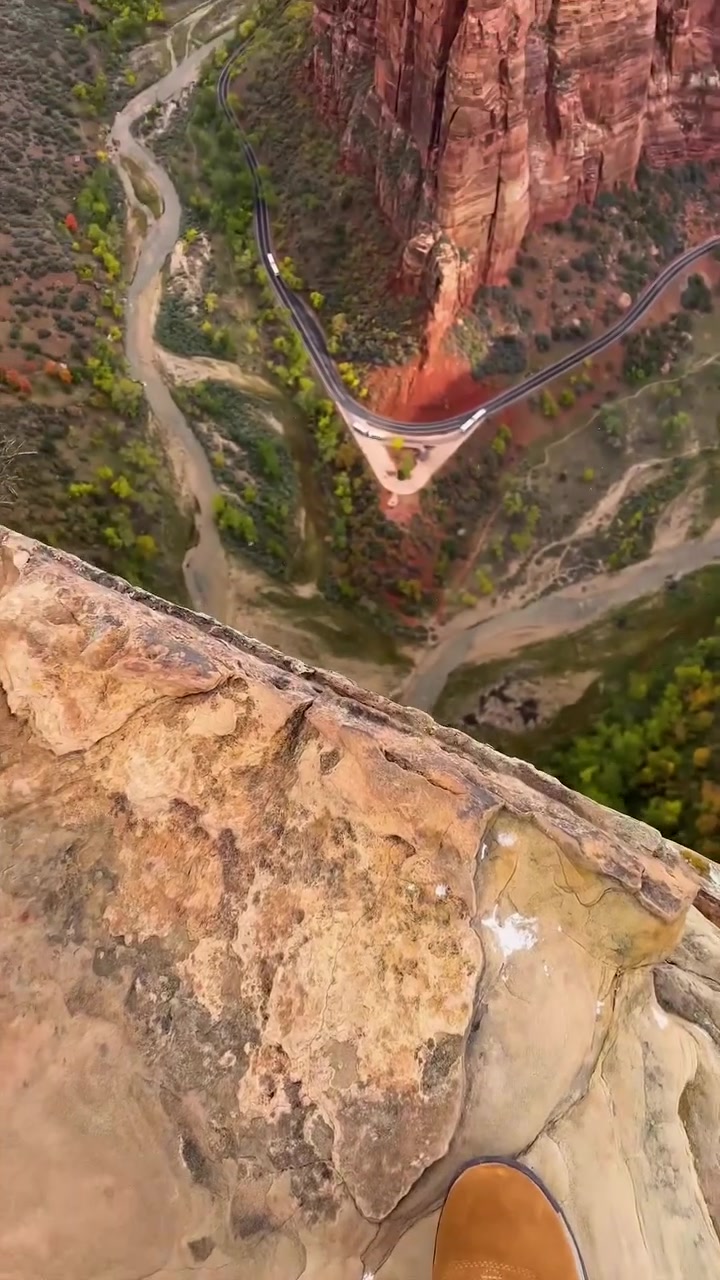
Standing on the edge of a rocky cliff in Zion National Park isn't just an adrenalin rush — it's a perspective on Earth's grandeur. An aerial view of the canyon, recorded by a traveler, captures an expanse of winding roads, verdant foliage, and towering red rock formations.
The aerial view of Zion's wilderness
This sweeping high-altitude vista showcases the awe-inspiring landscape that only a hiker can witness. The park, located in the Southwestern United States, is known for its expansive vistas and rugged terrain. The video focus is on the unimpeded aerial view of Zion National Park and captures the essence of a thrilling canyon experience. Hiking through Zion National Park stands out for the thrills it offers, including the myriad hikes that cater to different skill levels, from the famous Angels Landing trail to the scenic Canyon Overlook Trail. Zion National Park is a home to hikers seeking dramatic views and rugged terrain. The national park offers hiking trails for adventurers of varying skill levels, ranging from leisurely walks to strenuous climbs.
The significance of high-altitude travel
The video reflects a trend — not just in Zion, but globally — where nature lovers seek out high-altitude hikes to escape crowded urban areas. The awe and majesty of the natural world is a striking counterpoint to the everyday lived life, a perspective that has become increasingly valued in a world increasingly plugged into digital devices. The video makes a strong case for the transformative power of high-altitude hikes, highlighting the unique experiences these expeditions offer.
The Parks' Scene
What Zion offers
Zion National Park covers nearly 230 square miles and boasts the steep-sided canyons. One of the key natural features of Zion National Park is its composition of layered red and pink sandstone and other colorful rock formations. The cliffs are high, the valleys are narrow, and the views are colossal. This makes Zion a playground for hikers, adventurers, and climbers. The park was initially known as Mukuntuweap National Monument, but later received its current name. Zion National Park also gets its name from the Hebrew word for "sanctuary" or "refuge," reflecting the reverence early pioneers held for the majestic canyons. The park became the first U.S. national park to be added via the Antiquities Act. Zion National Park is home to diverse ecosystems that support a wide variety of wildlife. Animals like bighorn sheep and mountain lions roam the park. Zion National Park is a testament to the enduring beauty of the American West, offering visitors a chance to experience the raw, untamed wilderness that has captivated adventurers for generations. For outdoor enthusiasts, Zion National Park is a dream destination. It is home to many unique rock formations and landscapes. Zion Canyon includes Emerald Pools, and the Kolob Arch. The various hikes offer different experiences. The park also includes attractions like the Kolob Canyons, which feature stunning panoramas and challenging hikes. The park's diverse ecosystems support a diverse array of wildlife, from bighorn sheep to mountain lions. The park attracts over 5 million visitors each year. The Park's main attraction includes the popular trails, the Angles Landing. Visitors flock to Zion National Park for its breathtaking canyons and dramatic vistas. Zion National Park invites visitors to explore its natural wonders, offering a range of activities from hiking to rock climbing. Zion National Park is also known for its rugged trails, from canyoning to slot canyons and scenic drives.
Hiking and scenery
Zion National is known for its spectacular views of the canyons and gorges. Zion National Park is home to an array of hiking trails, each offering unique vantage points of the stunning landscape. It offers a variety of hiking trails, providing unforgettable experiences for all skill levels. From the iconic Angels Landing, which offers a close-up view of the iconic rock formations, to the scenic Canyon Overlook Trail, which leads to a breathtaking overlook of the park, Zion National Park has something for everyone. The hiking trails in Zion National Park offer a range of experiences, from challenging climbs like the Narrows to more leisurely strolls. The Narrows trail is popular for hiking and canyoning. The various trails in Zion National Park offer a range of experiences, from challenging climbs to leisurely strolls.
A close-up of a hiking boot
The video's close-up of a hiking boot is a testament to the rugged terrain that Zion National Park offers. Hiking boots for Zion National Park feature sturdy soles, good grip, and watertight materials. The boots are essential equipment for hiking on Zion National Park's rugged terrain, providing both stability and protection. The Zion National Park hiking trails require proper footwear for a safe and enjoyable experience. Hiking boots protect the feet from bruises and falls that could occur on the rocks. Hiking boots are essential for navigating the rugged terrain, offering stability and protection on the steep and rocky trails. The Park trails require sturdy footwear for safe hikes. This is a close-up of the footwear that made possible the unparalleled view.
Zion's Park calls for preparedness
Zion National Park offers stunning views and adventures. The park is home to over 140 species of plants and animals — many of which are endangered. When hiking, ensure you are prepared and alert. Zion National Park requires planning and knowledge. Research and plan your route carefully, and consider the weather conditions. Bring ample water, food, and proper gear. It is essential to carry water, food, and appropriate hiking gear. Follow park rules and regulations to ensure a safe and enjoyable experience.
Read and research
Visit the Zion National Park website. Get specifics on what you want to do before you head down there. Read up on the trails of Zion national park. Trails in Zion National Park can be very strenuous and require proper preparation and gear. Some trails may be unsafe for visitors who are inexperienced or uninformed. Zion National Park trails can be rugged and strenuous, requiring proper preparation and gear. Before visiting, research the trails and their descriptions to ensure you have the necessary equipment and fitness level. Zion National Park offers many trails, so visitors should choose the one that best suits their abilities. Knowing what you're bringing and what you can't bring is vital.
What to bring
Carry plenty of water and snacks, as well as sunscreen, hats, and sunglasses. The proper attire for hiking in Zion National Park includes sturdy footwear, lightweight clothing, and protective gear. Always bring essentials like a hiking boot, water, and a map. The weather can quickly change, so it’s critical to be prepared. Bring enough water to stay hydrated, sunscreen, and a map of the trails. Be sure to pack sunscreen, hats, and sunglasses. Proper attire is essential for hiking in Zion National Park. Carry a map, water, and food. Know the weather conditions before you go. Avoid going on trail during thunderstorms. Severe weather can change quickly, so be prepared. Avoid hiking during thunderstorms. All this will ensure a smooth excursion. Zion National Park's beauty, drama, and grandeur is an awe-inspiring experience. The video of the hiking adventure captures this drama — and the careful preparation it requires to ensure a safe and enjoyable expedition.
Watch the Reel
Questions readers ask
What kind of drone was used to capture the aerial views of Zion National Park?
The article does not specify the type of drone used to capture the aerial views. However, it mentions that the video was recorded by a traveler, suggesting it could be a consumer-grade drone commonly used by outdoor enthusiasts.
Can I bring my own drone to Zion National Park?
The article does not cover drone regulations, but it is important to note that many national parks, including Zion, have specific rules about drone use. Typically, drones are not allowed in most areas of the park to protect wildlife and maintain the natural experience for visitors. It's best to check the official park guidelines before planning to bring a drone.
How many miles are in the Zion National Park hiking trails?
The article mentions that Zion National Park covers nearly 230 square miles, but it does not specify the total length of the hiking trails. The park offers a variety of trails, from easy walks to strenuous climbs, catering to different skill levels. For exact trail lengths, you would need to consult a park map or guide.
What are some popular hiking trails in Zion National Park besides Angels Landing and Canyon Overlook Trail?
The article highlights Angels Landing and Canyon Overlook Trail, but Zion National Park has many other popular trails. Some notable ones include the Narrows, which offers a unique hiking experience through a slot canyon, and the Observation Point trail, which provides stunning panoramic views. The Emerald Pools Trail and the Kolob Arch Trail are also popular choices, each offering distinct landscapes and experiences.
Is Zion National Park a good place for beginners to go hiking?
Zion National Park offers a range of hiking trails suitable for different skill levels, so it can be a good place for beginners. Trails like the Pa'rus Trail, which is paved and relatively flat, are great for those new to hiking. However, for more challenging trails like Angels Landing, beginners should be prepared for steep climbs and narrow paths. It's always a good idea to assess your fitness level and choose a trail that matches your abilities.
Related deep dives
Similar reads based on topic and creator.




Recent articles
Fresh deep dives from the latest Reels we unpacked.




Comments
Be the first to comment.