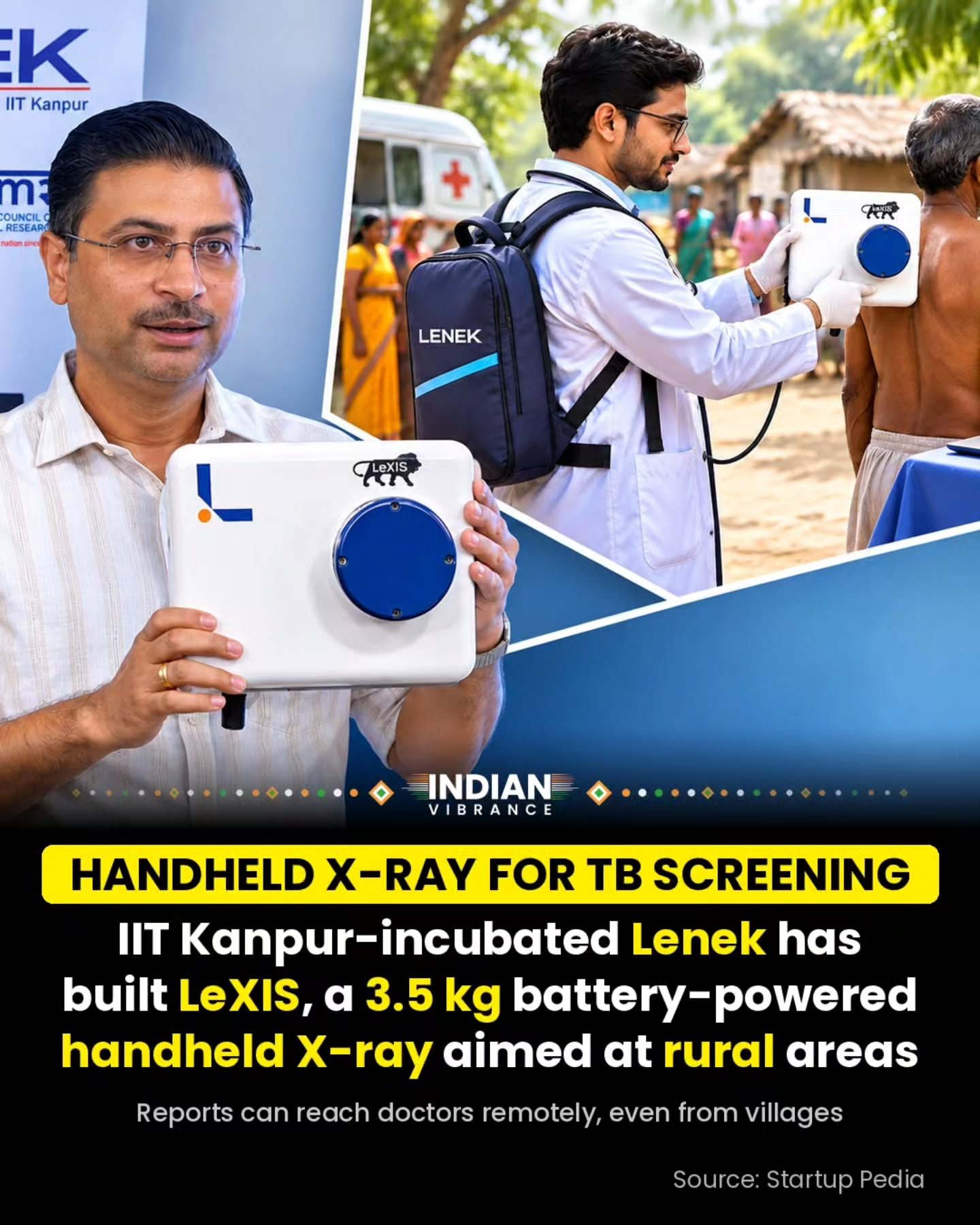
Filling the rural gap in TB screening
Medical diagnostics have advanced swiftly. Innovations like the portable X-ray device, LeXIS by Lenek, showcase how technology can shrink in size but expand in utility. LeXIS is a 3.5 kg battery-powered device designed for tuberculosis (TB) screening, capable of filling a crucial gap in rural healthcare. Unlike traditional X-ray machines, LeXIS can be operated in locations with irregular or no electricity, making it a vital tool in resource-constrained settings. Weighing less than a standard laptop, LeXIS is battery-powered. This independence from a fixed power supply allows it to be transported and used in diverse environments, from village clinics to mobile health units. Its primary function — to “screen for TB in rural areas” — is clear from the onset. LeXIS is a product of India's IIT Kanpur. Being incubated at IIT Kanpur has allowed Lenek to tap into a rich ecosystem of research and innovation. Building a device with this level of detail is no small feat. The ability to "transmit reports remotely" to doctors is also something typically reserved to large equipment with dedicated networks. Lenek's portable device is designed to transmit X-ray reports remotely, even from remote villages—making this a unique innovation. This feature is a game-changer for areas where specialist care is scarce, as it allows for quicker diagnosis and treatment initiation, potentially reducing the spread of TB.
The technical leap
What makes LeXIS truly remarkable is not only its portability but also its advanced features. The device is equipped with technology that enables it to transmit X-ray reports remotely. This capability is particularly useful in rural areas where access to specialist healthcare is limited. By allowing reports to be sent directly to doctors, LeXIS ensures that patients in remote villages receive timely and accurate diagnoses. The device is designed to be user-friendly, with a simple interface that requires minimal training. This ease of use is essential for its deployment in rural areas, where healthcare workers may not have extensive technical expertise. In addition to TB screening, the device's portability and versatility make it suitable for other diagnostic purposes, such as detecting bone fractures and pneumonia. This versatility increases its value in resource-constrained settings, where a single device can serve multiple healthcare needs.
Removing barriers
The barriers to remote healthcare treatment are multifold. Access is reduced in remote villages. Specialist care is scarce in villages — often necessitating travel to urban centers. Transport of large, heavy machinery to villages is difficult. The diagnosis distance extends from the village clinic to the urban testing lab. Fortunately, LeXIS is engineered to confront these barriers. The battery-powered, lightweight design addresses the logistical challenges of transporting traditional X-ray machines to rural areas. The remote transmission feature bridges the gap between rural clinics and urban specialist healthcare. The ability to "remotely transmit" reports cuts down on the time and cost associated with patient travel and sample transportation. This creates a more efficient and accessible diagnostic process, which can significantly improve healthcare outcomes in rural communities.
Enhancing rural health infrastructure
LeXIS not only enhances rural healthcare but also contributes to the broader goal of strengthening India’s health infrastructure. By making advanced diagnostic tools more accessible, LeXIS helps to bridge the urban-rural healthcare divide. This is a critical step in improving overall public health, particularly in a country like India, where rural health disparities remain a significant challenge. As healthcare infrastructure continues to evolve, devices like LeXIS serve as a model for future innovations. Their design prioritizes accessibility, affordability, and ease of use. In addition, it leverages technology, such as remote transmission, to overcome traditional barriers to healthcare delivery. As more devices of this nature become available, there is potential to revolutionise rural healthcare, providing high-quality, or even specialist, diagnostic services to even the most remote communities.
Watch the Reel
Related deep dives
Similar reads based on topic and creator.
Recent articles
Fresh deep dives from the latest Reels we unpacked.



Comments
Be the first to comment.