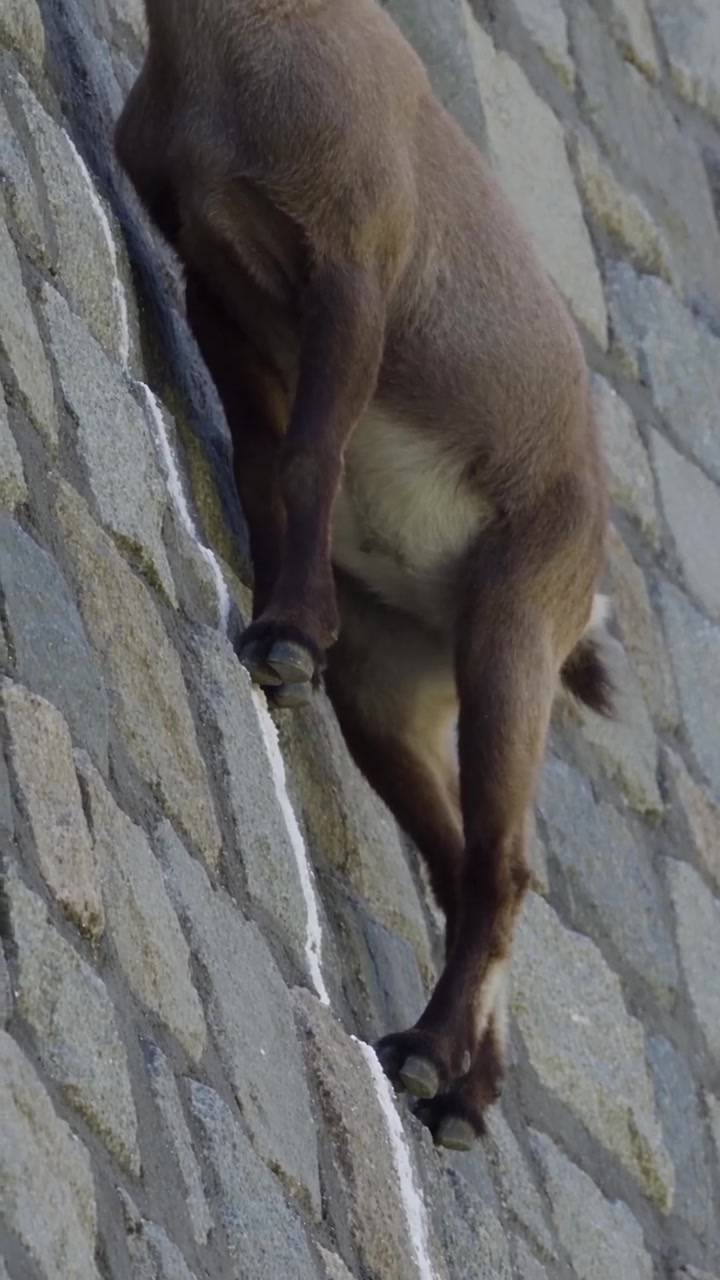
The alpine ibex climbs nearly vertical walls with ease — up to fifty meters high. They can do this by reorienting their legs, using their strong hooves to grip narrow edges and maintain balance, even on near-vertical slopes. Alpine Ibexes are the hardcore climbers of the alpine world.
The Alpine Ibex
see its ability to climb nearly vertical surfaces. If the rock is flat, the ibex uses its toe to grip the surface, but when faced with a near-vertical slope, it uses the narrow edge of its hooves to gain traction. When the slope is less steep, the ibex can descend head-first; it can also execute a controlled descent when the slope is steep. Alpine ibexes have learned how to find salt in the Italian Alps, which is a challenging and unsafe endeavor. Gravitational forces and the need to consume minerals to maintain their health make this trek a risky one for these animals. The Alpine Ibex is a large, black sheep-like animal that lives in the high mountains of Europe. It is a subspecies of the wild goat, its muscles are so strong that they can climb even the most challenging cliffs. The Alpine Ibex is a formidable opponent and lives in the high mountains of Europe. They have long, curved horns and beards of unusual length. Its tail is usually white, and its body is dark brown, with a lighter belly. The Alpine Ibex is a large animal, typically eight to 115 centimeters tall and 60 to 110 cm in length. Their diet consists of grass and other vegetation, which they can find in their alpine habitat.
The Alpine Ibex's Wall Challenge
The Alpine Ibex is a high-altitude mammal that can climb steep slopes. The Alpine Ibex has a special diet of salt-laden stone chips and rock brick, which is why the Alpine Ibex has a unique feature — its stickiness. Alpine Ibexes are wild animals that live in the Swiss Alps. They have a special ability to climb steep, rocky surfaces. Alpine Ibexes climb rocks to obtain salt, which is a critical mineral for their health. Alpine Ibexes climb rocks to obtain salt, which is a critical mineral for their health. The Alpine Ibex is a large, black sheep-like animal that lives in the high mountains of Europe. Alpine ibexes are known for their ability to climb nearly vertical surfaces, with rock made of stone blocks almost a hundred years old. Alpine Ibexes have a unique ability to climb steep, rocky surfaces. Alpine Ibexes are wild goats that live in the mountains, where they climb to get salt. Alpine Ibexes have developed a unique way of climbing — they use the stiff bristles on the tip of their feet to grip the rock surface. When the slope is flat, the ibex can use its toes to grip, but they often find themselves on near-vertical slopes, where they need to use the narrow edge of their hooves to grip the surface and maintain balance when climbing the steep slopes. Alphine Ibexes are wild goats that can climb to the top of a near-vertical slope. This is because they have a unique way of climbing — they use the stiff bristles at the tip of their feet to grip the rock surface. @@@ Ingredients on a Mountain's Edge When Alpine Ibexes climb the icy slopes of the Italian Alps, they rely on more than their physical abilities to navigate the terrain. Alpine Ibexes use their scent to detect underground salt deposits, which are a vital source of minerals. Alpine Ibexes like to climb the mountain on the Cingino Dam, which is a wall of rough stone blocks built a hundred years ago. Alpine Ibexes are known for their ability to navigate steep cliffs, but they also have a unique way of climbing. Alpine Ibexes use their toe to grip the surface, but when faced with a near-vertical slope, they need to use their unique ability to grip the surface. Alpine Ibexes have a unique way of climbing — they use the stiff bristles at the tip of their feet to grip the rock surface. Alpine Ibexes can climb the steep cliffs of a mountain, where they find salt, a vital mineral for their survival. The Alpine Ibex is a mountain goat that can climb steep surfaces, even when they are nearly vertical. Alpine Ibexes climb steep cliffs to find salt, which is a vital mineral for their survival. Alpine Ibexes are wild goats that live in the mountains, where they climb to get salt. Alpine Ibexes have a unique way of climbing, which allows them to climb steep slopes and even near-vertical surfaces. Alpine Ibexes climb near-vertical slopes to find salt, which is a vital mineral for their survival.
A Mountain of Minerals
Alpine Ibexes climb the steep cliffs of the Italian Alps, despite the presence of gravity, to reach the salt deposits that are essential for their survival. Their diet is made up of the minerals they consume from the rocky surfaces in and of the salt they obtain from these deposits. Alpine Ibexes are wild goats that can climb steep, rocky surfaces. Alpine Ibexes climb steep cliffs to obtain salt, an essential mineral for their existence. Alpine Ibexes have a unique ability to climb steep, rocky surfaces. Alpine Ibexes climb the steep cliffs of the Italian Alps, despite the presence of gravity, to reach the salt deposits that are essential for their survival.
Salt Dependence
Alpine Ibexes climb steep, rocky surfaces to obtain salt, which is essential for their survival. It is therefore not surprising that Alpine Ibexes have a unique ability to climb steep, rocky surfaces. Alpine Ibexes climb the peaks to reach the salt deposits, which are vital for their survival. Alpine Ibexes have an interesting way of navigating the terrain — they use the stiff bristles at the tip of their feet to grip the surface. Alpine Ibexes climb the steep cliffs of the Italian Alps, despite gravity, to reach the salt deposits that are essential for their survival. Alpine Ibexes climb steep cliffs to find salt, which is a vital mineral for their survival. Alpine Ibexes climb the peaks to reach the salt deposits, which are vital for their survival. Alpine Ibexes are wild goats that live in the Italian Alps, home to the Alps and Italy's highest mountain. Alpine Ibexes are wild goats that can climb steep surfaces, even when they are nearly vertical. Alpine Ibexes climb steep cliffs to find salt, which is a vital mineral for their survival. Alpine Ibexes climb the peaks to reach the salt deposits, which are vital for their survival. Alpine Ibexes are wild goats that live in the mountains.
Climbing with Alpine Ibexes
Out to find the Alpine Ibexes frequenting the mountains? The Alpine Ibex is a large, black sheep-like animal that lives in the high mountains of Europe. A unique animal that lives in the mountains, Alpine Ibexes use their toes to grip the surface, but when faced with a near-vertical slope, the Alpine ibex uses the narrow edge of its hooves to grip the surface and maintain balance.
- Travel planning: Alpine Ibexes live in the Italian Alps, where they have access to salt in the wild. Alpine Ibexes climb steep cliffs to obtain salt, which is an essential mineral for their health and wellbeing. Alpine ibexes are the only herbivores in the alpine biome, which is a unique feature of their climbing abilities.
- What to bring: Alpine Ibexes have the ability to climb steep slopes to find salt, which is vital for their survival. Alpine Ibexes climb the steep cliffs of the Italian Alps, despite the presence of gravity, to obtain the salt that is essential for their survival. Alpine Ibexes use their toes to grip the surface, but when faced with a near-vertical slope, they need to use their unique ability to grip the surface. Alpine Ibexes have a unique way of climbing — they use the stiff bristles at the tip of their feet to grip the surface. Alpine Ibexes are wild goats that live in the mountains, where they climb to get salt. Alpine Ibexes climb near-vertical slopes to find salt, which is a vital mineral for their survival.
- Where to stay: Alpine Ibexes are wild goats that live in the mountains, where they climb to get salt. Alpine Ibexes are wild goats that live in the mountains and use their toes to grip the surface, but when faced with a near-vertical slope, they need to use their unique ability to grip the surface. Alpine Ibexes have a unique way of navigating the terrain — they use the stiff bristles at the tip of their feet to grip the surface. Alpine Ibexes climb the peaks to reach the salt deposits, which are vital for their survival.
Alpine Ibexes and Alpine Salt
Climbing with Alpine Ibexes is a unique experience that provides a glimpse into the world of these remarkable animals. Alpine Ibexes are wild goats that climb steep, rocky surfaces to obtain salt, which is an essential mineral for their health and wellbeing. But some people are skeptical of the safety of these activities, as they are unsure of the impact on the Alpine Ibexes. Alpine Ibexes are wild goats that can climb steep surfaces, even when they are near-vertical. Alpine Ibexes climb the peaks to reach the salt deposits, which are vital for their survival, allowing them to thrive in the harsh alpine environment.
Watch the Reel
Questions readers ask
What makes the Alpine Ibex such a remarkable climber?
The Alpine Ibex's remarkable climbing ability comes from its strong muscles and unique hooves. These animals can reorient their legs on steep surfaces, using the narrow edge of their hooves to grip narrow edges and maintain balance. This allows them to scale near-vertical walls, like those of the Cingino Dam, with ease. They can climb up to fifty meters high, showcasing their impressive agility and strength.
How do Alpine Ibexes manage to climb near-vertical surfaces?
Alpine Ibexes have a unique way of climbing. They use the stiff bristles on the tip of their feet to grip the rock surface. When the slope is flat, they use their toes to grip, but on near-vertical slopes, they use the narrow edge of their hooves to gain traction and maintain balance. This allows them to ascend and descend steep slopes with control and precision.
Why do Alpine Ibexes climb the Cingino Dam?
While the article does not specify the reason, Alpine Ibexes are known to climb steep surfaces to obtain salt, which is a critical mineral for their health. The Cingino Dam, with its near-vertical walls, provides a challenging but rewarding opportunity for these animals to find the salt they need.
Are there any risks involved in Alpine Ibexes climbing the Cingino Dam?
Yes, there are risks. The climb is challenging and unsafe due to gravitational forces and the need to consume minerals. The near-vertical walls of the Cingino Dam present a significant challenge, and the climb can be dangerous for these animals.
How do Alpine Ibexes descend from steep slopes?
Alpine Ibexes can descend from steep slopes in different ways. When the slope is less steep, they can go head-first. If the slope is steep, they execute a controlled descent, using their strong hooves and agility to navigate the challenging terrain safely.
What do Alpine Ibexes eat, and how does their diet relate to their climbing behavior?
Alpine Ibexes primarily eat grass and other vegetation, but they also consume salt-laden stone chips and rock bricks, which are critical for their health. Their diet, along with their strong muscles and unique climbing abilities, drives them to scale steep surfaces in search of these essential minerals.
How big are Alpine Ibexes, and what do they look like?
Alpine Ibexes are large animals, typically standing 80 to 115 centimeters tall and measuring 60 to 110 centimeters in length. They have long, curved horns and beards of unusual length. Their bodies are dark brown with a lighter belly, and they have a distinctive white tail. Their appearance is often described as sheep-like, but they are a subspecies of the wild goat.
Related deep dives
Similar reads based on topic and creator.




Recent articles
Fresh deep dives from the latest Reels we unpacked.


Comments
Be the first to comment.