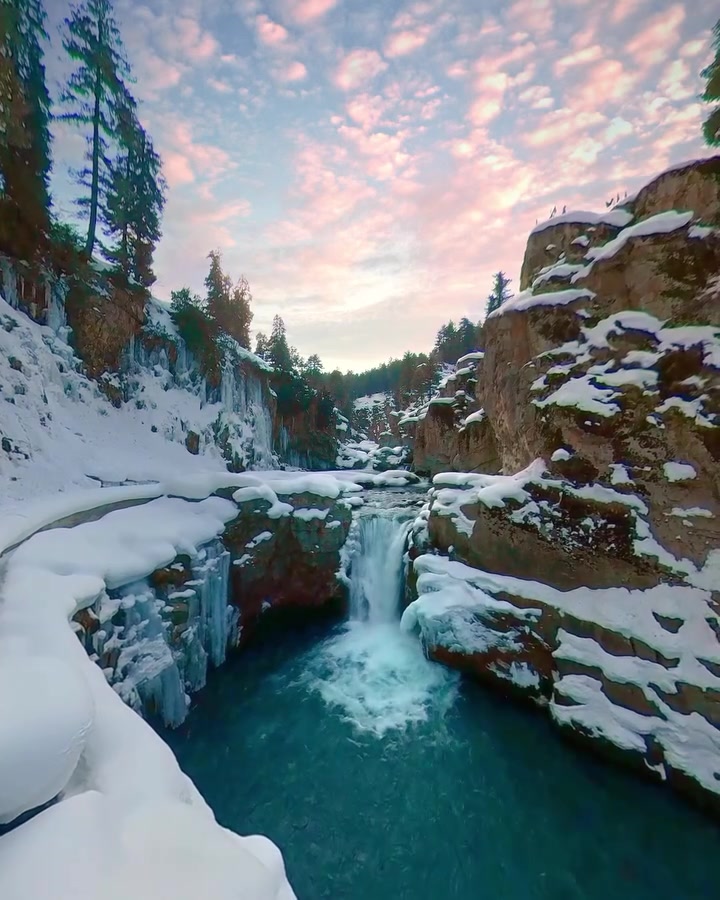
A frozen waterfall cascades through a snow-covered gorge, creating a stark contrast between the white landscape and the ice-blue water. The frame captures the soft glow of a winter sunset or sunrise, blanketing the scene in an array of pink and blue hues. This is more than just a pretty scene for a postcard; this is the beauty of the season in action.
The Frozen Cascade
A frozen waterfall is a natural phenomenon that occurs when the water flow is interrupted and eventually freezes, creating sharp, jagged ice formations. These formations typically create ice towers, ice caves, and other interesting and dangerous geological features. Frozen waterfalls look a lot like their liquid counterparts, but the water cascades as sheets and free-flowing streams of ice, instead of liquid water. The layering of ice and snow can make these structures delicate, despite their often towering size, and can make them a sight to be seen, and not touched or climbed. The fragility of these formations is evident in how easily the ice can break apart. The winter wonderland setting of this particular frozen waterfall is elevated by the surrounding environment. The snowy cliffs and rocks reflect the ample light, providing an almost ethereal glow. The soft lighting of sunrise or sunset adds to the scene, casting pink and blue hues onto the icy water and snow-covered surrounding.
The Sentimental Grace of Winter
The serene beauty of frozen waterfalls can be hard to find in other seasons. The delicate balance of cold temperatures and adequate sunlight creates a graspable view of the winter season. The scenery also creates a serene atmosphere. Maintaining the natural beauty of the landscape is a reputation for the winter season, but it is a reputation that can easily be lost. As climate change progress leads to rising temperatures, the time span and intensity of winter weather are changing. In colder areas of the world, winters will be warmer and shorter, reducing the occurrences of these natural wonders. This loss of time span will reduce the number of frozen waterfalls that occur in a year, and many of the rocky formations may not freeze at all.
Ice, Landscape, and Light
The Snowy Sway
Snow, the veil that folds itself over the landscape and obscures everything, has a distinctive quality. It transforms the landscape, giving it a soft and muted look. With snow coating the surroundings, the details are blurred, creating a serene but chilly atmosphere. Cliffs and rocks, once seemingly daunting, become gentle and petite in their icy white.
The Pinks and Blues of Twilight
Frozen waterfalls are often captured in the soft twilight of sunrise or sunset. The pink and blue hues of the sunflowing make the watery glass appear ethereal. The reflection of the sky in the icy water magnifies the cool pastel colors. The boundaries between the land, water, and sky blur into a seamless gradient as the light fades, leaving a majestic sight.
Proximity to Water
The cascading of a frozen waterfall is a result of water flowing over the topography. The height of the cascading waterfall makes it appear as a frozen fall. The movement of water in the surrounding area allows this to occur. The length and amount of water in these waterways affect the amount of water that can cascade out of the waterfall's boundaries. The angle of the cascading flow also affects the amount of water.
The Ice That Skiers Love
Ice climbing is an extreme sport in which climbers scale vertical features that are made of ice. Frozen waterfalls are an ideal climbing terrain for experienced climbers, due to the powerful anchor points. The structures formed can appear as simple slabs or sheets of flowing ice, dotted with passages covered in delicate icicles and frosted formations. The frigid conditions and severe, slippery climbing can just as easily leave you stuck. This is a sport that is not for wet shoes and beginner climbers. Equipment is extremely essential for safety. The sport is pursued by both men and women.
On the Way to the Waterfall
Visiting a frozen waterfall is a risky but worthwhile endeavor. The following tips may help you experience this majestic natural wonder.
- Preparation: As mentioned before, ice climbing is a dangerous sport but can be manageable with moderate planning. Ensure the correct equipment is present. Freezing weather can have adverse effects on the climber. Be mindful of the temperature.
- Safety: Familiarize yourself with climbing equipment and how to use it. Seek guidance from a professional. Pack a first aid kit and know basic first aid. Always assess the road and topographical mapping of the terrain before you begin climbing. Be aware of the temperature.
- Equipment: Evaluate the climbing equipment. Choose the right type of ice axe and crampons. Secure boots and gloves are essential.
Enjoy the Freeze
If you take away the allure and beauty of the frozen waterfall, you are still left with a river of ice. Let the extreme conditions be, and the winter season will continue to affect it. Ice formations can be everchanging with the temperature of the season. Each year, the waterfall will change during the span of the season. That is its beauty.
Watch the Reel
Questions readers ask
What causes a waterfall to freeze and form these unique ice structures?
A frozen waterfall occurs when the water flow is interrupted and eventually freezes, creating sharp, jagged ice formations. This process is influenced by cold temperatures and the continuous flow of water, which can create structures like ice towers and caves. The layering of ice and snow makes these formations delicate and potentially dangerous, despite their size.
How does the surrounding environment enhance the beauty of a frozen waterfall?
The snowy cliffs and rocks surrounding a frozen waterfall reflect light, providing an almost ethereal glow. The soft lighting of sunrise or sunset adds to the scene, casting pink and blue hues onto the icy water and snow-covered surroundings, which creates a serene atmosphere.
Why are frozen waterfalls more fragile than they appear?
Frozen waterfalls can appear towering and solid, but they are actually quite fragile. The layering of ice and snow makes these structures delicate, and the ice can break apart easily. This fragility is why it's important to admire these formations from a safe distance and not attempt to climb or touch them.
How does climate change affect the occurrence of frozen waterfalls?
As climate change progresses, rising temperatures are leading to warmer and shorter winters. This reduces the time span and intensity of winter weather, making it less likely for waterfalls to freeze. As a result, the number of frozen waterfalls occurring in a year may decrease, and many of the rocky formations may not freeze at all.
What makes the lighting conditions during sunrise or sunset so special for viewing frozen waterfalls?
The soft twilight of sunrise or sunset casts pink and blue hues onto the icy water and snow-covered surroundings, giving the frozen waterfall an ethereal appearance. The reflection of the sky in the icy water magnifies the cool pastel colors, creating a seamless gradient between the land, water, and sky.
Can I visit a frozen waterfall, and if so, how do I find one?
Yes, you can visit a frozen waterfall, but it's important to do so safely. Research local areas known for their frozen waterfalls, such as national parks or scenic hiking trails. Ensure you have the right gear, including proper footwear and clothing for cold weather, and always follow safety guidelines to avoid dangerous conditions.
What can I do to help preserve these natural wonders?
To help preserve frozen waterfalls, it's important to maintain the natural beauty of the landscape. This includes adhering to Leave No Trace principles, staying on designated trails, and not disturbing the ice formations. Additionally, supporting efforts to combat climate change can help ensure that these natural wonders continue to exist for future generations.
Related deep dives
Similar reads based on topic and creator.
Recent articles
Fresh deep dives from the latest Reels we unpacked.

Comments
Be the first to comment.