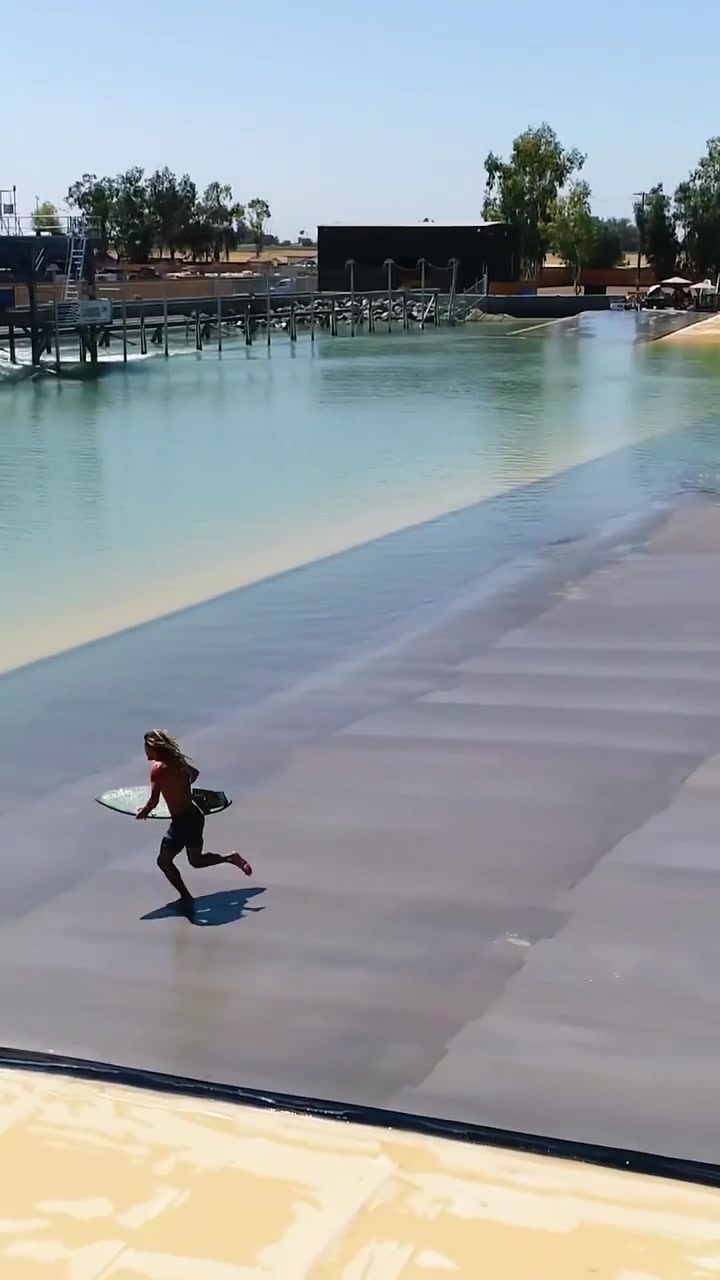
Assaulting Giant Waves in a Controlled Environment
Wave pools offer a unique surfing experience — an artificial ocean contained in a human-built facility that could replicate professional surfing from the ocean. Unlike ocean surfing, wave pool waves aren't dictated by tides or weather. The wave quality is consistent, and the waves are designed to be more predictable and reliable. The demonstration of surfing in the pool shows the rider catching a wave and performing a quick maneuver with the board. Whoever this person is, they don't need to worry about unexpectedly getting thrown off by an ocean rogue wave. Wave pools recirculate water using pumps, channels, and a movable gate to produce waves. The waves generated by this machine are a great way for surfers to practice, because the waves are consistent and reliable. Man-made waves have made surfing more accessible 2nd to ocean surfing.
The Surfer's Training Ground
Access to surfable waves depends on geography. Wave pools democratize the sport by bringing consistent waves to landlocked regions, allowing for year-round training, and enabling surfers to practice new tricks without the risks of ocean hazards. Many surfers enjoy being surrounded by the elements of nature, however the weather and tides are unpredictable.
The Many Shapes of Man-Made Waves
Customized Wave Shapes and Sizes
Wave pools are not just about consistent waves; their shapes and sizes vary by design. The wave pool’s technology can generate different types of waves, from the perfectly shaped barrel wave to steep, fast-moving peaks. The size can range from beginner-friendly waves to those that challenge even the most skilled surfers. Surfers can customize their own settings to match their preferences.
Cutting-Edge Wave Generation
Wave pools use advanced technology to create waves. The most common method involves a hydraulically driven paddle or a movable gate that pushes water into a channel, generating waves that propagate outwards. Some systems use air compressors to create waves, offering more control over the wave’s shape and power. This advancement has meant that even high waves similar to the size of a tsunami can be created.
Man-Made, Yeah—But Not All the Same
Wave pools may share a basic technology—water recirculating to produce a wave—but designs vary. Some feature a continuous wave. These waves are more spacious, with space for long rides.
Comparisons to Ocean Surfing
Training and Improving Technique
While wave pools offer convenience, they can't fully replicate the ocean. Despite this, surfers have found ways to train indoors to improve surfing technique. Surfers can check their progress with slow-motion cameras. The rider on the wave tries to maintain control over the board and make sure the nose doesn't dip into the water.
Scope for Innovation
Surfers thrive on innovation — wave pools giving them the chance to test new tricks in a safe controlled environment.
Making Waves More Accessible
Surfers often see waves as a part of the landscape of surfing, noting how real ocean waves offer a unique experience and a challenge to surfers. This personalized experience leads many surfers to seek out natural beaches. It’s possible to travel to shore to seek the next wind swell. However, ocean surfing has constraints. Access to surfable waves depends on geography, and natural conditions like tides, wind, and weather affect wave quality and consistency. Wave pools are a great place to bring the surf to inland areas by providing a training ground for surfers.
Watch the Reel
Questions readers ask
How do wave pools generate their waves?
Wave pools generate waves using a combination of pumps, channels, and a movable gate. The most common method involves a hydraulically driven paddle or a movable gate that pushes water into a channel, creating waves that propagate outwards. Some advanced systems even use air compressors to offer more control over the wave’s shape and power.
Can wave pools fully replicate the ocean surfing experience?
While wave pools offer consistent and predictable waves, they can't fully replicate the ocean surfing experience. The ocean provides unique challenges and a more natural environment, including unpredictable tides and weather conditions that wave pools lack.
How do wave pools make surfing more accessible?
Wave pools make surfing more accessible by bringing consistent waves to inland and landlocked regions. This allows surfers to train year-round, practice new tricks in a safe environment, and avoid the risks and uncertainties of ocean hazards.
What are the different types of waves that wave pools can generate?
Wave pools can generate a variety of wave shapes and sizes, ranging from beginner-friendly waves to challenging peaks for experienced surfers. The technology can create perfectly shaped barrel waves, steep, fast-moving peaks, and even high waves similar to those found in tsunamis.
Is it possible to customize the waves in a wave pool?
Yes, many wave pools allow surfers to customize their own settings to match their preferences. This customization can include adjusting the wave’s shape, size, and power, providing a tailored experience for surfers of all skill levels.
What are the benefits of training in a wave pool compared to the ocean?
Training in a wave pool offers several benefits, including consistent and predictable conditions, the ability to practice new tricks without ocean hazards, and the use of slow-motion cameras to check progress. However, surfers still enjoy the natural elements and challenges of ocean surfing.
What are the limitations of wave pools?
Wave pools do have limitations. They can't fully replicate the ocean’s natural environment, unpredictable tides, and weather conditions. Additionally, some surfers might miss the unique experience and challenge that real ocean waves offer. However, wave pools are a great way to practice and improve surfing technique in a controlled and safe environment.
Related deep dives
Similar reads based on topic and creator.



Recent articles
Fresh deep dives from the latest Reels we unpacked.


Comments
Be the first to comment.