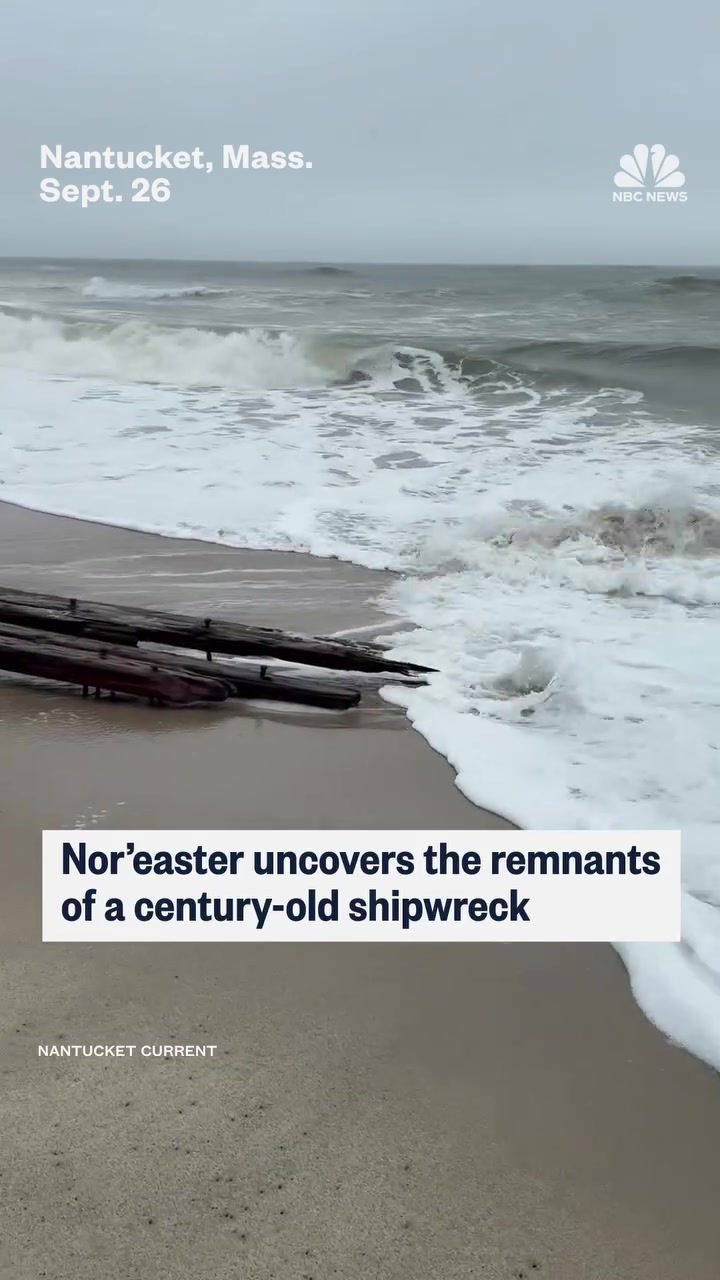
A century-old shipwreck washed up on the shores of Nantucket. In a violent act, a Nor'easter storm exposed the remnants of the wreck in 2022. The Warren Sawyer returned after 142 years
The Warren Sawyer's Resurgence
The visible wreckage on Miacomet Beach sparks a historical 1880's mystery. The Warren Sawyer shipwreck discovery was a surprise when wooden fragments appeared. On-site erosion is the likely cause of today's exposure. Historical shipwrecks are common along the coast of New England. Many wrecks remain waiting for another storm to uncover them. Clues say the ship sank in the same segment of Nantucket Sound, on the north side of the island. The wreck may have sailed from Nantucket for Boston in 1880. The ship may have foundered during a September 1880 hurricane.
The History of Nantucket Shipwrecks
A shipwreck uncovered by a Nor'easter brings to light the history of maritime disasters in the region. The story of Nantucket’s nautical lore is a mix of perilous storms and hidden maritime secrets. Shipwrecks had been appearing for centuries as well. A Nor’easter whipped the beach.
Weathering the Storm Exposure
A hurricane marked the schooner's date with a 1880s disaster. Because of the time and location, the Warren Sawyer’s story is connected to larger historical currents. Natural cycles and weather patterns likely played a role in the shipwreck’s discovery. The schooner’s wreckage offers clues to the sailing conditions of the 19th century. The Nor'easter brought valuable insights about the weather patterns and wind conditions during the 1800s. 80s hurricanes disrupted navigation systems and ship movement. The October hurricane of 1878 sank several ships. It highlighted the dangers of navigating Nantucket Sound that year. The hurricane also demonstrated the impermanence of maritime landmarks. The schooner sank near the site where it was first discovered.
At the Mercy of Nature
You are overlooking a historically rich maritime site. Fragments of the Warren Sawyer found on Miacomet Beach are part of a larger tapestry of ships that disappeared in the harsh waters of the region. The shipwreck's discovery adds to the significance of the local waters. History's atmospheric and geological conditions shaped the maritime history of the area. Natural forces, coupled with the area's weather, left clues about the shipwreck. Wooden hull fragments date to the ship's era. The boat wreck surfaced with the 2022 storm. The storm caused erosion that exposed the ship. Scientific methods will trace the ship's path. The schooner wreckage adds to the maritime history of Nantucket.
Rugged Reminders
The schooner warning comes from the sea. For a visitor to Nantucket, the Warren Sawyer shipwreck holds a lesson. The wreck exposes how nature reclaims human artifacts. The Warren Sawyer holds lessons about the power of the sea and the importance of remembrance. This maritime memorial serves to remind the sailors of the dangers of the Atlantic. Sailing conditions in 1880 highlight the North Atlantic's dangers. Examining the wreckage can add to the knowledge of the past. The coastal weathering is a key part of the coastal story.
Watch the Reel
Questions readers ask
What exactly is the Warren Sawyer and why is its discovery significant?
The Warren Sawyer is a 19th-century shipwreck that recently resurfaced on Nantucket's Miacomet Beach after being hidden for 142 years. Its discovery is significant because it offers a tangible link to the region's maritime history and the perilous conditions sailors faced in the 1880s. It also adds to the historical record of shipwrecks in Nantucket Sound.
How did the Warren Sawyer end up on the beach?
The Warren Sawyer likely foundered during a September 1880 hurricane and sank in Nantucket Sound. Its wreckage remained hidden until a 2022 Nor'easter storm caused erosion that exposed the wooden fragments on Miacomet Beach. The storm's power and the area's natural weathering processes likely played a role in bringing the wreckage to the surface.
How does the discovery of the Warren Sawyer contribute to our understanding of 19th-century sailing conditions?
The wreckage of the Warren Sawyer provides clues about the sailing conditions and weather patterns of the 1880s. Its discovery helps illustrate the dangers posed by hurricanes and storms in the North Atlantic, as well as the challenges of navigating Nantucket Sound during that era.
Are there other shipwrecks like the Warren Sawyer along the New England coast?
Yes, shipwrecks are common along the coast of New England due to the region's history of maritime disasters. Many of these wrecks remain hidden, waiting for storms to uncover them, similar to how the Warren Sawyer resurfaced on Nantucket's Miacomet Beach. The area's maritime history is marked by a mix of perilous storms and hidden secrets.
What can visitors to Nantucket learn from the Warren Sawyer shipwreck?
The Warren Sawyer shipwreck serves as a reminder of the power of the sea and the dangers of sailing in the North Atlantic. It also highlights the importance of remembrance and the value of examining maritime artifacts to gain insights into the past. Visitors can reflect on the historical significance of the site and the lessons it holds about nature's ability to reclaim human artifacts.
What kind of scientific methods might be used to trace the ship's path?
Scientific methods such as underwater archaeology, radiocarbon dating, and historical records analysis can be used to trace the ship's path and understand its journey. These methods can help researchers determine the ship's origin, its route, and the circumstances surrounding its sinking.
Is it possible to visit the wreckage of the Warren Sawyer?
As of now, there is no information about public access to the wreckage. It is likely that the site is being studied by experts and may not be open to visitors. If you are interested in visiting, it would be best to check with local authorities or historical societies for the most up-to-date information.
Related deep dives
Similar reads based on topic and creator.




Recent articles
Fresh deep dives from the latest Reels we unpacked.


Comments
Be the first to comment.