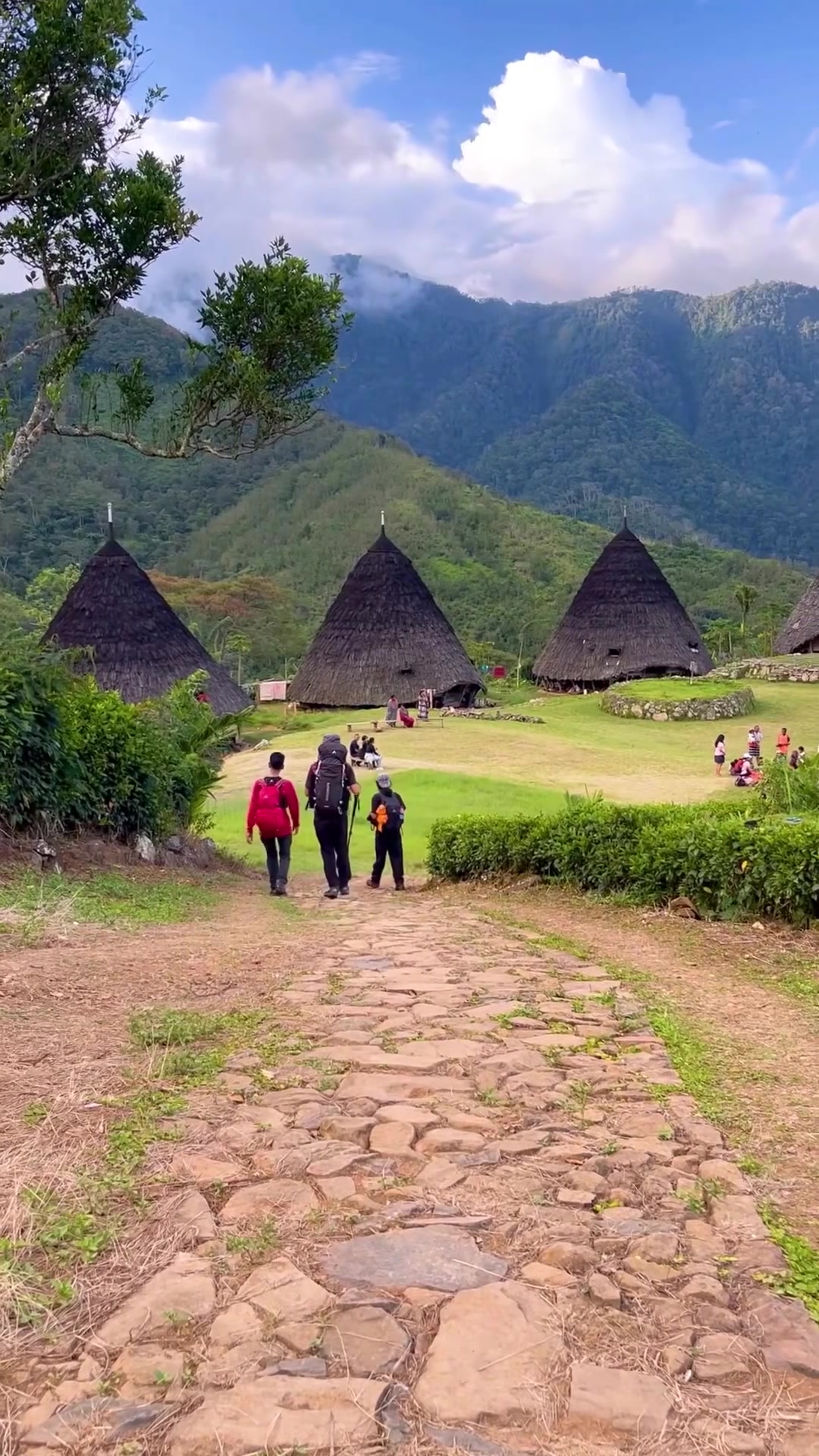
Wae Rebo Village is a cultural and natural oasis, isolated in the lush, rolling hills of Indonesia. The village’s unique feature is its cone-shaped houses, known as Mbaru Niang, covered in lontar thatch that stretches from the rooftop to the ground. Wae Rebo’s architecture is not just a fascinating sight. It’s how the villagers live and thrive in harmony with nature.
Humbly Conical, Woven from Nature
The people of Wae Rebo call their traditional homes Mbaru Niang. Each one is a distinctive, tall cone covered in a thick layer of lontar thatch. The conical design itself — though unique — isn’t uncommon. What matters here is how the villagers use natural surroundings. They watch over the village, surrounded by lush greenery as well as rolling hills and mountains. The construction materials blend traditional architecture and design, using natural surroundings authentically. The village is small and isolated, but this doesn’t mean it’s untouched or backward. The villagers have adapted Indonesian traditions to build a welcoming destination. They deliberately use what nature provides, from the stone pathways to the thatch. The people of Wae Rebo warmly welcome visitors who wish to immerse themselves in this simple, traditional lifestyle.
Sustainable Living Draws the Curious
The villagers have found an unusual economic model, turning isolation into an asset. The village’s remote location means tourists can’t pour in. Rather, visitors can immerse themselves in the villagers’ traditional lifestyle. Many visitors are international ecotourism enthusiasts and sustainable travelers. They book tours to view the distinctive houses covered in lontar thatch. Wae Rebo’s allure lies in its ability to offer visitors an experience that is immersive and authentic. This also encompasses the idea of eco-friendly travel. There are no formal tours or tourist guides, but instead you enjoy the culture of people who have been living in harmony with their surroundings.
The Architecture’s Practical Side
The stunning, conical houses look like modern art sculptures. And they are the embodiment of local wisdom. The conical shape helps these houses withstand strong winds and high rainfall, common in the area. Deep dives into the village's architecture show the reason for the currant-scented thatch and palm leaves. It’s about durability and efficiency. The thatch provides insulation.
Treasures of the Village’s Structural Design
The houses in Wae Rebo are conical. But the design has a purpose. Each house is built in the same way, as follows:
- They have a central pole, often made from wood, and help keep the structure stable.
- supporting walls are wrapped around by palm leaves and bamboo poles.
- Only natural materials are used, and only natural materials are used, which means sustainability to the highest degree.
The Village Life and its Difficulties
Despite the ecological benefits, not everyone finds the village lifestyle easy. Life in Wae Rebo is a testament to resilience. High winds and heavy rain are common, and villagers must work hard to maintain their homes and crops. The villagers grow crops like rice and sweet potatoes, and have recently expanded into tourism. This may help sustain their traditional practices. However, it also means they must adapt to the influx of tourists. Young villagers who leave to attend school must decide whether to come back.
The Tourist’s Eyes
Some visitors find it hard to adapt to the harsh conditions Wae Rebo is a village where technology and the modern world are almost invisible. This is truly an ecological hotspot where nature is supreme. Although it is a demanding area, visitors are drawn to its natural beauty. The warmth of the people in Wae Rebo Village is integral to the experience. It isn’t just about the distinctive conical houses and the lush greenery. Visitors are invited into a way of life that is sustainable. It’s about living in harmony with the land and each other. For those who seek to immerse themselves in a truly unique cultural experience, Wae Rebo offers an experience that is both a journey and a destination.
Watch the Reel
Questions readers ask
What exactly are the *Mbaru Niang* houses made of?
The *Mbaru Niang* houses are made from natural materials such as lontar thatch, palm leaves, bamboo poles, and wood. These materials are locally sourced, making the homes sustainable and eco-friendly. The thatch not only provides insulation but also gives the houses their distinctive cone shape.
How do the villagers in Wae Rebo adapt to the challenges of their environment?
The villagers in Wae Rebo have adapted to their environment by using natural materials for construction that can withstand high winds and heavy rainfall. They also grow crops like rice and sweet potatoes, and have developed a sustainable lifestyle that aligns with their surroundings. This resilience is a key part of their culture.
Is it possible for tourists to stay in the *Mbaru Niang* houses?
While the article doesn't specify accommodation details, the villagers welcome visitors to immerse themselves in their traditional lifestyle. It's likely that arrangements can be made for tourists to experience staying in these unique homes, but it would be best to contact local tour operators or the village directly for specific information.
What kind of visitors typically come to Wae Rebo Village?
Wae Rebo Village primarily attracts ecotourism enthusiasts and sustainable travelers. These visitors are drawn to the village's unique architecture, sustainable lifestyle, and the opportunity to experience a traditional way of life in harmony with nature.
Why do the houses have such a distinctive conical shape?
The conical shape of the *Mbaru Niang* houses serves both practical and aesthetic purposes. It helps the houses withstand strong winds and high rainfall, which are common in the area. Additionally, the shape is a traditional design that has been passed down through generations, reflecting the villagers' deep connection to their environment.
What is the economic model of Wae Rebo Village?
Wae Rebo Village has an unusual economic model that leverages its remote location as an asset. Instead of mass tourism, the village attracts visitors who are interested in immersive and authentic experiences. This model allows the villagers to maintain their traditional lifestyle while generating income from tourism.
Related deep dives
Similar reads based on topic and creator.


Recent articles
Fresh deep dives from the latest Reels we unpacked.



Comments
Be the first to comment.