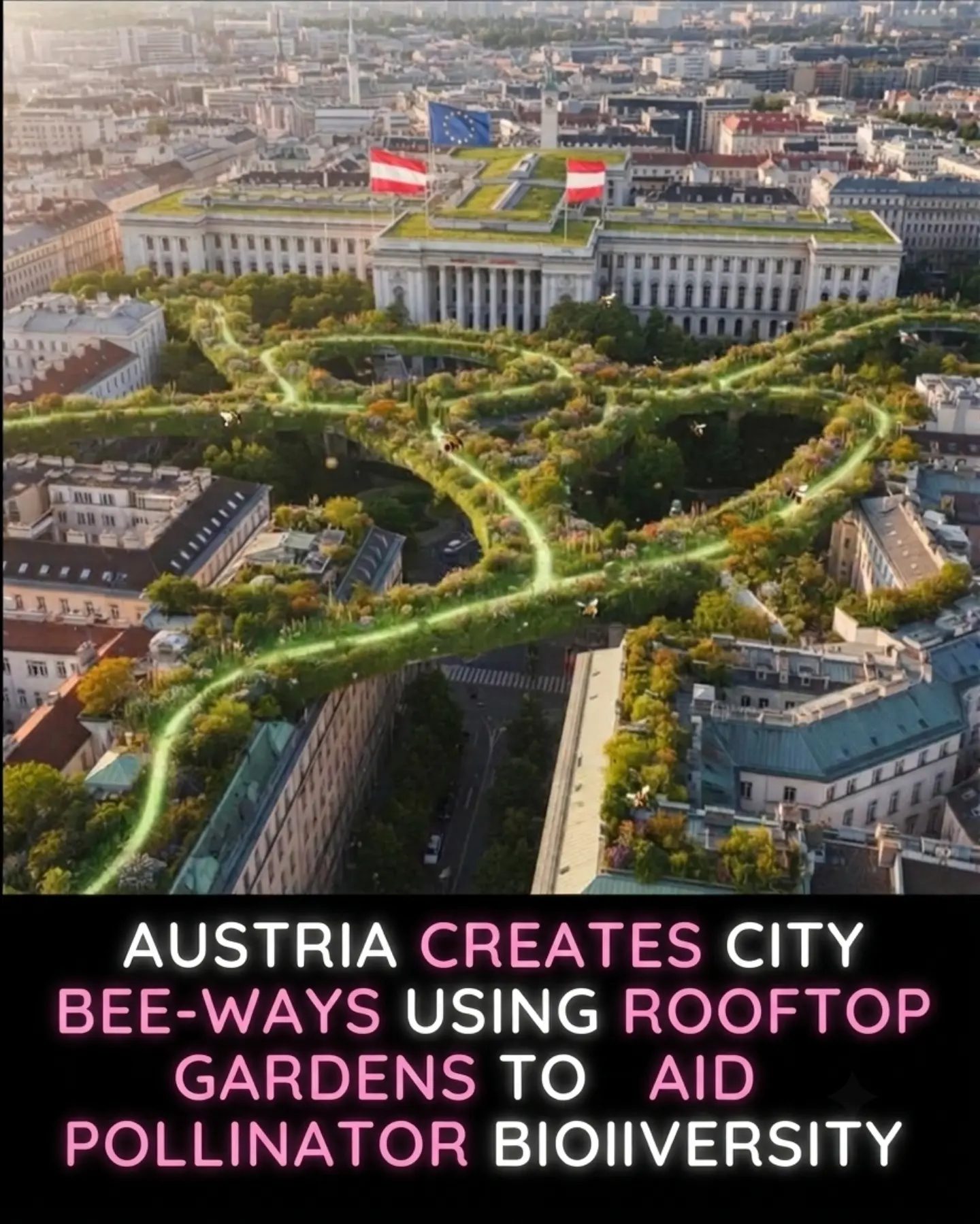
Rooftop Pollinator Biodiversity: Vienna's Urban Initiative
Vienna, Austria, is taking urban green spaces to new heights with an innovative initiative called "bee-ways." This project involves creating interconnected rooftop gardens across the city to support pollinator biodiversity. By transforming underutilized rooftop spaces into lush, bee-friendly habitats, Vienna is making significant strides in urban sustainability and ecological conservation.
Context / Why this matters
Pollinators, including bees, butterflies, and other insects, play a crucial role in maintaining healthy ecosystems and ensuring food security. However, rapid urbanization and environmental degradation have led to a decline in pollinator populations worldwide. Cities, with their concrete jungles and limited green spaces, often fall short in providing habitats for these essential creatures. Vienna's 'bee-ways' initiative addresses this challenge by reimagining urban landscapes as interconnected ecosystems that support biodiversity.
Main discussion
The Concept of Bee-Ways
The 'bee-ways' initiative focuses on creating a network of rooftop gardens that serve as corridors for pollinators, allowing them to move freely between green spaces. By providing food sources and nesting sites, these gardens support the health and vitality of pollinator populations, which in turn benefits local flora and fauna.
Rooftop Gardens: Ideal Habitats for Pollinators
Vienna's urban rooftops are being transformed into vibrant gardens that offer a variety of benefits for pollinators. These gardens are designed with a diverse range of native plants that provide nectar and pollen, ensuring a steady food supply for bees and other pollinators. In addition, the gardens feature nesting sites and shelter, creating a safe and supportive environment for these vital insects. This is achieved by building artificial nesting sites and providing natural materials for nesting.
Creating a City-Wide Network
One of the key aspects of the 'bee-ways' initiative is the creation of a city-wide network of interconnected rooftop gardens. By linking these green spaces, Vienna is fostering a more resilient and diverse ecosystem. This interconnected network allows pollinators to travel between gardens, ensuring the exchange of genetic material and promoting the overall health of the population. This biodiversity is essential for maintaining the balance of local ecosystems and supporting the reproductive success of various plant species.
Urban Sustainability and Conservation
The 'bee-ways' initiative is a shining example of how cities can contribute to sustainability and conservation efforts. By repurposing rooftops, Vienna is not only creating habitats for pollinators but also promoting sustainable urban development. Rooftop gardens help mitigate the urban heat island effect, reduce energy consumption by providing insulation, and improve air quality. Additionally, these gardens contribute to the city's aesthetic appeal, enhancing the quality of life for residents.
Practical Tips
If you're inspired by Vienna's 'bee-ways' initiative and want to support pollinator biodiversity in your own community, consider the following tips:
Start Small
Begin by transforming your own rooftop or balcony into a pollinator-friendly space. Choose native plants that are known to attract bees and other pollinators. Even a small garden can make a significant difference in supporting local pollinator populations.
Create Nesting Sites
Provide nesting sites and shelter for pollinators by incorporating natural materials into your garden. Hollow plant stems, dead tree branches, and nest boxes can serve as ideal nesting sites for bees and other insects.
Connect Green Spaces
Encourage the creation of interconnected networks of green spaces in your community. Work with local authorities and community groups to transform underutilized rooftops, balconies, and vacant lots into pollinator-friendly habitats.
Promote Awareness
Raise awareness about the importance of pollinators and the role of urban green spaces in supporting biodiversity. Share your knowledge with friends, family, and neighbors, and encourage them to take action to support pollinators.
Important takeaways
- Vienna's 'bee-ways' initiative demonstrates the potential of urban green spaces in supporting pollinator biodiversity.
- Rooftop gardens provide ideal habitats for pollinators by offering food sources, nesting sites, and shelter.
- Creating interconnected networks of green spaces fosters a more resilient and diverse ecosystem.
- Urban sustainability and conservation efforts can be effectively promoted through initiatives like 'bee-ways.'
Conclusion
Vienna's 'bee-ways' initiative is a groundbreaking effort to support pollinator biodiversity in urban environments. By transforming rooftops into vibrant gardens that provide food sources and nesting sites for pollinators, Vienna is creating a more sustainable and resilient ecosystem. This initiative serves as a model for other cities looking to integrate biodiversity conservation into urban development. By following the practical tips outlined above, you can contribute to the health and vitality of pollinator populations and promote sustainable urban living in your own community.
Watch the Reel
Questions readers ask
What exactly are Vienna's 'bee-ways' and how do they support pollinators?
Vienna's 'bee-ways' are interconnected rooftop gardens designed to create pollinator-friendly habitats. These spaces provide food, shelter, and nesting sites for bees, butterflies, and other pollinators, helping to mitigate the impacts of urbanization on these vital species. By offering a continuous network of green spaces, 'bee-ways' ensure that pollinators have access to the resources they need to thrive.
How does the 'bee-ways' initiative benefit the city of Vienna beyond supporting pollinators?
Beyond supporting pollinators, Vienna's 'bee-ways' initiative enhances urban sustainability and biodiversity. These rooftop gardens help reduce the urban heat island effect, improve air quality, and manage rainwater, contributing to a greener and more livable city. Additionally, they promote community engagement and awareness about the importance of pollinators in urban environments.
What kinds of plants are typically used in Vienna's bee-friendly rooftop gardens?
Vienna's bee-friendly rooftop gardens are planted with a variety of native and pollinator-friendly plants that provide nectar and pollen throughout the growing season. These plants include wildflowers, herbs, and flowering shrubs, such as lavender, thyme, and coneflowers, which attract a diverse range of bees and butterflies.
Can other cities adopt a similar initiative to Vienna's 'bee-ways'?
Yes, other cities can adopt similar initiatives to enhance pollinator diversity and urban sustainability. The key is to identify underutilized spaces, such as rooftops, and transform them into interconnected, bee-friendly habitats. Collaboration with local governments, community organizations, and residents is essential for the success of such initiatives.
How do the rooftop gardens in Vienna contribute to the city's sustainability goals?
Vienna's rooftop gardens contribute to the city's sustainability goals by promoting biodiversity, reducing energy consumption, and mitigating the effects of urbanization. These green spaces help to insulate buildings, lower energy costs, and absorb carbon dioxide, making the city more resilient and environmentally friendly.
What role do bees and other pollinators play in urban environments?
Bees and other pollinators play a crucial role in urban environments by facilitating plant reproduction and supporting local food production. They help maintain the balance of urban ecosystems and contribute to the quality of life in cities. Urban pollinators are essential for the health of urban agriculture, parks, and green spaces.
How can residents in Vienna and other cities support local pollinators?
Residents can support local pollinators by creating pollinator-friendly spaces in their own gardens and balconies. This can be achieved by planting native, bee-friendly flowers, avoiding pesticide use, and providing water sources. Additionally, supporting local initiatives like Vienna's 'bee-ways' and advocating for more green spaces in urban areas can make a significant difference.
Related deep dives
Similar reads based on topic and creator.

Recent articles
Fresh deep dives from the latest Reels we unpacked.




Comments
Be the first to comment.