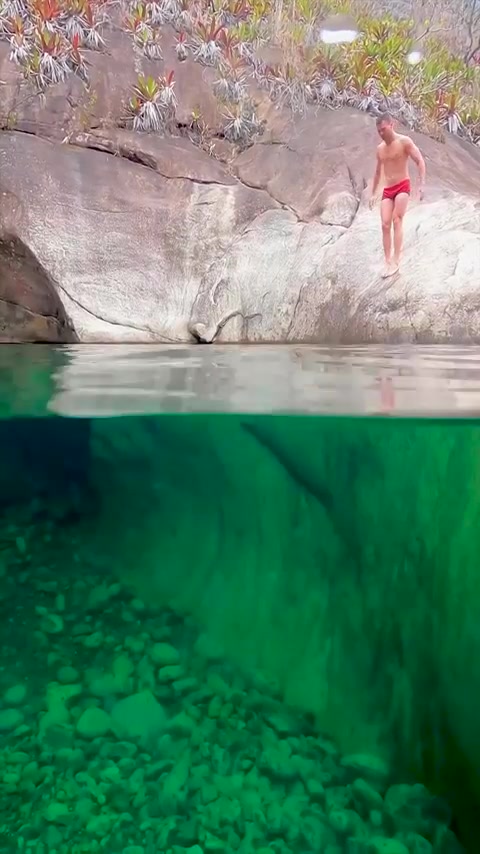
The joy of underwater swimming isn't just about the exercise but being a silent explorer. In clear, green water, the swimmer easily navigates a landscape of rocks and natural structures, including a cave. The sheer visibility all around is the main delight.
The experience of diving headlong into pristine water
Underwater swimming is the art of navigating submerged environments with graceful ease. But this isn't just about propelling through H2O with efficient strokes. It is, in essence, moving through a world that normally the senses can't easily capture. With visibility up to fifteen meters, the red swim trunks of the swimmer stand out against an algae-coated seascape. The body of water is both deep enough to be clear of any shore muck and shallow enough for the swimmer to see a cave's ceiling. There are no scanning equipment or guiding devices. Just a pair of untethered eyes. The equipment is minimal. Human buoyancy, an oxygen-filled chest cavity, and simple arm strokes are plenty. It is the most intuitive and fluid way to experience diving. Asterisks mark out the spaces accessible for a dive, not kilometres of open water. Limiting the swim to a confined pool of water makes the body of water easier to navigate and learn. The swimmer receives ample reward for the effort. Visibility is not compromised by shoreline silt. The swimmer can see the ground in front of them and the roof above. This green hue shows the water and its surroundings have yet to be contaminated with tourist pollution.
Cave diving in a clear underwater landscape
This underwater swimming experience fits into a broader trend of people seeking to connect with nature on their own. Thousands of people now visit Blue Grotto underwater cavern every day. The swimmer's dive into a cave is indicative of a growing demand for simulated exploration. People have become increasingly aware of the direct connection between the way they travel, and the impact they have on the planet. Commercially run diving is a budding industry. These experiences can run into thousands of dollars. The trend is part of a broader push away from the sterilized fun of hotels and toward the real connections of travel.
Glimmers and glints
In underwater swimming, green light beams shine sideways. Without the cave, the swimmer might not see them. The water above the deepest part of the cavern blocks the sunlight. The green of the water must be lit from below. The cave is in a shallow hole in the ground that the water fills. The cool water creates a perfect environment for growing the plants and microfauna that make its cavernous areas the swimmer's playground. There, the sunlight creates a sunstar beam of light to illuminate the cave.
The swimmer's experience
The swimmer's swimsuits are bright against the greenish-blue water. The swimmers are able to navigate underwater safely and efficiently. The swimmer is a solitary figure in a world of vibrant shades and fragile textures. The red swim trunks contrast with the natural surroundings.
The magic of watery depths
What might the swimmer do in the water? Underneath the surface, the swimmer can see the ground and above them. Swimming underwater can be compared to swimming in the air, although there is no gravity. The swimmer b ends are using different muscles. When swimming in air, the swimmer's feat is the propulsion.
How to take a dive
People who want to experience underwater swimming should be careful to follow all safety precautions. It is important that people heed all safety warnings. People should also not enter watery environments that seem unsafe. Can the diver make a box out of the rock and dive into it? If such a thing existed, it could be a hazard to divers.
Watch the Reel
Questions readers ask
What makes underwater swimming different from regular swimming?
Underwater swimming is distinguished by its focus on navigating submerged environments with grace and ease, rather than just propelling through water. It involves moving through a world that our senses typically can't easily capture, and is done in clear, green water where visibility can reach up to fifteen meters. This allows for a unique experience of exploring natural underwater structures and caves.
How does the visibility underwater affect the swimming experience?
The visibility underwater greatly enhances the swimming experience. In clear, green water, swimmers can see up to fifteen meters, allowing them to navigate natural structures and caves with ease. This visibility is what makes the underwater world so captivating and allows for a silent exploration of the environment.
What equipment is typically used for underwater swimming?
Underwater swimming requires minimal equipment. Swimmers primarily rely on their natural buoyancy, an oxygen-filled chest cavity, and simple arm strokes. There are no scanning equipment or guiding devices typically needed, making it an intuitive and fluid experience.
Why is the color green significant in underwater swimming?
The green hue of the water indicates that it is pristine and uncontaminated. This color is a result of the water's depth and the presence of algae, which creates a clear and vibrant environment for swimmers to explore. It also allows for unique lighting effects, such as green light beams shining sideways and sunstar beams illuminating caves.
What is the appeal of cave diving in clear underwater landscapes?
Cave diving offers a unique and thrilling experience. It allows swimmers to explore hidden, cavernous areas and witness unique lighting effects created by the interplay of sunlight and water. The cave's environment, filled with plants and microfauna, provides a distinctive and captivating playground for swimmers.
How does underwater swimming fit into the broader trend of nature-focused travel?
Underwater swimming is part of a growing trend where people seek to connect with nature in a more meaningful way. It offers a direct and immersive experience with the natural world, allowing swimmers to explore pristine environments without the impact of tourist pollution. This trend is also seen in the increasing popularity of commercially run diving experiences, which can be quite expensive.
Are there specific areas marked out for underwater swimming?
Yes, underwater swimming is typically confined to specific areas marked out for a dive. These areas are chosen for their clear water and interesting underwater structures, making them easier to navigate and learn. This confinement also helps to preserve the pristine environment and ensures that swimmers have a rewarding experience.
Related deep dives
Similar reads based on topic and creator.




Recent articles
Fresh deep dives from the latest Reels we unpacked.


Comments
Be the first to comment.