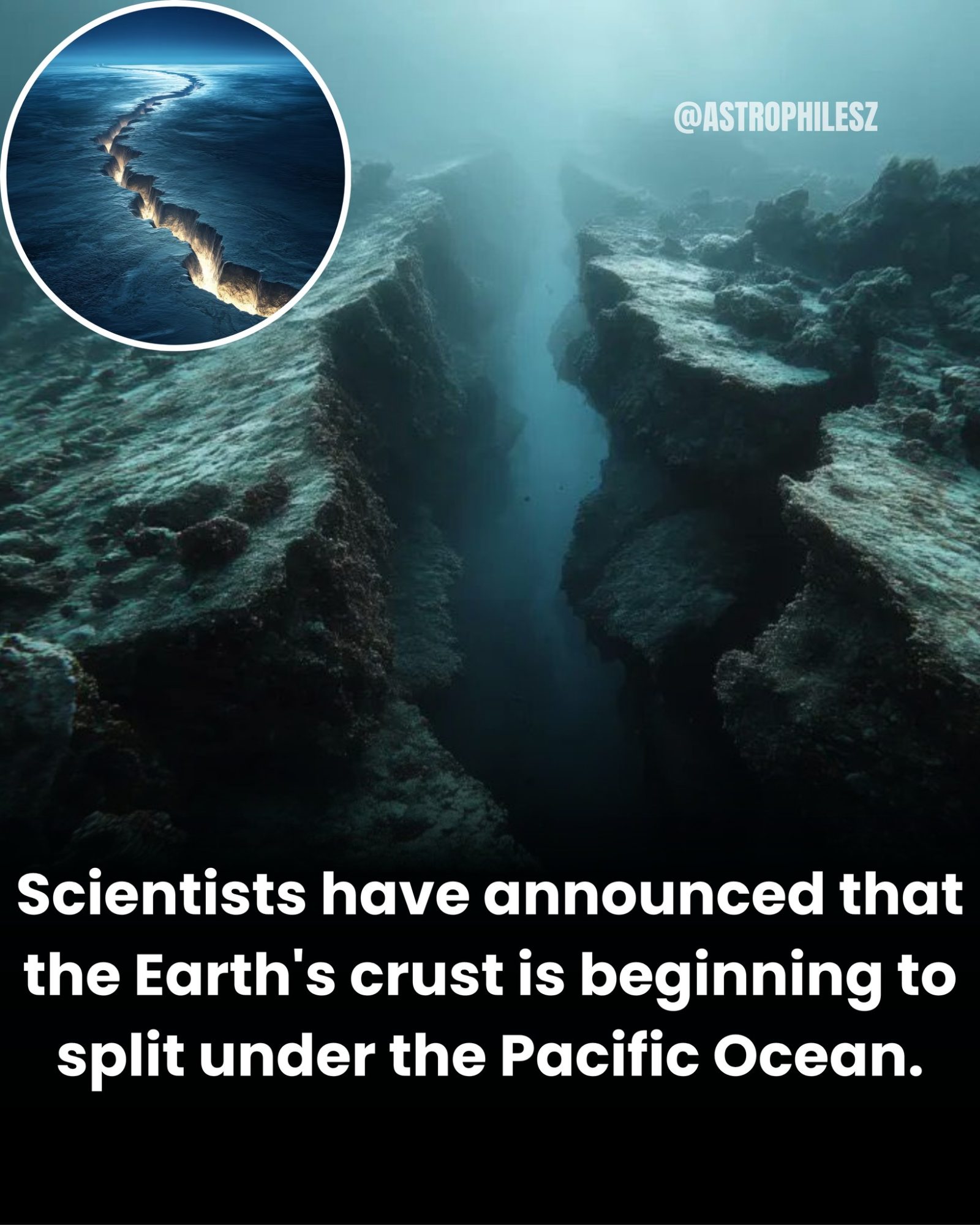
The Slow-Motion Unraveling of the Explorer Plate
Off the coast of Vancouver Island, a remarkable geological event is unfolding. Scientists have documented, for the first time, a subduction zone in the midst of a slow, catastrophic breakdown. This isn't a sudden catastrophe, but a process taking place over millions of years. The star of this geological drama is the Explorer plate, a small fragment of oceanic crust in the Cascadia region. Led by Brandon Shuck at Louisiana State University, a team of geologists has uncovered clear evidence that this tectonic plate is actively tearing itself apart.
Why This Matters
The Explorer plate is located in a complex region where four tectonic plates converge. This makes it a critical area for understanding the dynamics of plate tectonics and subduction zones, which are responsible for earthquakes and volcanic activity. The findings from this research offer a unique glimpse into the lifecycle of these enormous geological systems, providing insights into how they eventually break down and redraw the boundaries between tectonic plates.
The Explorer Plate and Cascadia Subduction Zone
A Unique Geological Setting
The Explorer plate is tucked within the Cascadia subduction zone, a region where the Juan de Fuca plate is sliding beneath the North American plate. This zone is known for its seismic activity, including the infamous "Big One" earthquake that is predicted to strike the Pacific Northwest.
The Discovery
Using seismic reflection data gathered during a 2021 research expedition, Shuck's team mapped several large faults and fractures running beneath the seafloor. The most striking discovery was a massive fracture stretching 75 kilometers, or roughly 47 miles, that is actively splitting the Explorer plate from within. This fracture is a clear indication of the plate tearing apart.
The Slow-Motion Train Wreck
Shuck compared the process of a subduction zone collapsing to a slow-motion train wreck. While starting a subduction zone requires enormous effort, ending one takes something dramatic and catastrophic, playing out over millions of years. This process is unlike the typical subduction zone, which runs smoothly for tens of millions of years.
The Process of Plate Tectonics
Subduction Zones
Subduction zones are areas where one tectonic plate slides beneath another, driving earthquakes and volcanic activity. They are typically long-lived, stable features of the Earth's crust. However, what Shuck's team found is something different—a subduction zone in the midst of a chaotic collapse, unraveling into smaller fragments and microplates.
The Explorer Plate's Unique Fate
The Explorer plate is not shutting down cleanly; instead, it is breaking apart piece by piece. This is a rare opportunity for scientists to study the complex interplay of forces that ultimately lead to the end of a subduction zone.
Practical Tips for Understanding Plate Tectonics
Scientific Research and Technology
The discovery of the Explorer plate's disintegration is a testament to the power of advanced scientific research and technology. Seismic reflection data, in particular, has been crucial in mapping the faults and fractures beneath the seafloor. This technology allows scientists to peer into the Earth's crust and understand its dynamics in unprecedented detail.
Staying Informed
While the process of the Explorer plate splitting is happening over millions of years, it is essential to stay informed about geological research. Understanding the dynamics of plate tectonics can provide valuable insights into the Earth's seismic activity and help predict future events.
Important Takeaways
A Rare Geological Event
The splitting of the Explorer plate is a rare and significant geological event. It offers scientists a unique opportunity to study the breakdown of a subduction zone, providing insights into the larger processes that shape the Earth's crust.
The Long-Term Nature of Geological Processes
The finding underscores the long-term nature of geological processes. While the splitting of the Explorer plate may not pose an immediate threat, it is part of a broader, ongoing process that shapes the Earth's surface over millions of years.
The Role of Advanced Technology
Advanced technology, such as seismic reflection data, is essential for understanding complex geological phenomena. It allows scientists to map the Earth's crust in detail and study the dynamics of plate tectonics.
Conclusion
The slow-motion unraveling of the Explorer plate is a fascinating glimpse into the Earth's geological processes. It highlights the power of scientific research and technology to uncover the mysteries of the Earth's crust. As the Explorer plate continues to tear apart, scientists will gain valuable insights into the dynamics of subduction zones and the forces that shape our planet.
Watch the Reel
Questions readers ask
What is the Explorer Plate and where is it located?
The Explorer Plate is a small fragment of oceanic crust situated off the coast of Vancouver Island. It is part of a complex region where multiple tectonic plates converge, making it a key area for studying plate tectonics.
What is a subduction zone and why is its breakdown significant?
A subduction zone is a region where one tectonic plate moves beneath another, typically causing geological activity such as earthquakes and volcanic eruptions. The breakdown of the Explorer Plate's subduction zone is significant because it provides a unique opportunity to study the long-term dynamics of plate tectonics.
What is causing the Explorer Plate to tear apart?
The Explorer Plate is being torn apart due to the complex interactions among the four tectonic plates in the region—the Explorer, Juan de Fuca, Pacific, and North American plates. The process is driven by the Pacific Plate's movement and the dynamics of the subduction zone.
What are the implications for geological activity in Vancouver Island?
The slow-motion separation of the Explorer Plate could influence geological activity in Vancouver Island, including earthquakes and volcanic activity. However, this process is ongoing and may take millions of years to significantly impact the region.
What kind of geological insights can be gained from studying the Explorer Plate?
Studying the Explorer Plate offers insights into how tectonic plates interact and evolve over time. It sheds light on the mechanics of plate separation and the long-term behavior of subduction zones, which can help predict and understand geological events.
Related deep dives
Similar reads based on topic and creator.

Recent articles
Fresh deep dives from the latest Reels we unpacked.




Comments
Be the first to comment.