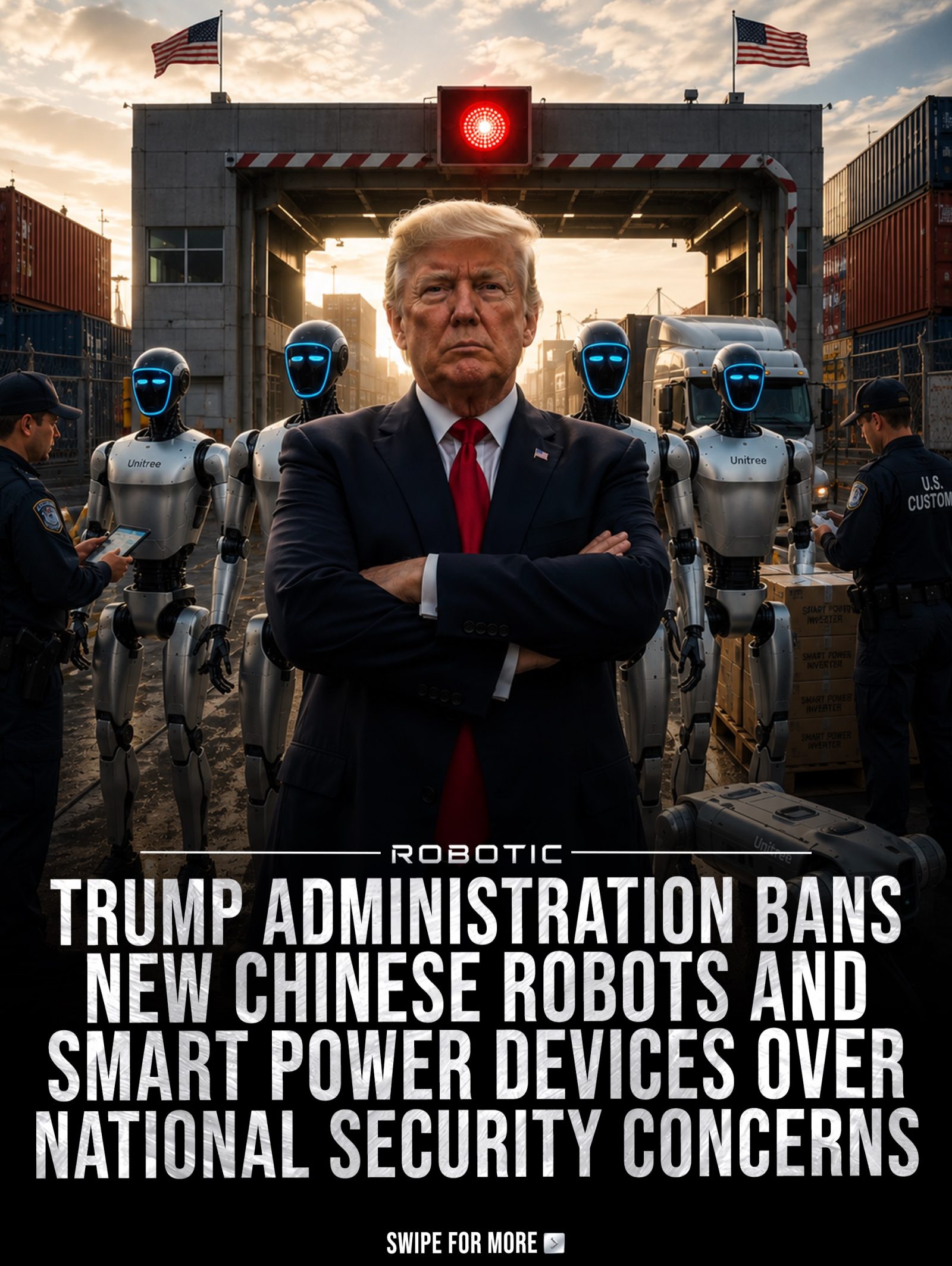
The Impact of U.S. Restrictions on Chinese Robots and AI Infrastructure
The United States has implemented new restrictions on Chinese technology, focusing on humanoid and quadruped robots, as well as connected power inverters. These measures, announced by the Trump administration, are driven by concerns over national security and cybersecurity. The policy aims to bolster domestic AI manufacturing and reduce reliance on foreign hardware for critical infrastructure. This move intensifies the U.S.-China technology rivalry, as both nations vie for leadership in the technologies that will shape the future of artificial intelligence.
The Scope of the Restrictions
The new restrictions target specific categories of Chinese technology:
-
Chinese humanoid and quadruped robots: These include advanced robotic systems designed to mimic human and animal movements, often used in industries like manufacturing, logistics, and even military applications.
-
Connected power inverters: These devices convert direct current (DC) to alternating current (AC) and are crucial for integrating renewable energy sources into the power grid, as well as for various industrial and commercial applications.
The ban is part of a broader strategy to safeguard America's AI supply chain, ensuring that critical components are produced domestically or by trusted international partners.
Why This Matters
The escalating competition between the U.S. and China over AI infrastructure has significant implications for both economies and the global technology landscape. Here’s a deeper look into the context and impact of these new restrictions:
Technological and Economic Implications
The U.S. restrictions on Chinese robotics and smart power devices are part of a larger geopolitical strategy aimed at reducing dependency on Chinese technology. This move could have far-reaching effects, including:
-
Increased Domestic Innovation: By encouraging domestic manufacturing, the U.S. aims to spur innovation and self-sufficiency in the AI sector. This could lead to the development of new technologies and solutions tailored to American needs.
-
Economic Impact on China: For Chinese firms like Unitree Robotics, the ban could mean reduced access to the U.S. market, potentially affecting their revenue and growth prospects. It could also drive Chinese firms to seek alternative markets or develop new strategies to bypass these restrictions.
National Security and Cybersecurity Concerns
The U.S. government has cited national security and cybersecurity concerns as the primary reasons for these restrictions. The fear is that Chinese technology may be used for espionage or cyber-attacks, posing a threat to national security. These concerns are particularly relevant in the context of AI and robotics, where advanced technologies can be repurposed for military or covert operations.
The Role of AI in Future Technologies
AI is at the heart of many emerging technologies, from autonomous vehicles to smart cities. Both the U.S. and China recognize the strategic importance of AI and are investing heavily in its development. The restrictions on Chinese robotics and smart power devices are a manifestation of this strategic rivalry, with each country seeking to gain an edge in the global AI race.
Impact on Specific Technologies
Humanoid and Quadruped Robots
Humanoid and quadruped robots are at the forefront of AI advancements. These robots are designed to perform tasks that require human-like dexterity and mobility, ranging from industrial automation to search and rescue operations. The restrictions on these robots could affect various industries:
-
Manufacturing: Robots are widely used in manufacturing for tasks such as assembly, welding, and quality control. The ban could disrupt supply chains and force manufacturers to seek alternative robotic solutions.
-
Logistics: Robots are increasingly used in warehouses and distribution centers for tasks such as picking, packing, and delivery. The restrictions could affect the efficiency and cost-effectiveness of logistics operations.
-
Defense: Robots are used in military applications, including reconnaissance, surveillance, and bomb disposal. The ban could impact defense strategies and operations, potentially leading to the development of new technologies.
Power Inverters
Power inverters are essential for converting DC to AC, enabling the integration of renewable energy sources into the power grid. The restrictions on connected power inverters could have significant implications for the energy sector:
-
Renewable Energy Integration: Power inverters are crucial for integrating solar and wind energy into the power grid. The ban could affect the efficiency and reliability of renewable energy systems, potentially slowing down the transition to clean energy.
-
Industrial and Commercial Applications: Power inverters are used in various industrial and commercial settings, including data centers, hospitals, and manufacturing plants. The restrictions could impact the reliability and performance of these critical infrastructure components.
Key Players and Market Dynamics
While specific Chinese firms like Unitree Robotics are expected to be affected by these restrictions, the broader market dynamics are also evolving. Here's a closer look at some key players and the shifting market landscape:
Impact on Chinese Firms
Chinese firms that specialize in robotics and smart power devices, such as Unitree Robotics, are likely to face significant challenges. These firms may need to adapt their business models to comply with the new restrictions, potentially leading to a shift in their market focus or the development of new technologies.
Adaptation Strategies
Chinese firms are likely to explore several strategies to mitigate the impact of the U.S. restrictions:
-
Alternative Markets: Firms may look to expand their presence in other markets, such as Europe, Asia, and Africa, where demand for advanced robotics and smart power devices is growing.
-
Technological Innovation: Chinese firms may invest in research and development to develop new technologies that can bypass the restrictions. This could lead to advancements in robotics and energy systems.
-
Partnerships and Collaborations: Chinese firms may seek partnerships with domestic and international companies to share resources, knowledge, and technology. These collaborations could help firms overcome the challenges posed by the U.S. restrictions.
Practical Tips for Industry Players
For industry players affected by these restrictions, several practical steps can help navigate the changing landscape:
For U.S. Manufacturers
-
Evaluate Supply Chains: Assess your supply chain to identify components and technologies that may be affected by the restrictions. Develop contingency plans to ensure continuity of operations.
-
Invest in Domestic Innovation: Consider investing in domestic R&D to develop alternative technologies and solutions. This can help reduce reliance on foreign hardware and strengthen domestic manufacturing capabilities.
-
Compliance and Risk Management: Stay updated on regulatory changes and ensure compliance with new restrictions. Implement risk management strategies to mitigate potential disruptions.
For Chinese Firms
-
Explore Alternative Markets: Diversify your market presence to reduce reliance on the U.S. market. Explore opportunities in Europe, Asia, Africa, and other emerging markets.
-
Invest in R&D: Allocate resources to research and development to create new technologies that are not subject to the restrictions. This could involve exploring new materials, designs, and manufacturing processes.
-
Build Strategic Partnerships: Collaborate with international firms to share resources, knowledge, and technology. This can help Chinese firms overcome the challenges posed by the U.S. restrictions and expand their global presence.
Important Takeaways
The new U.S. restrictions on Chinese robots and smart power devices mark a significant escalation in the tech rivalry between the U.S. and China. These measures aim to bolster domestic AI manufacturing while addressing national security concerns. For both U.S. and Chinese firms, adapting to these changes will require strategic planning and innovation. The future of AI and robotics will be shaped by how these countries navigate this evolving landscape.
Conclusion
The U.S. decision to restrict Chinese robotics and smart power devices underscores the growing importance of AI and the intensifying rivalry between the U.S. and China. As both nations continue to invest in and develop AI technologies, the global landscape will be shaped by their strategies and innovations. For industry players, staying informed, adapting to regulatory changes, and investing in R&D will be crucial for navigating this complex environment. The future of AI and robotics is poised for rapid evolution, with both opportunities and challenges on the horizon.
Watch the Reel
Questions readers ask
Which specific technologies are targeted by the U.S. restrictions on Chinese AI and robotics?
The restrictions primarily focus on Chinese humanoid and quadruped robots, as well as AI-powered power inverters. These technologies are seen as critical to both national security and the development of advanced AI infrastructure.
What is the primary goal of the U.S. restrictions on Chinese robotics and AI technology?
The primary goals are to secure the U.S. technological infrastructure, reduce dependence on foreign hardware, and bolster domestic manufacturing in these key areas. This is motivated by concerns over national security and cybersecurity.
How do these restrictions impact the U.S.-China tech rivalry?
The restrictions intensify the competition between the U.S. and China in the tech sector, particularly in the realm of AI. Both countries are vying for leadership in technologies that will shape the future of artificial intelligence, making this a critical area of rivalry.
What prompted the Trump administration to enact these restrictions?
The Trump administration enacted these restrictions due to concerns over national security and cybersecurity. The aim was to ensure that critical infrastructure is not vulnerable to foreign threats and to promote domestic technological advancement.
Are there any exceptions or exemptions to these restrictions?
The article does not mention any specific exceptions or exemptions. The restrictions are broad and target the categories of technology mentioned, with the goal of enhancing domestic manufacturing and reducing reliance on foreign hardware.
How do these restrictions affect the Chinese robotics and AI industry?
The restrictions could significantly impact the Chinese robotics and AI industry by limiting their access to the U.S. market and potentially hindering their ability to innovate and compete on a global scale. This could lead to a shift in the industry dynamics and market share.
Related deep dives
Similar reads based on topic and creator.



Recent articles
Fresh deep dives from the latest Reels we unpacked.




Comments
Be the first to comment.