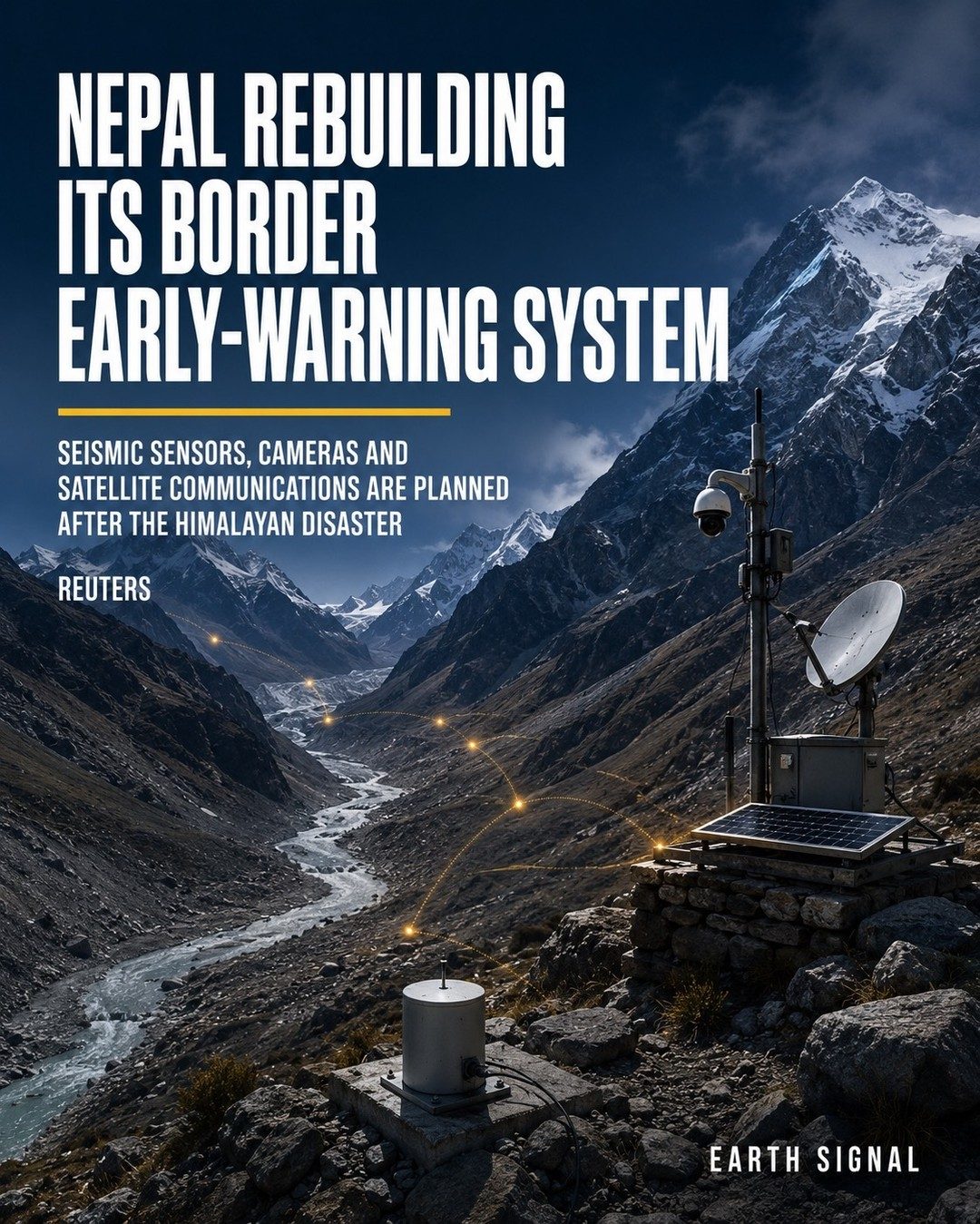
Nepal Bolsters Border Security with Advanced Earthquake Detection
The Himalayan mountains’ devastating earthquakes have brought a new urgency to Nepal’s national safety. After the Himalayan disaster, Nepal is rebuilding its border with an advanced network of seismic sensors, cameras, and satellite communications. The system aims to provide crucial early warnings of seismic activity, but bolstering border security is only one of its anticipated benefits. Data collected from these tools can also play a role in monitoring geological activity throughout the region.
Three Are Better Than One
The seismic monitoring system employs three types of surveillance: seismic sensors, cameras, and satellite communications. Nepal install seismic sensors across the Himalayan foothills. These devices detect minute seismic shifts in the Earth’s crust, enabling scientists to identify potential earthquakes in their nascent stages. The cameras complement the seismic sensors. They are positioned to track ground movement from different angles. This dual-surveillance helps pinpoint the precise location of seismic activity. For instance, if a seismic sensor detects ground movement, the camera array may confirm the disturbance, providing a clearer picture of the situation. Satellite communications form the final part of the triad. These satellites transmit data between the sensor network and a central monitoring station. The communication network can be used to relay an early warning to authorities and civilians if seismic activity exceeds safe levels.
Faster Response Time
Nepal hasn't just invested in multiple types of surveillance but also in the technology around communication and response to earthquakes. Administrators can access and analyze seismic data in real-time via satellite communication. This real-time capability reduces response times, giving inhabitants and authorities alike a critical head start on safety procedures. Each component of this seismic monitoring system is essential. However, this combination is even more powerful. Nepal’s new seismic monitoring system is an example of the civil engineering progress possible when a nation prioritizes disaster preparedness in a high-risk region.
Beyond Nepal’s Border
The seismic monitoring system provides crucial context for future geological research. The data collected will offer insights into the Himalayan region’s tectonic activity. Insights gained from this data could inform future research and improve our understanding of geological processes in the region. But it won't just help Nepal. The seismic monitoring system promises to serve as a model for other nations in the Himalayan region. Nepal’s new seismic monitoring system is a significant step forward in earthquake preparedness. It represents a nation’s commitment to safeguarding its citizens and setting an example for the region.
Watch the Reel
Related deep dives
Similar reads based on topic and creator.


Recent articles
Fresh deep dives from the latest Reels we unpacked.




Comments
Be the first to comment.