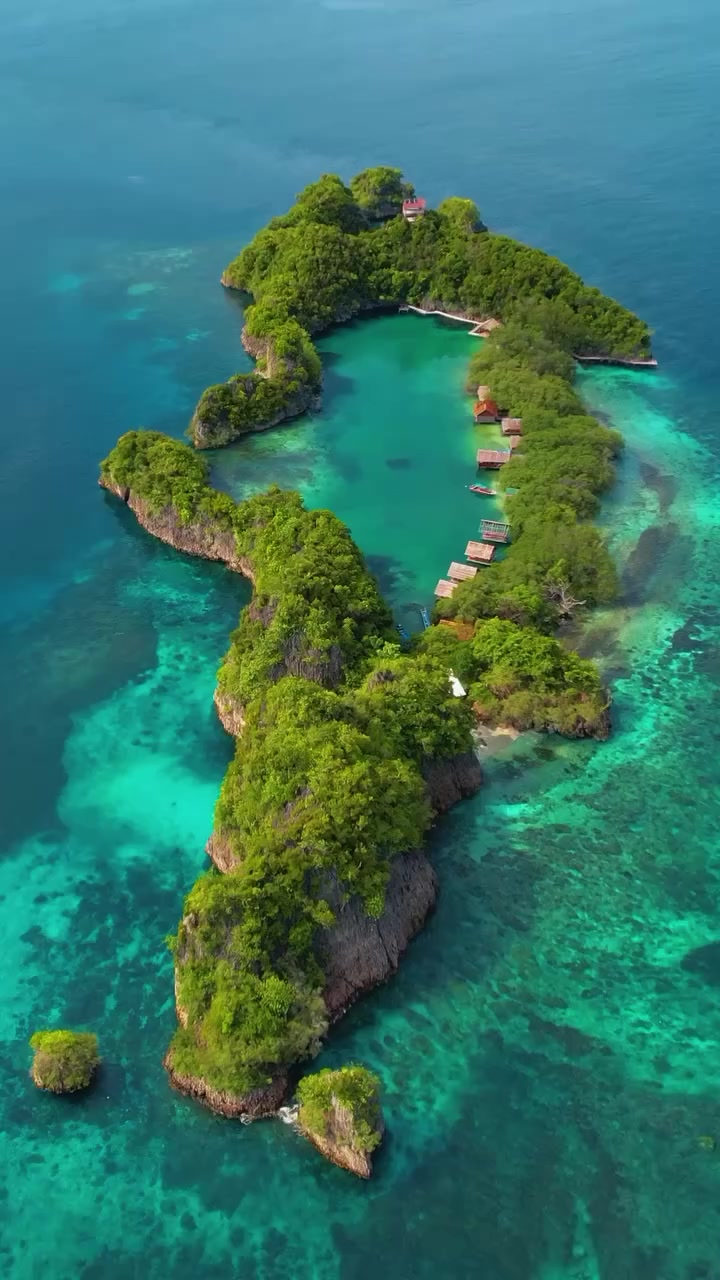
The island of Maldives in the Indian Ocean is a remote tropical paradise. It is an archipelago of almost 1,200 small coral islands spread over 90,000 kilometers. But the ones most known are not the largest or most populous but of the 150 plus islands that are uninhabited.
The making of an exclusive island
At the heart of the island’s appeal are its natural wonders. Aerial footage shows an inexplicable turquoise water, and lush greenery peppered with islands. The real attraction comes from the fact that most of these islands are still uninhabited. Atolls, or ring-shaped coral reefs, encircle placid lagoons, creating a perfect barrier reef for tourism that's tightly controlled. The islands’ signature feature is the overwater bungalow, a secluded cabin perched above the water. These unique accommodations are not just popular, they're what the overwater destinations are known for. For one, it provides the best view of the ocean, and the nearby coral reefs, but also offers privacy and close experience with the marine life too - like the fish and turtles that the corals harbor. Practicality triumphs here: grab your coffee in the morning from the comfort of your balcony as you watch the sunrise over the ocean. The islands are not short of luxury — comfortable, elaborate houseboats or dhoni boats provide an experience that's synonymous with the islands, along with the terrain, that's otherwise inaccessible and can't be commuted or traversed. The Maldives’ tourism revenue has made overwater bungalows synonymous with the islands. Yet they remain a must-see attraction, stereotypically dreamed of and photographed.
The tourism industry’s pivotal role
The tourism industry in the Maldives has grown explosively, with a recent study estimating that more than 50% of the country’s GDP relies on it. Tourism in the Maldives is a unique case. The country has a stringent policy, often mediated via long-lease agreements, that only a handful of islands are permitted for tourists, while the rest remain uninhabited. This not only gives tourists an isolated and exclusive experience, but it also ensures environmental protection. This has made the Maldivian tourism industry model a valuable case study for countries looking to balance tourism with protection. The demand for tourism in the Maldives has grown over the years. The island nation has received tourists from across the globe and industries like airline carriers like Air France, British Airways and others are trying to attract tourists using the Maldives as a stopover. This island nation has become a significant milestone in the life of a tourist. The islands have become a go-to destination for rich tourists and even as an escape destination for sometimes celebrities like Tom Cruise and Victoria Becham. Adds the touch of exclusivity.
The island’s unique architecture
One of the most fascinating aspects of these islands are the overwater bungalows. These bungalows are raised on stilts, which not only offers an uninterrupted view of the ocean but also a clean entrance. In fact, according to many, the overwater bungalows are a significant checkmark to experiencing the Maldives in its full potential. But the overwater bungalows aren’t the only marvel. The islands themselves are rich in architecture. Many resorts are built to blend in with the natural landscape. You’ll see thatched roofs, wooden structures, and other traditional Maldivian elements. The style can range from minimalist, with components of wood, to elaborate. Other architectures include wooden cabins built on stilts. The glass floorings also are a major checklist for tourists when they visit the Maldives. These glass floorings often feature a glass floor where you can relax and watch the turtles and corals underwater. The Maldivian tourism industry is known for its exclusive and luxurious experience. It is characterized by its attention to detail in luxury. Think about it as a dream come true, where the guests are treated as royalty, will majorly include an uninhabited island, a private yacht, personalized chefs and maids.
The Maldives’ underwater world
One of the most interesting factors about the Maldivian islands is the coral reefs. The archipelago encircled by coral reefs comes with a rich marine ecosystem. The coral reefs are so resistant to corrosive forces that they are among the most vibrant reefs in the world. The coral reefs are havens for many marine species, including the green sea turtles, clownfish, and blacktip reef sharks. Imagine lying in your overwater bungalow and watching sea turtles gliding gracefully under your room. The reefs are also a source of fascinating experiences, including underwater weddings and scuba diving. These reefs are said to be the natural capital of the Maldives. You can stockpile these memories even if you fail to dive and snorkel.
The threat of climate change
The Maldives is known for its pristine beaches, but it is also one of the low-lying countries most vulnerable to rising sea levels. Moreover, its tourism industry faces significant risks from climate-related hazards such as coral bleaching, which can destroy the vibrant coral reefs and marine life that attract tourists. The Maldives’ President, Ibrahim Mohamed Solih, has raised the alarming issue of climate change and called on nations to make efforts to control the release of greenhouse gases. Unless measures are taken, the islands may face serious consequences.
How to visit the Maldives
If you find yourself longing for a trip to the Maldives, planning won’t be too hard.
- Pick a budget: If you plan to travel alone, expect to spend around $2,000 to $3,000. If you're visiting with a partner, and if you want an inclusive package, you might be looking at $3,500 to $4,000 $6000.
- What to carry: If you plan to go diving, don’t forget your scuba gear and mask. Neil is a 5-time visitor. What he'd recommend, is carrying a camera — the beaches, the people, and the ocean are a treat for a photographer's eye. Also, don’t forget mosquito repellent.
- Neil advises, “Try local food. Especially the catch of the day. The places are tourist friendly, so the prices are market maneged, but be cautinous, some places might bite as much as the mosquitoes.” It is also important to note that the romantic dinners on the beach aren't romantic everytime. It is essential to respect the local culture, no matter how tourist-friendly the Maldives is.
Watch the Reel
Questions readers ask
What exactly are overwater bungalows and what makes them special?
Overwater bungalows are secluded cabins built on stilts above the water, offering guests an unobstructed view of the ocean and nearby coral reefs. They provide a unique experience of being close to marine life and offer privacy, making them a signature feature of the Maldives.
How does the Maldives control tourism to protect its environment?
The Maldives has a strict policy where only a select number of islands are designated for tourism, while the rest remain uninhabited. This is often managed through long-lease agreements, ensuring that tourism is tightly controlled and environmentally protected.
Why are overwater bungalows so popular in the Maldives?
Overwater bungalows are popular because they offer a unique and luxurious experience. They provide stunning views of the ocean, proximity to marine life, and a sense of exclusivity that aligns with the Maldives' brand as a high-end tourist destination.
What role do houseboats play in the Maldives tourism experience?
Houseboats, or dhoni boats, are an integral part of the Maldives tourism experience. They offer comfortable and elaborate accommodations, and they provide access to areas of the islands that are otherwise inaccessible, enhancing the overall luxury experience.
Can tourists expect to see celebrities while visiting the Maldives?
The Maldives is known for attracting high-profile tourists, including celebrities like Tom Cruise and Victoria Beckham. While you might spot a celebrity, it's not guaranteed, but the islands' exclusivity adds to the allure for those seeking a luxurious and private getaway.
How do overwater bungalows contribute to the Maldives' tourism revenue?
Overwater bungalows are a major draw for tourists, contributing significantly to the Maldives' tourism revenue. They are synonymous with the islands and have become a must-see attraction, driving a significant portion of the country's GDP, which relies heavily on tourism.
Related deep dives
Similar reads based on topic and creator.




Recent articles
Fresh deep dives from the latest Reels we unpacked.


Comments
Be the first to comment.