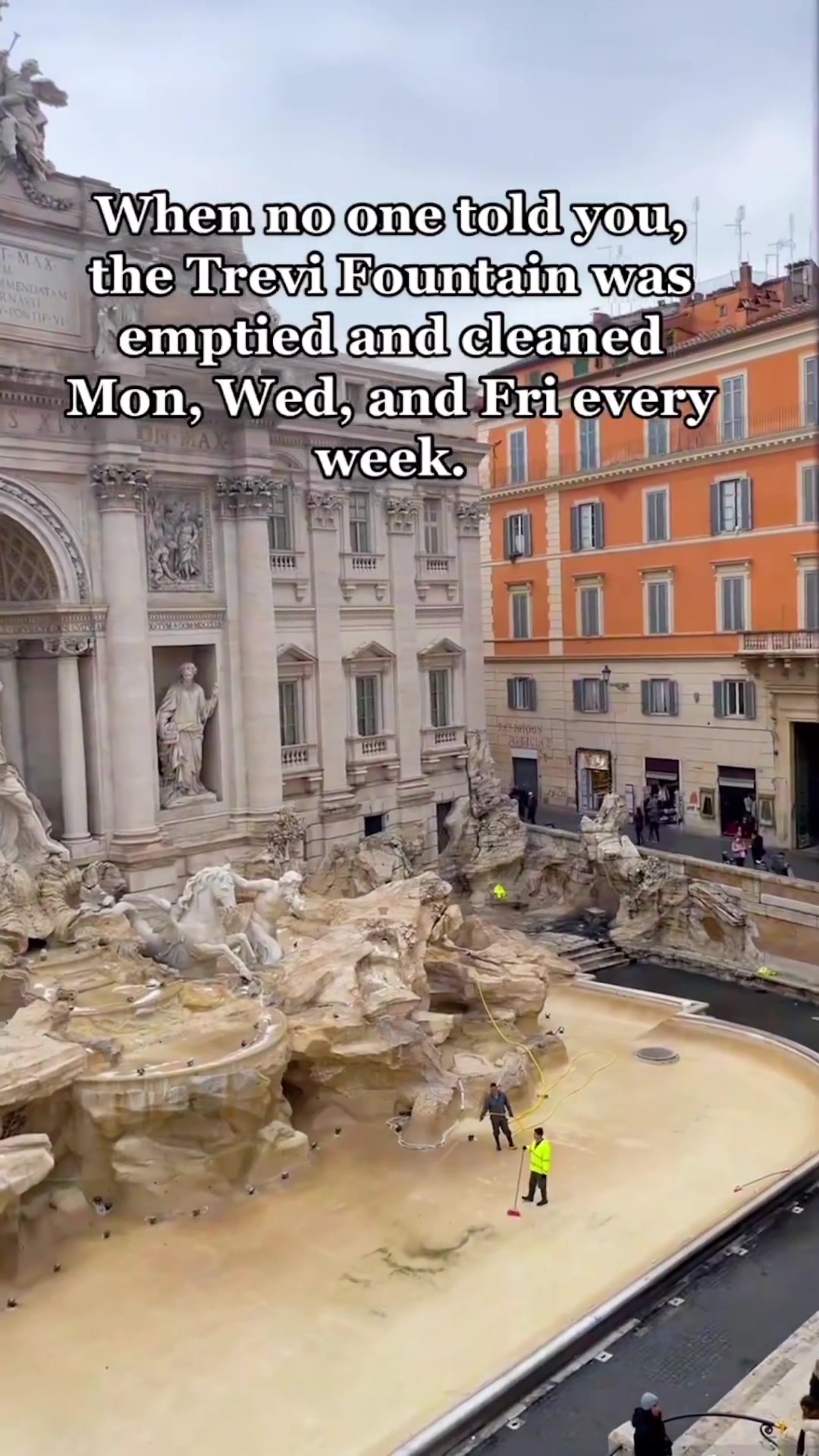
The Trevi Fountain in Rome, an iconic symbol of the city, is not just a tourist destination but also a daily maintenance project. Each week, the fountain is drained and cleaned, ensuring that visitors can delight in its beauty, even when they aren't throwing coins for a wish. The fountain's cleaning regime is a meticulous process. Every Monday, Wednesday, and Friday, workers drain the fountain and meticulously scrub its statues and basin, restoring it to its pristine condition.
The Masterpiece in Maintenance
The Trevi Fountain, designed by Italian architect Nicola Salvi, is one of Rome's most famous landmarks. The fountain's design is a stunning blend of Baroque elegance and intricate detail, depicting mythological scenes and featuring intricate carvings and sculptures. The fontana, which flows continuously, the fountain stands 25 meters high, 36 meters wide, and holds 1,500 cubic metres of water. To keep the fountain in top condition for visitors who come from all over the world, Trevi Fountain has been routinely cleaned every week for decades. While the focal point of the routine cleaning is the fountain's sculptures, the fountain is also routinely drained and cleaned to remove sediment, algae, and other debris that can build up over time. The fountain's water is drained, and all surfaces are cleaned to ensure that it remains a beautiful and sparkling attraction for visitors. The dedication to these detailed cleaning processes keeps the fountain looking pristine.
Trevi Fountain's Twin Roles
The Trevi Fountain serves not just one, but two primary functions. The first is to delight Rome's visitors with a Baroque masterpiece and offer a meditative space for reflection, as well as a star turn for any Instagram-friendly Rome itinerary. Second, the fountain collects around 1,796 coins each week; these are donated to Rome's charity Cariolio Foundation. The fountain is a beloved landmark for generations of visitors, and its routine maintenance, is the caption-less reminder that the fountain remains in top condition. The coin ritual as a side, conveys a sense of community and interconnectedness for travelers from all corners of the world. The fountain plays a vital role in Rome's local culture. It is a gathering spot for locals and tourists alike, where people come to socialise, take photos, and make wishes. The fountain's presence in Rome's cultural fabric makes it a vital part of the city's heritage, and its cleaning process ensures it remains a shining beacon for the city.
The Weekly Cleaning Ritual
While everyone marvels at the fountain's spectacular appearance, the process of keeping the fountain clean and pristine is as detailed as being able to recognize the seven gods of the Romans and Greek gods. Each Monday, Wednesday, and Friday, workers follow a meticulous routine: the fountain is first drained of water, revealing the intricate sculptures and carvings that lie beneath. The fountain is disassembled and carefully cleaned, removing algae, sediment, and other debris that can accumulate over time. Each part of the fountain is cleaned and restored, ensuring that every surface remains pristine and sparkling. The cleaning process involves several steps. First, the fountain is drained of water, and the basin is thoroughly cleaned to remove any sediment, algae, and debris. The statues and carvings are then scrubbed and polished to ensure that they are restored to their original condition. The fountain is then reassembled, and fresh water is added to the basin, ensuring that it remains sparkling and inviting for visitors.
The Mechanics of Meeting Rome's Icon
The Trevi Fountain's weekly cleaning maintains the fountain's aesthetic appeal, and is a testament to the city's dedication to its cultural heritage. By keeping the fountain in pristine condition, Rome ensures that visitors can continue to enjoy this iconic landmark for generations to come. The cleaning process is a meticulous one, involving several steps to ensure that every surface is cleaned and restored to its original condition. While the cleaning process may not be glamorous, it is an essential part of maintaining the fountain's beauty and ensuring that it remains a vital part of Rome's cultural fabric. By keeping the fountain sparkling and inviting, Rome ensures that visitors can continue to enjoy this iconic landmark for generations to come, even as weathering and corrosion threaten the fountain's condition. Every time you visit Rome, you can be assured that the fountain will be in top condition, ready to be admired and enjoyed by all who visit. The fountain's beauty and allure are preserved, and its vitality is maintained through the tireless efforts of the city's workers, and the fountain remains a beloved landmark and a source of inspiration for visitors from all over the world. The routine cleaning is a reminder of the city's dedication to maintaining its cultural heritage and ensuring that future generations can continue to enjoy this iconic landmark.
For Those Who Wish to Assist
There is no routine, guided, or tourism-oriented visit to assist from a visitor standpoint. While the beauty of the fountain is self-evident, the next time you see the fountain as captivating as ever, you'll know it's not just drawing water from the ground; it’s undergoing a rigorous caring cleaning process to remain in your travels as long as your memories about it last. But you can join in the spirit of the fountain with a few focal tips. To experience the fountain’s splendor on a deeper level, try visiting a couple of hours before or after the planned cleaning times. These quieter periods offer a more tranquil experience, allowing visitors to fully immerse themselves in the fountain's beauty and contemplate its history and significance.
- The Best Time to Visit: Romans recommend early in the morning or late in the evening, outside the peak tourist hours, to appreciate the fountain's elegant design and awe-inspiring bas-relief statues. Mondays, Wednesdays, and Fridays can be quieter due to the afternoon cleaning schedule.
- Sightseeing: You can stroll through nearby streets to enjoy more of Rome’s treasures, such as the Piazza di Spagna, Via del Corso, or Piazza Navona.
- Inspiration: For the musically inspired, the fountain might serve as the perfect backdrop for a self-composed piece. It could be a way to pay tribute to the city's rich cultural heritage. Though they have not publicly confirmed the routine, it might be worth sharing your own clips and compositions as a tributes to the fountain.
The Daily Miracle of Trevi
The Trevi Fountain’s cleaning routine is a testament to Rome's commitment to preserving its cultural heritage. The cleaning process is a meticulous one, involving several steps to ensure that every surface is cleaned and restored to its original condition. Next time you visit the Trevi Fountain, take a moment to appreciate the dedication and hard work that goes into maintaining this iconic landmark, ensuring that it remains a beacon of beauty and inspiration for generations to come.
Watch the Reel
Questions readers ask
Why is the Trevi Fountain cleaned so frequently?
The Trevi Fountain is cleaned three times a week to maintain its pristine condition for visitors. This frequent cleaning helps remove sediment, algae, and other debris that can accumulate in the fountain's 1,500 cubic meters of water and on its intricate sculptures. The routine ensures that the fountain remains a sparkling attraction and preserves its cultural heritage.
How long does it take to clean the Trevi Fountain?
The cleaning process typically takes up to four hours to complete. This includes draining the fountain, cleaning its surfaces with specialized equipment, and removing debris from the basin. The fountain is usually reopened to the public by late afternoon on the days it is cleaned.
What kind of equipment is used to clean the Trevi Fountain?
The cleaning team uses a variety of specialized equipment, including soft-bristled brushes, water, and mild cleaning solutions to gently clean the fountain's surfaces. They also use vacuums and hoses to remove debris from the basin, ensuring that all parts of the fountain are meticulously cleaned.
Can visitors watch the cleaning process?
While the article doesn't specify if visitors can watch the cleaning process, it does mention that the fountain's cleaning provides an opportunity for visitors to appreciate its beauty and significance. It's likely that visitors can observe the fountain during the cleaning process.
Who designed the Trevi Fountain, and when was it built?
The Trevi Fountain was designed by Italian architect Nicola Salvi. It was commissioned in 1732, and construction began in 1732. The fountain is a stunning blend of Baroque elegance and intricate detail, depicting mythological scenes and featuring intricate carvings and sculptures.
Is the Trevi Fountain drained to collect the coins?
The Trevi Fountain is drained primarily for maintenance purposes, not to collect coins. The fountain is drained every Monday, Wednesday, and Friday to remove sediment, algae, and other debris. While coins are thrown into the fountain by visitors, the cleaning process is focused on maintaining the fountain's condition and not specifically on collecting coins.
How does the cleaning of the Trevi Fountain impact Rome's economy?
The Trevi Fountain is a major tourist attraction, drawing millions of visitors each year. The routine maintenance of the fountain ensures that it remains a top tourist destination, contributing significantly to Rome's tourism industry. This, in turn, has a positive economic impact on the city.
Related deep dives
Similar reads based on topic and creator.



Recent articles
Fresh deep dives from the latest Reels we unpacked.




Comments
Be the first to comment.