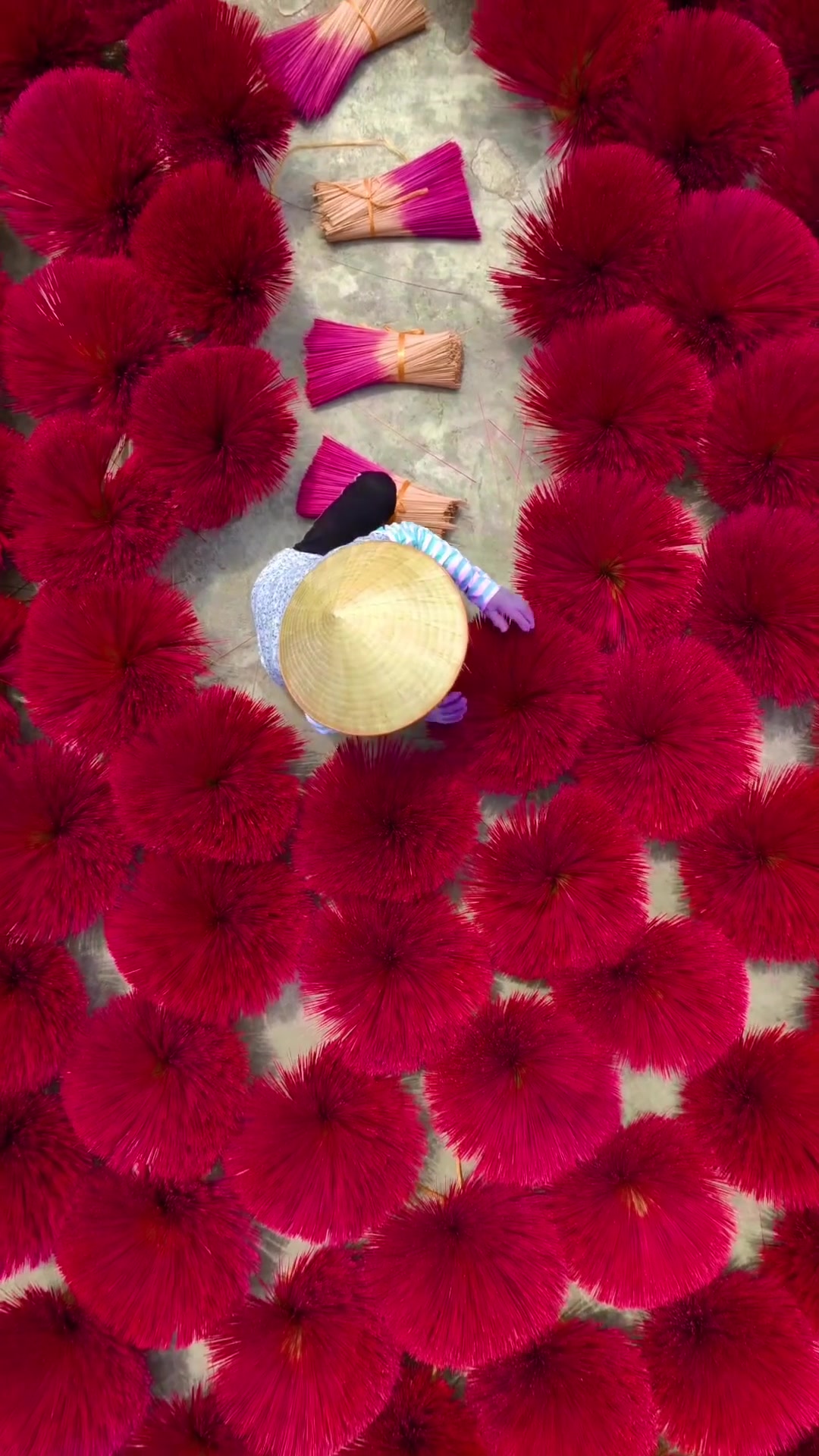
Thousands of incense sticks are arranged in concentric circles on a concrete surface, forming a mesmerizing pattern. This is the traditional process of making joss sticks in Hanoi, Vietnam, a craft that transforms simple bamboo into sacred objects for festivals like the Chinese New Year.
The Art of Incense Arrangement
In the heart of Hanoi, Vietnam, joss sticks are handcrafted with meticulous care. The process begins with bamboo, which is cut into thin, even strips to form the base of the incense. "These bundles that you see are artistically arranged in a wonderfully circular pattern." According to the caption, they are arranged into sacred bouquets. The use of a conical hat by the artisan adds a touch of tradition to the process. These hats, known as nón lá, are iconic in Vietnam and provide shade and protection while working. The circular arrangement is a distinctive feature of this craft and is often used during annual festivities to create intricate patterns reflecting the beauty of local artisanship.
The Power of Everyday Rituals
The making of these joss sticks, often referred to as a traditional Vietnamese ritual, serves as an emotional and spiritual ritual honoring ancestors and celebrating life. This process is deeply rooted in cultural practices that transcend generations. It highlights the larger trend of reviving and preserving traditional crafts in an increasingly modern world. Joss sticks are not only used as offerings but, for many, in their daily rituals around family altars and important celebrations, they are necessary part of spiritual practice.
### Tools of the Trade
The primary material for these joss sticks is bamboo, chosen for its straightness and longevity. The bamboo strips are bundled together, dyed in various colors, and arranged in a circular pattern. The visual appeal of the arrangement is key. The sticks create a visually stunning display, with each stick carefully placed to follow a radial pattern.
### Artisan Techniques
The artisans use a circular arrangement that symbolizes unity and harmony. This method requires immense patience and skill, as each stick must be placed precisely to maintain the overall pattern. The process demands meticulous attention to detail, ensuring that the sticks are evenly spaced and perfectly aligned.
### The Role of Color
The colors used to dye the incense sticks hold significant meaning, often representing different aspects of life and nature. Colors range from vibrant reds and greens to more subdued browns and whites. The dyes are derived from natural sources, such as plants and minerals, adding to the eco-friendly aspect of the craft. The careful selection and application of these colors contribute to the overall aesthetic and emotional impact.
The Sacred Art of Celebration
Joss sticks are deeply embedded in Vietnamese culture, used in various celebrations and rituals. The dazzling concentric displays at the altar are a visual feast. For many, joss sticks are used in daily rituals and significant celebrations. They are not just an element of tradition; they are a means of connecting with the past and honoring ancestors. Annual festivals such as the Chinese New Year highlight the significance of these sticks, where they are burned as offerings to ancestors and deities, transforming the physical into the spiritual. Their importance lies in their dual role of a ritual tool and a beacon of cultural heritage. These sticks are not merely decorative; they hold profound spiritual significance. Their vibrant colors and intricate arrangements create a serene and reverent atmosphere, making them indispensable in Vietnamese festivals and ceremonies.
Tributes to Heritage with Your Own Design
The beauty of traditional incense sticks transcends cultural boundaries. Creating your own sacred bouquet of joss sticks, even in a small way, can offer a sense of community with Vietnamese artisans. Here’s how to begin.
- Choose the Right Materials: Start with thin bamboo strips for the body of the joss sticks. The natural material ensures eco-friendliness and authenticity.
- Natural Dyes: Use natural dyes to color the sticks. Plant-based dyes can create a range of colors that are vibrant and safe.
- Artful Arrangement: Arrange the sticks in a circular pattern, following the traditional methods. Use the radial layout to ensure every stick contributes to the overall design.
- Celebrate with Care: Use your joss sticks in rituals and celebrations, acknowledging their significance and honoring the traditions they represent. The cultural significance of these joss sticks lies in their sacredness and the intricate patterns they form. The carefully crafted incense sticks transform the physical space into one of reverence and harmony.
Watch the Reel
Questions readers ask
What specific steps are involved in arranging the incense sticks into the circular patterns?
The artisans begin by cutting bamboo into thin, even strips. These strips are then bundled together and dyed in various colors. The most crucial step is arranging these bundles into a circular pattern, which requires immense patience and skill. Each stick must be placed precisely to maintain the overall radial pattern, ensuring even spacing and perfect alignment.
Why are conical hats, or nón lá, used by the artisans during the incense-making process?
Conical hats, or nón lá, are used by the artisans for both practical and cultural reasons. They provide shade and protection while the artisans work, which is important given the meticulous nature of the task. Additionally, these hats are iconic in Vietnam and add a touch of tradition to the process, reflecting the deep cultural roots of the craft.
What is the significance of the colors used to dye the incense sticks?
The colors used to dye the incense sticks hold significant meaning, often representing different aspects of life and nature. These colors range from vibrant hues like reds and greens to more subdued tones like browns and whites. The dyes are derived from natural sources, such as plants and minerals, which adds to the eco-friendly aspect of the craft and contributes to the overall aesthetic and emotional impact.
How do the joss sticks contribute to the emotional and spiritual aspects of Vietnamese culture?
Joss sticks play a crucial role in Vietnamese culture, serving as a means of honoring ancestors and celebrating life. They are used in daily rituals around family altars and during significant celebrations. This craft is deeply rooted in cultural practices that transcend generations, highlighting the larger trend of reviving and preserving traditional crafts in a modern world.
What kind of events or celebrations are joss sticks commonly used in, and how are they displayed?
Joss sticks are commonly used in various celebrations and rituals, including annual festivals like the Chinese New Year. They are often displayed in dazzling concentric patterns at altars, creating a visually stunning display. These displays not only serve as offerings but also as a means of connecting with the past and honoring ancestors, emphasizing the sacred art of celebration in Vietnamese culture.
Related deep dives
Similar reads based on topic and creator.


Recent articles
Fresh deep dives from the latest Reels we unpacked.


Comments
Be the first to comment.