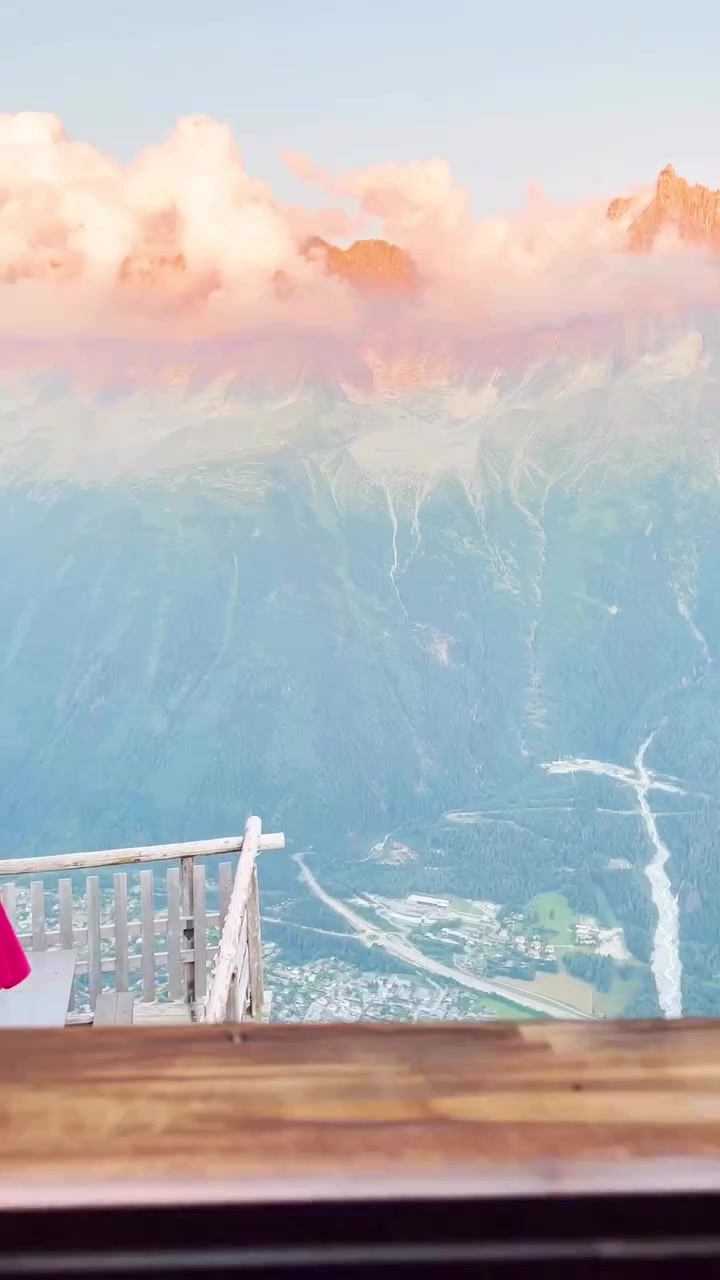
where mountains top the list of sights
The Tour du Mont Blanc (TMB) is a walking route that welcomingly greets hikers from around the world — and a look at why this experience is an outdoor enthusiasts' dream. The hike covers approximately 170 kilometers, taking in parts of Switzerland, Italy, and France. Unlike a big city adventure or a visit to a populated beach, the Tour du Mont Blanc covers wide open natural terrain — and nothing to stop your gaze from the mountains. "How incredible these views are," one creator was driven to exclaim, tagging another hiker and asking fans for their takes.
A classic, panoramic, international hike
The Tour du Mont Blanc is the essence of a long-distance hike, crossing through three countries with a total length of 170 kilometers. The hike typically takes 7 to 11 days to complete, depending on the number of rest days and how many overnights are spent in local lodging. Unlike other hikes that may be located in one country or region, the Tour du Mont Blanc encompasses a variety of landscapes, including forests, lakes, snow-capped peaks, and alpine meadows. It offers a panoramic experience that few other hikes can match. This trail's comprehensive coverage of varied topography means that hikers will experience changes in elevation; maximums are steep and their rewards are sweeping views with fresh air. The hike's international route adds a cultural dimension to the experience. Travelers will pass through quaint villages and towns in Switzerland, Italy, and France, each with its own unique character and charm. This can add layers of experience — everything from local cuisine to different languages to various kinds of mountain scenery.
Beyond visuals: the physical and cultural journey
Gearing up for the trail
Hiking the Tour du Mont Blanc requires a specific set of skills and gear. The route is well-marked, and there are plenty of resources available to help hikers plan their trip. However, the terrain can be challenging, with steep ascents and descents. Before embarking on the hike, it is important to be in good physical shape and to have the right gear, including sturdy footwear, appropriate clothing, and a good map or GPS device. There are different stages of the hike where staying overnight is necessary, so planning where to lodge is important. Thankfully, there are several options, from camping to mountain huts to local accommodations. The terrain might not be easy, but the rewards are well worth it. The physical journey of the Tour du Mont Blanc is challenging, but it is also incredibly satisfying. The sense of accomplishment that comes from completing such a long and demanding hike is unmatched. Along the way, hikers will encounter a variety of landscapes, from dense forests to rocky ridges to alpine meadows. The views from the summits are breathtaking, and the experience of hiking through the high mountains is one that will stay with hikers for a lifetime. The touristing aspect of hiking through the alpine area is a big part of the overall experience; the combination of physical challenge and mental relaxation are a unique delight.
The villages and towns
The Tour du Mont Blanc is a journey over three countries, and because of that, there is a lot to see and do along the way. The trail passes through several charming villages and towns, each with its own unique character and charm. In Switzerland, hikers will pass through villages like Chamonix and Les Houches, while in Italy, they will visit towns like Courmayeur and Val Ferret. The pace of hiking is relatively slow, which gives you time to stop in any town of interest. The villages and towns along the Tour du Mont Blanc are not just stops for lodging; they are an integral part of the experience. The local cuisine is a highlight of the hike, and hikers will have the opportunity to sample a variety of dishes, from hearty Swiss fondue to rich Italian pastas. The region's culinary traditions are a delight the whole journey long. The villages also offer a glimpse into the local culture and history, with many having their own unique traditions and customs.
Adapting to sudden weather changes
One of the unique features of the Tour du Mont Blanc is its constantly changing landscapes. While this makes for a visually stunning hike, it also means that hikers must be prepared for a variety of weather conditions. The trail passes through a range of elevations, from lowland forests to high alpine peaks, and the weather can change rapidly. It's not uncommon to experience all four seasons in a single day. This can make the hike more challenging, but also more rewarding. Hikers who are prepared for the changing weather will be able to enjoy the hike to the fullest. This is part of the draw for many hikers: the challenge of hiking in unpredictable and ever-changing conditions.
Planning your Tour
To get the most out of the TMB, it is important to plan ahead and select the right route and equipment. The hike can be completed in a variety of ways, with options for different levels of difficulty and duration. Before embarking on the hike, consider the following: *** Mapping your path: There are several route options available, ranging from the traditional Tour du Mont Blanc to more off-the-beaten-path alternatives. Choose the one that best suits your fitness level and hiking experience. The trail has a lot of popular destinations to rest and resume but the traditional approach is highly recommended. Go with a route that maximizes time in alpine terrain, lakes and waterfalls. Specific routes mean a much better preparation for the terrain. *** Pack for the weather: The weather in the mountains is unpredictable, so it is important to be prepared for all weather conditions. Pack a variety of clothing layers, rain gear, and sturdy footwear. A good backpack and tent or other shelter is required, even if you are camping. *** Time your hike: The best time to hike the Tour du Mont Blanc is from June to September, when the weather is mild and the days are long. However, it is important to be prepared for cooler temperatures and potentially shorter days, depending on the elevation and location. Research what the typical weather is for the time of year you plan to hike and plan accordingly. Rain gear, plenty of layers, and appropriate footwear will serve you best at higher elevations. There are few things better than the feeling of resting in a village after a long day of hiking, and the Tour du Mont Blanc offers numerous options for rest and relaxation. Plan a few nights in some of the most charming mountain villages around. The experience is different from simply hiking past these villages and towns.
The call of the mountains
The Tour du Mont Blanc is more than just a hike; it is a journey through some of the most stunning and diverse landscapes in Europe. The combination of physical challenge, mental relaxation, and cultural immersion makes it an experience that few other hikes can match. Whether you are a seasoned hiker or a novice, the Tour du Mont Blanc is an adventure that should be on every outdoor enthusiast's bucket list. For those that enjoy this kind of adventure, the Tour du Mont Blanc is an experience that will stay with you for a lifetime.
Watch the Reel
Questions readers ask
What exactly is the Tour du Mont Blanc and what makes it special?
The Tour du Mont Blanc (TMB) is a 170-kilometer hiking route that traverses through Switzerland, Italy, and France. It's special because it offers a unique combination of stunning mountain views, diverse landscapes, and a cultural experience as it passes through charming villages and towns in three different countries.
How long does it typically take to complete the entire hike?
The hike typically takes 7 to 11 days to complete. This can vary depending on how many rest days you take and how many overnights you spend in local lodging.
What kind of gear and preparation do I need for the Tour du Mont Blanc?
You'll need sturdy footwear, appropriate clothing, and a good map or GPS device. It's also important to be in good physical shape as the terrain can be challenging. Planning where to stay overnight is crucial, with options ranging from camping to mountain huts to local accommodations.
What kind of landscapes and views can I expect on the Tour du Mont Blanc?
The hike offers a variety of landscapes, including forests, lakes, snow-capped peaks, and alpine meadows. You'll experience changes in elevation with steep ascents and descents, but the rewards are sweeping views and fresh air. The panoramic experience is something few other hikes can match.
Can I complete the hike without any prior hiking experience?
The Tour du Mont Blanc is challenging, with steep ascents and descents, so it's important to be in good physical shape. While you don't need to be an experienced hiker, you should have a good level of fitness and be prepared for the demands of a long-distance hike.
What are some of the cultural experiences I can expect along the way?
The hike passes through quaint villages and towns in Switzerland, Italy, and France, each with its own unique character and charm. You'll get to experience local cuisine, different languages, and various kinds of mountain scenery, adding layers of experience to the journey.
Related deep dives
Similar reads based on topic and creator.
Recent articles
Fresh deep dives from the latest Reels we unpacked.

Comments
Be the first to comment.