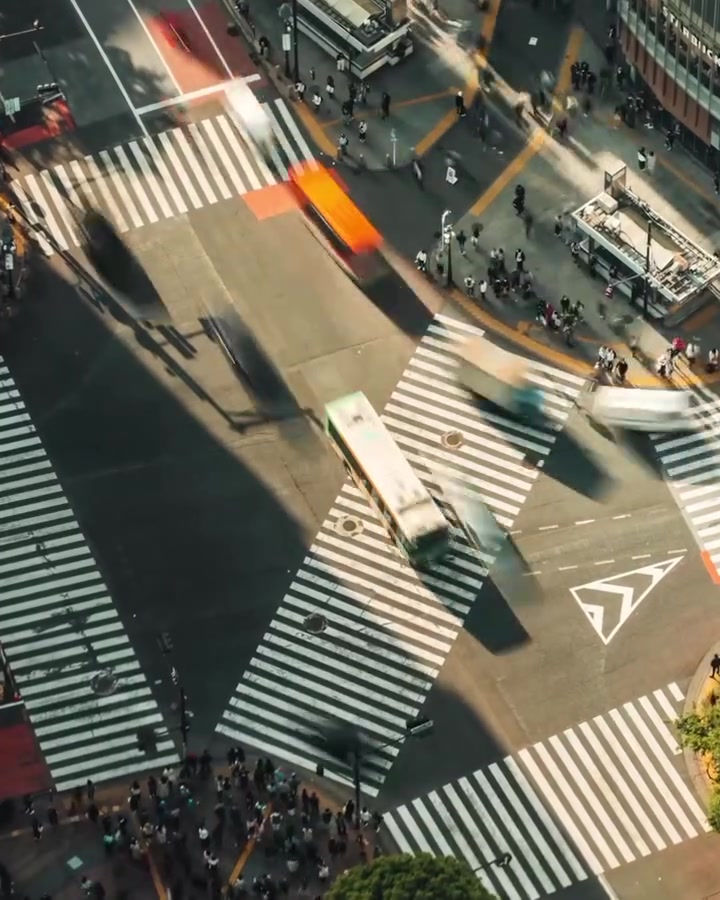
Aerial videography captures the bustling rhythm of a Tokyo intersection, as pedestrians weave between crosswalks, creating an urban ballet of motion and stasis. This panoramic view doesn't just depict a common scene in Tokyo; it showcases the city's unique urban design and energy. The intersection's geometry and the flow of people reveal the intricate choreography of urban mobility. Tokyo intersections are unique vantage points of urban planning. The presence of multiple crosswalks and pedestrian paths allows viewers to observe patterns of human movement, providing a wider frame for understanding pedestrian mobility.
An Intersectional View of Tokyo
Tokyo's intersections are distinctive for their unique design. The city's planning allows pedestrians to cross at multiple points within an intersection, fostering a more fluid and less rigid traffic system. This design allows for a greater flow of people, reducing congestion and crowding on sidewalks and streets. The "Shibuya crossing," though not explicitly in the video, is one of the most famous intersections in the world. Tokyo's intersections are also known for the intersections in various parts of Tokyo and how they all have unique features. A pedestrian frees himself to cross in any direction or way that suits him. Pedestrians have the freedom to cross in any direction they please. Tokyo's intersections reflect the city's unique urban planning, which prioritizes pedestrian flow. The blurred effect of pedestrians in the video showcases the livelihood of Tokyo's urban environment. Pedestrians' movements create a sense of motion within the stillness of the urban landscape, reflecting the city's vibrant energy. The blurred effect captures the constant motion and activity that characterize Tokyo's urban environment. The blurred effect of the pedestrians Symbolizes the velocity of Tokyo's urban life, which is constantly in flux. From the perspective of such visuals, one can see the flow of thousands of people, the rhythm of life in Tokyo. It's not just a view; it's a testament to the city's meticulous urban planning.
Aerial Perspectives
Tokyo's intersections have unique perspectives. They are a common subject for aerial videography. The aerial view allows viewers to observe the overall flow of traffic and pedestrians. The motion blur effect created by pedestrians' movements adds to the dynamic nature of the scene. This perspective showcases the city's urban design and highlights the harmony between pedestrians, vehicles, and the built environment. The pattern of movement and flow of people is important. The aerial view allows viewers to observe the overall flow of traffic and pedestrians. Adding to the dynamic nature of the scene is the motion blur effect created by the pedestrians' movements. The aerial perspective showcases the city's urban design and highlights the harmony between pedestrians, vehicles, and the built environment. Pedestrians pass through crosswalks like the tides of a river, as the flow of movement transforms the scene.
The Poetry of Pedestrian Motion
One of the distinct parts of Tokyo’s cityscape is the Poetry of Pedestrian Motion. People exhibit a sense of purpose in their movements, whether they are walking briskly, ambling, or standing, indicating how they use intersections. Pedestrians' paths often cross multiple directions as cars, scooters, and taxis navigate around people.
The Intersection as a Living Canvas
The Intersection as a Living Canvas is another distinct part of Tokyo’s cityscape. Pedestrians at crosswalks create a sense of visual interest and cultural fluidity with their movements. Pedestrians moving in a seemingly organic fashion is quite different from those strictly adhering to rules. While the intersection appears chaotic at first glance, pedestrians navigate seamlessly through the crossing paths.
Navigating Tokyo's Intersections
Tokyo intersections are a sight to behold, but navigating them requires a bit of patience and understanding. To get through Tokyo’s intersections, pedestrians must know the rhythm of the traffic, which can be daunting for newcomers. Walking briskly and being aware of your surroundings will allow you to navigate intersections more easily. Stay alert and follow the flow of traffic to navigate intersections safely and smoothly. Always:
- Stay Alert: The basic rule for pedestrians on the street. Always stay alert and aware of your surroundings, especially at intersections. Look both ways and follow the flow of the crowd.
- Walk Briskly: This will allow you to move with the flow of traffic and avoid any potential obstacles. If you're unsure, don't move at all. Catastrophies are caused by indecision and recklessness. . Stay on your side of the path, and use the crosswalk to proceed to the other side. Be aware of any blind corners and intersections before crossing.
- Patience: If you're unsure, don't move at all. Catastrophies are caused by indecision and recklessness.
- Follow the crowd: If you’re still unsure, follow the crowd. Their direction will likely lead you in the right direction. Tokyo's intersections are a fascinating microcosm of urban life, offering a glimpse into the city's meticulous urban planning and vibrant energy. The blurred effect of pedestrians in the video is a reflection of the constant motion and activity that characterize Tokyo's urban environment. Whether you're a local or a visitor, navigating Tokyo's intersections requires a bit of patience and understanding.
Watch the Reel
Questions readers ask
What makes Tokyo's intersections so unique compared to those in other cities?
Tokyo's intersections stand out due to their design, which allows pedestrians to cross at multiple points. This creates a more fluid traffic system and reduces congestion. The city's urban planning prioritizes pedestrian flow, giving people the freedom to cross in any direction they please, which is quite different from the rigid, single-crosswalk systems seen in many other cities.
How does the aerial view enhance our understanding of Tokyo's urban environment?
The aerial view provides a panoramic perspective that reveals the intricate choreography of urban mobility. It allows viewers to observe the overall flow of traffic and pedestrians, highlighting the harmony between different elements of the city. The motion blur effect created by pedestrians' movements adds to the dynamic nature of the scene, showcasing the city's vibrant energy and meticulous urban planning.
What is the significance of the blurred effect of pedestrians in the video?
The blurred effect of pedestrians in the video symbolizes the velocity and constant motion of Tokyo's urban life. It reflects the city's vibrant energy and the continuous flow of people, transforming the urban landscape into a dynamic scene. This visual representation emphasizes the rhythm of life in Tokyo and the city's unique urban design.
Can I visit the Shibuya Crossing, and is it as impressive as it looks in videos?
Yes, the Shibuya Crossing is a must-visit for anyone in Tokyo. It is one of the most famous intersections in the world and is known for its unique features. While the video captures the essence of Tokyo's intersections, experiencing the Shibuya Crossing in person will offer a more immersive experience of the city's urban planning and pedestrian flow.
Are there any other notable intersections in Tokyo besides the Shibuya Crossing?
Absolutely, Tokyo has many notable intersections beyond Shibuya Crossing. Each intersection has unique features that contribute to the city's overall urban design. These intersections offer different perspectives on Tokyo's urban planning and the flow of people, making them all worth exploring.
How does Tokyo's urban planning prioritize pedestrian flow, and what benefits does it bring?
Tokyo's urban planning prioritizes pedestrian flow by allowing multiple crossing points within intersections. This design fosters a more fluid traffic system, reducing congestion and crowding on sidewalks and streets. The benefits include greater pedestrian mobility, less rigid traffic patterns, and a more harmonious interaction between pedestrians, vehicles, and the built environment.
How does the aerial view of Tokyo's intersections compare to ground-level views?
The aerial view of Tokyo's intersections provides a broader, more comprehensive perspective that reveals the overall flow of traffic and pedestrians. In contrast, ground-level views offer a more intimate experience of the urban environment but may not capture the full scope of the city's urban design and the harmony between different elements. The aerial view highlights the dynamic nature of the scene, showcasing the city's vibrant energy and meticulous urban planning.
Related deep dives
Similar reads based on topic and creator.



Recent articles
Fresh deep dives from the latest Reels we unpacked.



Comments
Be the first to comment.