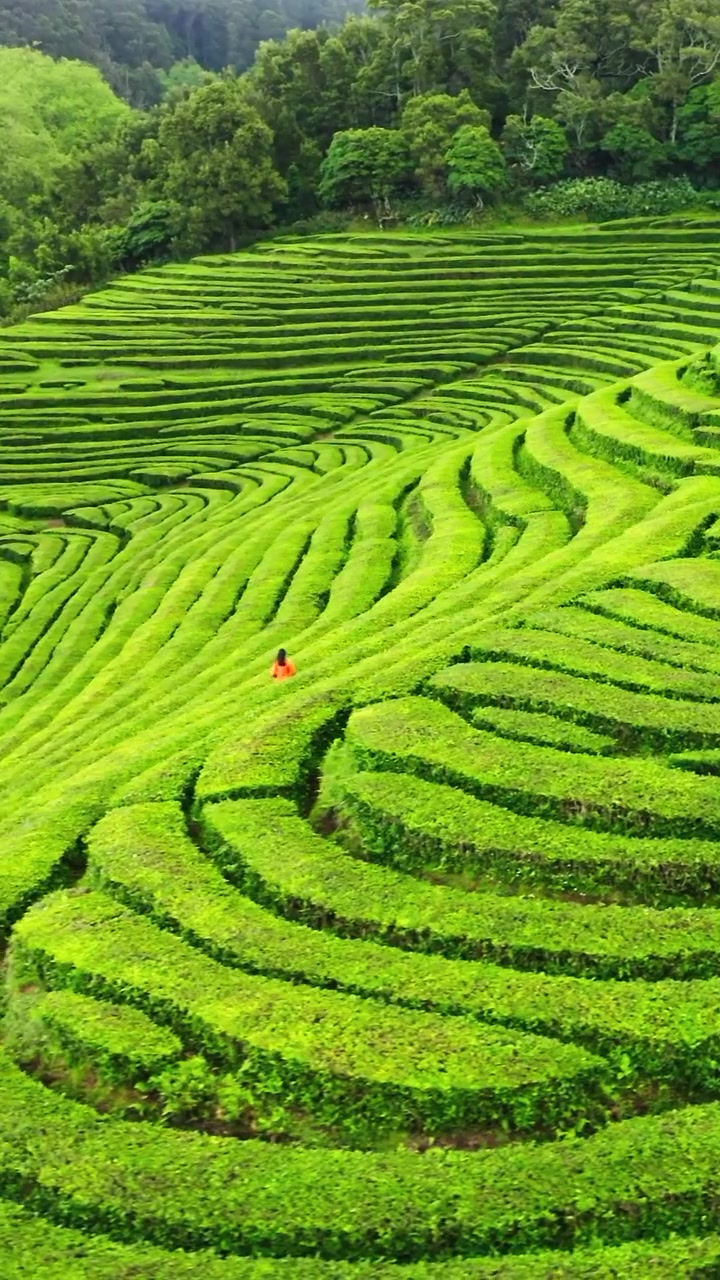
Basking in the vibrant green hues of terraced rice fields, Brunoazera walks through a living tapestry of agriculture and nature. This scene isn't just visually stunning but is also a testament to the intricate and labour-intensive process of cultivating rice, especially across uneven landscapes.
The Terracing Technique
Terrace rice fields are built into the sides of hills and mountains to form a series of steps. Terraces work by trapping water and soil, preventing erosion, and making the most of limited, often steep, land. These fields create an intricate landscape: each level is typically separated from the ones above and below by walls of earth, which allow water and nutrients to flow gradually through the system. While terraces are found in varied rice-growing regions, they are particularly iconic in Southeast Asia, an area where rice is a staple and the land often steep. The intricate structure of these fields creates an illusion that could be mistaken as an agricultural maze, transforming the verdant hills into a vibrant canvas of green and earthy hues. The terraced fields featured in the video are reminiscent of the Yukai Mountain Rice Terraces, which are less than 100 kilometers from the city of Hangzhou, with some experts believing they might date back as far as 2,000 years.
A Scaling Issue
Southeast Asia’s rice culture has long been shaped by landscape and climate. Climate change and technology are pushing agrarian communities to adapt. Rainfall patterns are altering in unpredictable ways. Localized flash floods, as well as droughts are emerging trends. Many of the world's most famous rice terraces, including the beautiful Yuanshi Village in China, are disappearing. But technology’s reach into rice paddies is localised, particularly for labour-intensive terracing. Wealthier farmers can access mechanised harvesting, but the cost often reflects the tech. For rural communities dedicated to this agricultural method, revenue comes from harvesting small, local batches twice a year. Technology and the climate schemes around it can be a taxing issue.
The Art and Craft of Rice Terrace Maintenance
Seasons of Labour
Terraced rice fields demand a year-long commitment. The rice growing cycle begins with planting seedlings in February, then harvesting at around August or September. Terraces are later drained to preserve the fields. Seasonal demand and environmental protection are major roadblocks for the growth of the sector. Maintaining rice fields is also a participatory activity, a group effort in many rural Asian communities. This collective labour offers each participant an all-inclusive crop share.
Geometric Patterns
The geometric patterns of terraces are enforced by human hands, requiring an eye for spatial proportioning and patience. Terraces follow the slope of the hill, and each step is precisely levelled to ensure uniform water distribution. Terraces are designed to be narrow and long, allowing for easy access and labour mobilisation. The most defining characteristic of terrace planting is that terraces are usually ‘planted’ in series, making them versatile enough for Earth-works even in the meteorological uncertainty of the coming decades.
The Colour Factor
Terrace rice fields are as much a visual aesthetic as they are an agricultural engineering feat. Their vibrant green color against the backdrop of mountains and hills is not only a stunning sight but also a testament to the labour and patience involved in their creation. The different shades of green indicate the various stages of rice growth, from the tender shoots of newly planted seedlings to the lush, mature plants ready for harvest. The contrast of the green fields against the earthy terraces and the sky above creates a harmonious blend of colours that is both soothing and invigorating. This fine-tuned landscape, where geometry and nature intertwine, makes terraced rice fields a unique and captivating sight.
The Art of Terracing Tea
Brunoazera explores Gorreana’s breadth and diversity. Tea is a mainstay of Portuguese culture and heritage. For over 200 years, Gorreana has used flowing water from nearby streams to keep the soil hydrated and fertilized. Gorreana also applies modern techniques to improve efficiency, including better irrigation and pruning. This "meets in the middle" approach is why Gorreana stands out. It’s possible to enjoy nature without sacrificing the authenticity of the agricultural experience. But terraced rice fields aren’t the only example of this unique intersection of nature, geometry, and agriculture. Portugal’s Gorreana Tea Plantation provides a different take on the human-made agricultural landscape. Founded in 1883, it features lush green tea fields and landscapes that resemble terraced rice fields, providing a different angle from Southeast Asia. The tea plantation’s meticulous process involves hand-picking and hand-crafting the leaves and even historically involved transport by oxen, thus providing a unique blend of old-world charm and modern agricultural techniques.
How to Visit a Tea Plantation
Everyone can get the most out of touring a tea plantation, especially Gorreana. * Arrive Early: Start your tour early in the day and plan to stay for a while. This gives you ample time to leisurely walk through the landscapes and absorb the serene atmosphere of the plantation, and often see the early morning harvesting. * Guided Tours: Typically, independent exploration is fine, but you might miss deeper insights. The plantation offers guided tours to give visitors an in-depth understanding of the various tea varieties, harvesting, and production processes. * Tasting Sessions: Sample the exquisite teas cultivated at the plantation. This experience heightens the appreciation of the tea-making craft’s complexity. And do note recommendations or tips, they often offer advice on how best to brew, and the best climate-controlled containers or repurposed wine bottles. * Ask Questions: Do not shy away from asking questions. The knowledge that the staff offers can help enhance understanding.
Watch the Reel
Questions readers ask
What makes terraced rice fields in Southeast Asia unique?
Terraced rice fields in Southeast Asia are unique due to their intricate design and the way they transform steep, often uneven landscapes into a series of perfectly aligned, verdant steps. This not only creates a visually stunning spectacle but also plays a critical role in the region's food security by maximizing the use of limited land and preventing erosion.
How do terraced rice fields work to prevent erosion?
Terraced rice fields work by creating a series of steps or levels on the sides of hills and mountains. These terraces have walls of earth that separate each level, trapping water and soil and allowing it to flow gradually through the system. This design helps to prevent erosion by slowing down the flow of water and distributing it evenly across the landscape.
What are the challenges faced by communities maintaining terraced rice fields?
Communities maintaining terraced rice fields face several challenges, including the labor-intensive nature of the work, unpredictable rainfall patterns due to climate change, and the high cost of accessing mechanized technology. These factors can make it difficult for rural communities to sustain their traditional agricultural practices.
What is the traditional cycle of rice cultivation in terraced fields?
The traditional cycle of rice cultivation in terraced fields begins with planting seedlings in February, followed by harvesting around August or September. After harvesting, the terraces are drained to preserve the fields for the next cycle. This process requires a year-long commitment and is often a collective effort in many rural Asian communities, ensuring that each participant receives a share of the crop.
What are the geometric patterns of terraced rice fields?
The geometric patterns of terraced rice fields are carefully designed to follow the slope of the hill, with each step precisely levelled to ensure uniform water distribution. These terraces are typically narrow and long, allowing for easy access and labor mobilization. The layout of the terraces is often in series, making them versatile enough to adapt to meteorological uncertainties, allowing for the Earth-works.
Related deep dives
Similar reads based on topic and creator.


Recent articles
Fresh deep dives from the latest Reels we unpacked.


Comments
Be the first to comment.