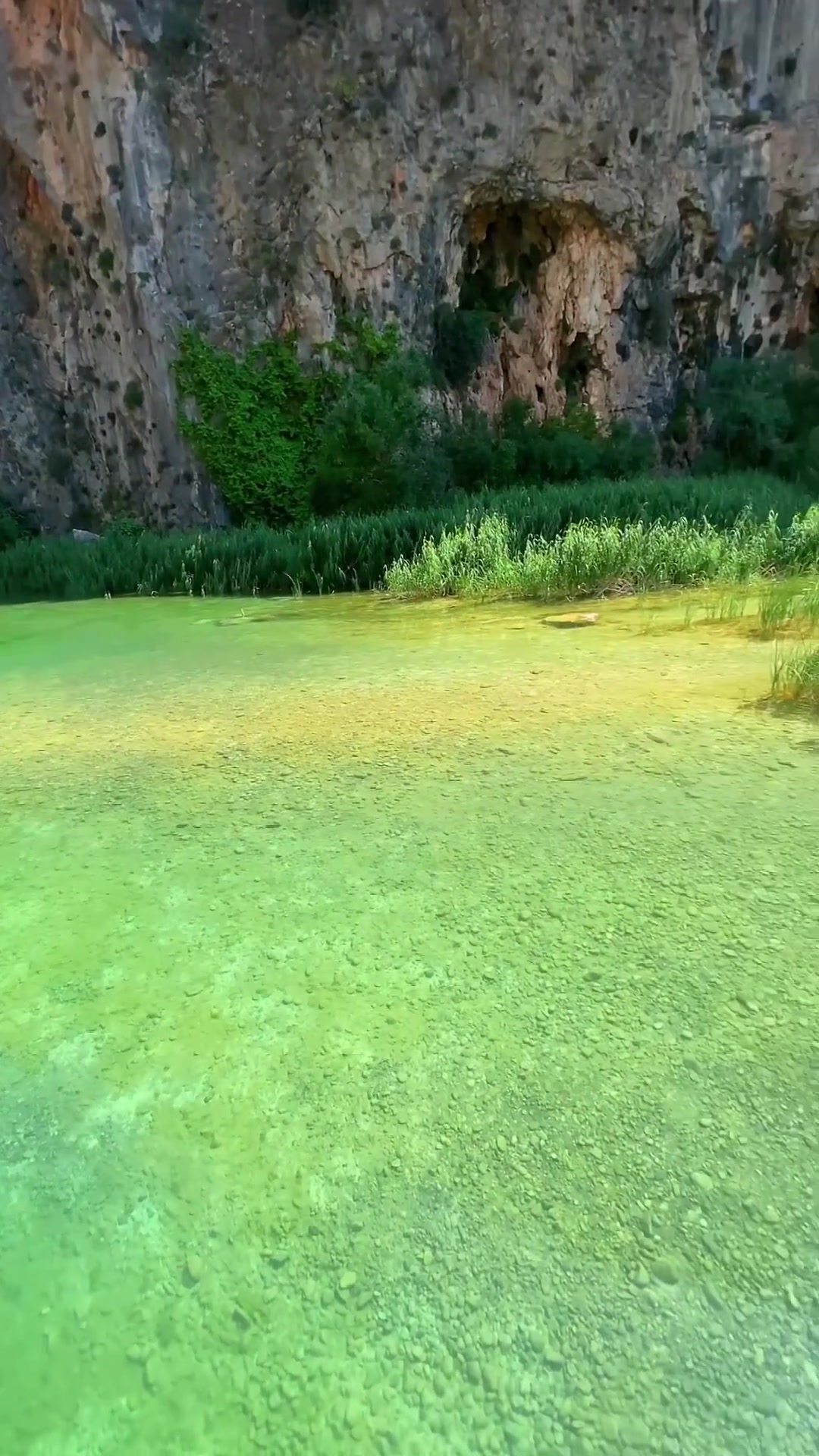
Hidden just a dive from a secluded cliffside trail, a watery oasis lay in a vivid, almost neon green, framed by rugged rocks and a thicket of trees and foliage. This was a natural pool, an unusual swimming spot — but with the right conditions, they can be discovered nearly anywhere.
The Quiet Lure of the Green Lagoon
The natural appeal of this pool was more than skin deep. Natural pools form in places where water is trapped but constantly filtered. This one likely had one of those geological quirks — a sinkhole, a fault, or an underground spring that directed fresh water through rocks, filtering the water as it pooled —: When a natural pool emerges, it creates more than a route to backcountry swimming. It's a complete sensory escape. As the swimmer in the video showed, the pool revealed layers as it was explored. The water had a crystal clarity and vibrant green color from the minerals in the surrounding rocks. There are the mineral deposits, which add to the unique color and create an ambience that pools in a backyard or community club can't capture. Its location enhanced this, being that it would take at least a trek to find it first.
It's Not the Same as a Man-Made Pool, But Both Have Their Place
The pool was a sharp reminder of the limits that built environments hold on nature. Inside of a designed pool, the water doesn't do anything of its own power — the pump runs continuously and the chlorine can be a problem for skin, hair, and eyes. The minerals, renewable water, and ecosystem — both above and below the smooth surface — make natural pools both a unique experience for the senses and a uniquely low-maintenance activity. Natural pools are not just for a dip.
The Minerals that Make the Marvel
The first thing that caught most eyes was the vibrant color. Without a filter system, natural pools take time to fill yet stay clean. Not all natural pools have that color, but many do. The green color in this instance is from copper deposits: "A lot of times...it might be algae — but green copper is also a possibility," explained one expert. The pool was likely colored copper sulfate mineral deposits. In their own right, natural pools are small ecosystems — some even hold mangroves and salt marshes. The distinctive color of this pool came from its unique natural filter system.
The Trek to Natural Luminosity
There are even hidden natural pools in highly built urban areas — NYC has salt water pools and Tokyo has mangrove forests in their parks — but the usually the best examples of these natural pools require a trek to get to. Of course, that means you can't just look up "pool nearest me" and go for a dip. Find the nearest hiking trail and you might find a natural pool near you. Trust but verify — if something is advertised as a natural pool, that might just be a built pool that is being advertised as such. It's less about what you are looking for on a map and more about what you can find by exploring.
The rare natural phenomena
The pool showcased variations on what makes a natural pool a natural pool. The color was from a combination of water depth and copper deposits, but this isn't the only oddity found around pools. The water itself was cool. The natural pool's temperature is generally cooler compared to a manmade pool, making it a refreshing escape in the summer. Some natural pools and lagoons can be hotter than man-made pools. The color was unique — and it wasn't the only variation. Calcium deposits, algae, and iron, gold, and silver can all combine to create stunning color. There are some pools that, while not necessarily natural, are actually built on top of historical mining sites. The historic mining sites also have pools that are tinted with gold and silver — which is marketed as the gold or silver spring.
The Joys of the Brisk Breeze
Natural pools are an ideal place, even with their varying sizes and ranges of aesthetic. Some are small enough to call a puddle. Some are big enough to call a lake. Some natural pools even have wooden platforms and steps to get into the pool. This was a delicate balance in the middle — it was fairly large, with plenty of space to dive in and swim. The swimmer was able to demonstrate the depth of the pool. The swimmer didn't have to stop for breath until leaving the pool. There was a natural breeze, given the cliff behind the pool. This particular pool even had crystal-clear water, which made the whole experience feel serene and dreamlike.
The relaxation to be found
Natural pools are typically found in remote areas and areas that offer a natural feeling. The pool itself was soothing, relaxing, and enjoyable; you could even think of it as a retreat. There are some pools found inside remote areas and cities that are built man-manually for the purpose of relaxation. But the natural pools are unique in that they provide a secluded retreat away from the craziness of man's world. The water itself was soft, smooth, and even therapeutic. This was a refreshing change from the buoyant chemicals found on man-made pools. There are some pools that even have mineral water. The mineral water is beneficial to the body in many ways — some even boast that it can relieve and relax the body. This was not a spa, but it was still all of these things.
A Few Weaknesses
Most natural pools don't have the amenities of a public pool. Natural pools don't have lifeguards or any other amenities. Some natural pools are designed for more than just swimming, but the majority of natural pools are best used for swimming. The natural pool wasn't necessarily the safest place to swim. The natural pool was not man-made or regulated, and it was important to be cautious, aware, and make sure that the area of the park was safe. To be safe, you should never swim alone, always make sure you have swimming gear, and always make sure you have a way to get out if you are in an area that is dangerous. Also, make sure to clean up after you leave. Natural pools are a place for everyone to enjoy, so make sure that it is clean.
Finding a Natural Pool for Yourself
If you don't know where to start, you can always follow the cues of the coast. Whether you are a local or a visitor, it's important to consider the natural swimmers, and you might be surprised at what you find. It's important to make sure to respect any signs or closures that might be there. There are some natural pools that are closed for a reason. After all, this can be dangerous. There are even some natural pool areas that are completely shut down.
- What to wear: There's no typical natural pool dress code. Whether you're swimming or just wandering, wear what feels comfortable.
- What to bring: Pack light snacks and sunscreen. Most natural pools don't have lifeguards or snack bars.
- How to get there: There's a chance that the pool could be a bit of a trek from the city. Unless you're a local, finding these swimming spots will take a bit of planning and time-off. The pool had a beautiful contrast between the bright green water and the rocky edge — rock and water, smooth and sharp. It was a reminder that the beauty of nature was not only a beautiful sight, but it also had a real and powerful effect.
Watch the Reel
Questions readers ask
What exactly makes a pool 'natural'?
A natural pool is formed when water is trapped in a specific location and filtered by the surrounding environment. This could be due to geological features like sinkholes or underground springs, which direct fresh water through rocks, naturally filtering it as it pools.
How does the water in a natural pool stay clean without chemicals?
Natural pools stay clean through a combination of constant water flow and filtration by the surrounding environment. The water is naturally filtered through rocks and minerals, which remove impurities and keep the water clean and safe for swimming.
Are there natural pools in urban areas?
Yes, there are natural pools in urban areas, but they are often less common and harder to find than those in more rural or wilderness settings. For example, NYC has saltwater pools and Tokyo has mangrove forests in their parks. However, most natural pools require a bit of a trek to find.
Why do some natural pools have such vibrant colors?
The vibrant colors in natural pools, such as the green color in this pool, come from minerals in the surrounding rocks. The green hue in this case is likely due to copper sulfate mineral deposits and the depth of the water.
How can I find a natural pool near me?
Finding a natural pool often involves exploring nearby hiking trails or natural areas. It's not as simple as looking up 'pool nearest me' on a map. Instead, you'll need to do some research and possibly talk to locals or experienced hikers who might know of hidden spots.
Can I swim in any natural pool I find?
While natural pools can be a serene and unique swimming experience, it's important to approach them with caution. Not all natural pools are safe for swimming. It's crucial to verify the water quality and ensure the pool is free from harmful bacteria or pollutants. If something is advertised as a natural pool, it might just be a built pool marketed as such.
What kind of wildlife might I encounter in a natural pool?
Natural pools can be small ecosystems, hosting a variety of wildlife. Some pools might contain mangroves, salt marshes, or other plant life. Additionally, you might encounter various animals, depending on the location and ecosystem. However, it's important to respect the environment and avoid disturbing any wildlife you encounter.
Related deep dives
Similar reads based on topic and creator.




Recent articles
Fresh deep dives from the latest Reels we unpacked.

Comments
Be the first to comment.