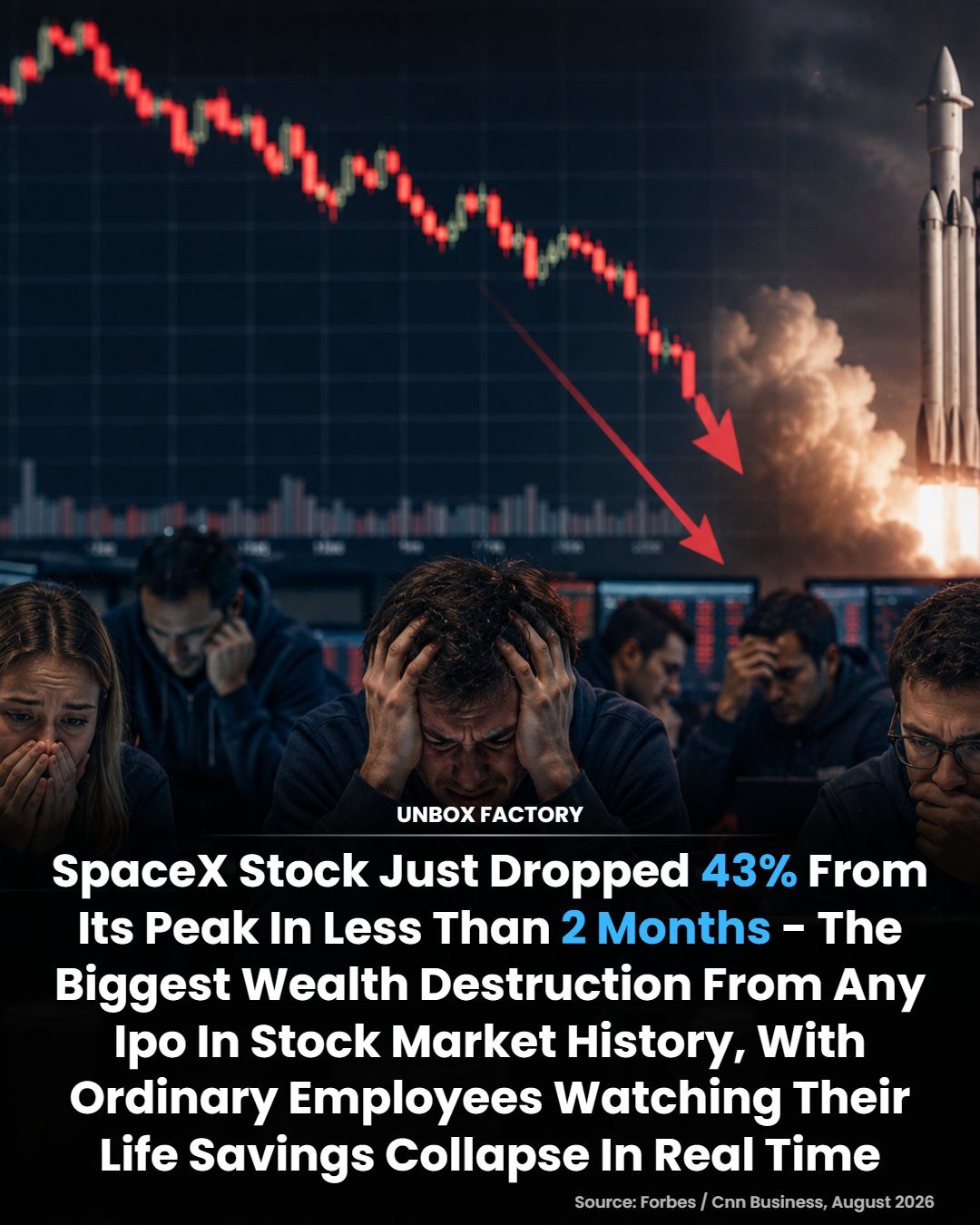
Stock Market Decline and Private Equity Volatility
SpaceX, a pivotal player in the aerospace industry, has recently experienced a significant decline in its secondary-market stock prices, dropping 43% from its peak in less than two months. This volatility has brought attention to the uncertainties faced even by some of the most valuable private technology companies.
Context: Why This Matters
The stock market decline has significant implications for SpaceX employees and early investors. Many of these individuals have a portion of their compensation tied to company stock, making them particularly vulnerable to fluctuations in secondary-market share prices. Understanding this context is crucial for investors, employees, and those interested in the broader financial health of the aerospace industry.
SpaceX, known for its ambitious projects like the Falcon 9 launch vehicles, the Starlink satellite network, and the development of the Starship, remains one of the world's most valuable private aerospace companies. However, the recent decline highlights that even industry leaders are not immune to market volatility.
Main Discussion
Understanding Secondary Markets
Secondary markets allow employees and early investors to buy and sell shares of privately held companies like SpaceX. Unlike public markets, these transactions are typically less regulated and can be more speculative. Secondary-market share prices can fluctuate substantially and do not necessarily reflect the company's long-term operating performance.
Impact on Employees and Early Investors
For SpaceX employees and early investors, the decline in stock prices has a direct impact on their paper wealth. This financial uncertainty can affect job satisfaction, future investment decisions, and even overall well-being. It's important to note that the paper wealth is the value on paper, which could be worthless if the company's long-term success doesn't improve; it isn't the actual amount of cash the investor has.
Investors and employees who hold significant amounts of company stock in their portfolios may experience considerable financial stress. In fact, it's the biggest wealth destruction from any IPO in stock market history, according to the visuals. Financial stress due to the drop in share prices can lead to anxiety and uncertainty about the future. This emotional toll can impact productivity and overall job satisfaction among employees.
Market Volatility and Long-Term Performance
Market volatility is a natural part of investing in any company, whether public or private. The recent decline in SpaceX's stock prices serves as a reminder that secondary-market share prices do not always align with the company's long-term operating performance. For example, SpaceX's innovative projects and technological advancements continue to drive its success, despite the recent stock market decline.
Market Volatility
Though the recent decline in stock prices has been significant, it is essential to consider the broader context of SpaceX's long-term performance. The company's ongoing projects, including the development of the Starship and the expansion of the Starlink satellite network, continue to drive its success. These projects are expected to generate significant revenue and contribute to the long-term growth of the company. The decline in stock prices, therefore, does not necessarily reflect the company's overall financial health or future prospects.
The Emotional Toll of Paper Wealth Loss
The decline in stock prices has also had an emotional toll on SpaceX employees and early investors. Seeing one's paper wealth decline can be distressing, especially for those who have a significant portion of their net worth tied to the company. This emotional toll can impact overall well-being and job satisfaction, making it crucial for employees and investors to stay informed and prepared for market volatility.
Practical Tips
Diversify Your Portfolio
Diversification is a critical strategy for managing the risks associated with market volatility, especially when a significant portion of your wealth is tied to a single company. Investors and employees should consider diversifying their portfolios by investing in a mix of stocks, bonds, and other assets. This approach can help mitigate the impact of market fluctuations on overall wealth.
Stay Informed
Staying informed about market trends and company performance can help investors and employees make better decisions. Regularly monitoring financial news and company updates can provide valuable insights into market volatility and long-term performance.
Seek Professional Advice
Consulting with a financial advisor can provide valuable guidance on managing market volatility and long-term financial planning. A professional can help assess your financial situation, develop a tailored investment strategy, and offer personalized advice on navigating market fluctuations.
Maintain a Long-Term Perspective
The stock market can be unpredictable, and short-term fluctuations are a natural part of investing. Maintaining a long-term perspective and focusing on the company's overall performance can help manage the emotional toll of market volatility. By staying informed about the company's projects and future prospects, investors and employees can better navigate market fluctuations and make more informed decisions.
Important Takeaways
The recent decline in SpaceX's secondary-market stock prices has several key takeaways for investors and employees:
- Market Volatility is a Natural Part of Investing: Market fluctuations are a natural part of investing, and even the most valuable private companies can experience significant declines in stock prices.
- Secondary-Market Share Prices Do Not Always Reflect Long-Term Performance: The recent decline in SpaceX's stock prices highlights that secondary-market share prices do not always align with the company's long-term operating performance.
- The Emotional Toll of Market Volatility: The decline in stock prices can have a significant emotional toll on investors and employees, impacting overall well-being and job satisfaction.
- Diversification, Staying Informed, and Seeking Professional Advice: Strategies to manage market volatility and long-term financial planning include diversifying your portfolio, staying informed, and seeking professional advice.
Conclusion
The decline in SpaceX's secondary-market stock prices serves as a reminder of the inherent volatility in the stock market. For investors and employees, it is crucial to stay informed, diversify portfolios, and maintain a long-term perspective. By understanding the broader context of the company's performance and the factors influencing market fluctuations, individuals can better navigate market volatility and make more informed decisions. Despite the recent decline, SpaceX remains a leader in the aerospace industry, driven by its innovative projects and technological advancements.
Watch the Reel
Questions readers ask
How does the 43% stock drop affect SpaceX employees?
The recent 43% stock drop at SpaceX directly impacts employees who receive company stock as part of their compensation. This means their personal wealth may decrease significantly, affecting their financial stability and future planning. Many employees may find themselves in a situation where a substantial amount of their net worth is tied to the company. Employees are advised to review their financial strategies to mitigate the risks associated with such market volatility.
What role do secondary markets play in SpaceX's stock volatility?
Secondary markets are where private company stocks, like SpaceX's, are traded among investors. The recent 43% drop in SpaceX's stock price in these markets highlights the volatility and uncertainty that can exist even for highly valued private technology companies. This volatility can lead to significant fluctuations in the wealth of employees and early investors who hold company stock.
Why are early investors concerned about the SpaceX stock drop?
Early investors in SpaceX are concerned because their initial investments are directly tied to the company's stock performance. The 43% stock drop means a significant loss in the value of their investments. These investors may be worried about recovering their losses and the potential long-term impact on their investment portfolios.
How does the SpaceX stock market impact affect employee wealth?
The impact on employee wealth is substantial. Employees who have company stock as part of their compensation package face a direct hit to their personal finances. This can affect their savings, retirement plans, and overall financial security.
What are the implications of the stock drop for SpaceX's valuation as a private company?
The 43% drop in stock price raises questions about SpaceX's valuation as a private company. Investors and analysts may reassess the company's worth, which could influence future funding rounds and strategic decisions. This volatility can affect the company's ability to attract new investments and partnerships.
What strategies can SpaceX employees use to manage the impact on their wealth?
Employees can explore diversification strategies, such as investing in a variety of assets rather than relying solely on company stock. Regular financial check-ups and adjustments can also help mitigate the impact of market fluctuations. Consulting with a financial advisor to develop a personalized financial plan can provide further guidance.
How might the recent stock drop influence SpaceX's future funding and growth?
The recent stock drop could make it more challenging for SpaceX to secure future funding. Potential investors may be more cautious, leading to a decrease in capital inflows. This could impact the company's growth plans, including new projects, research, and development initiatives. SpaceX may need to reassess its funding strategies and consider alternative financing options.
Related deep dives
Similar reads based on topic and creator.


Recent articles
Fresh deep dives from the latest Reels we unpacked.




Comments
Be the first to comment.