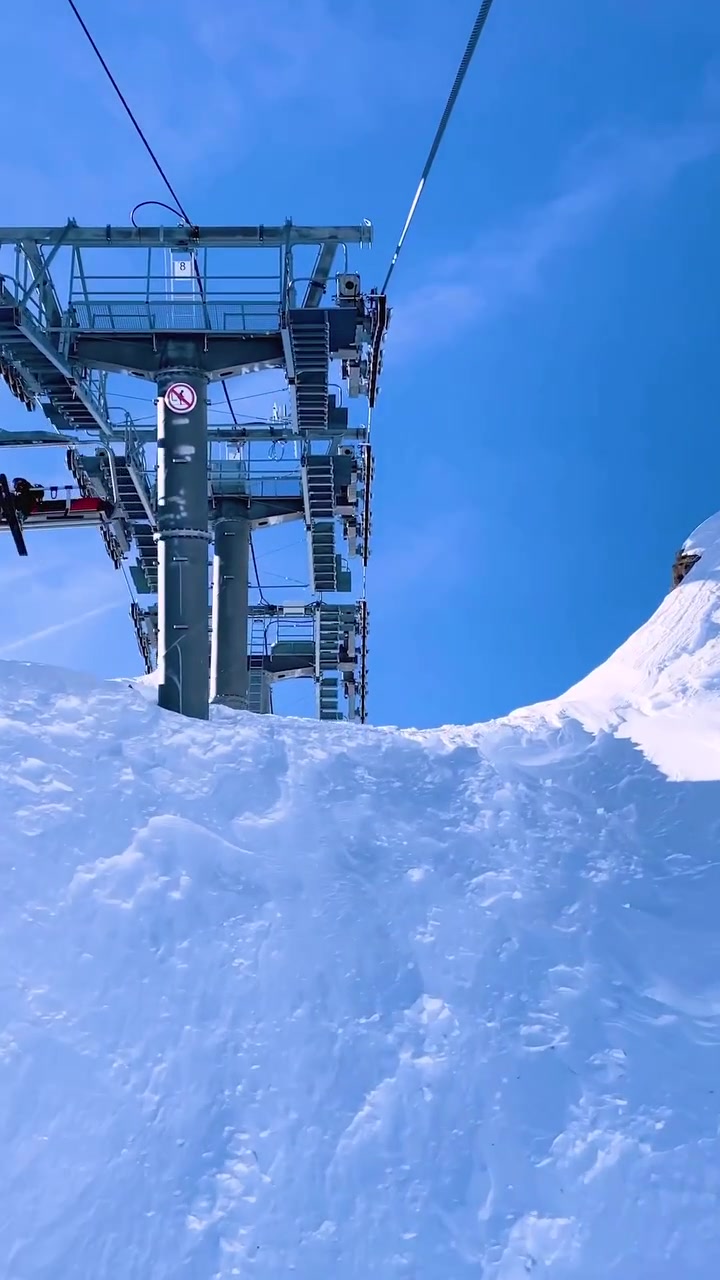
A ski lift carries you up to near-suprnal summit heights, revealed in transitioning close- up of their support structure and panoramic view of the mountains. This simple, but transforming ride serves a robust purpose — a dedicated conduit for reaching fresh powder.
The Chair On A Mission
There are things which are necessary to survive, and there are things which make life better. The ski lift lies between these boundaries, elevating riders both literally and metaphorically. A ski lift is a cable and chair ropeway comprising a sloping cable suspended between terminal towers and pulley systems. It lifts passengers to a higher elevation, usually for recreational purposes, like skiing or snowboarding. Unlike funiculars or cable cars, ski lifts, in particular, do not have a fixed track, and the chairs are detached from the cable. Typical ski lift design consists of a cable that loops around two bullwheels, at the top and bottom terminals, vertical supports, and chairs. The cable rotates by the driving bullwheel, dragging the lift chairs down the mountain. This motor-powered driving bullwheel is called a motor-generator. It is located inside a steel tower structure. The terrain of the mountain influences the angle of elevation, the ratio of vertical drop to horizontal distance it covers. To prevent slipperiness, each tower has a sharp edge. The mechanical components of a ski lift are crucial to its functionality, underpinning how efficiently and safely it operates. Ski lift mechanics encompass a variety of components, from the cable and chairs to the pulley systems and motor-driven arrangements, which work in tandem to transport passengers uphill. The mechanics of a ski lift work by leveraging a rotating cable and a series of pulley-systems to deliver riders to the top of the slope. The pulley systems convert the pulling motion of the cable into a uniform and smooth ascent, ensuring a steady ride for the passengers in the chairs. The mechanics of a ski lift are crucial for its operation, as they ensure a smooth, steady, and safe ride for passengers. The easy-to-get-on chair design of the ski lift is necessary to get you to the top. Ski lifts typically operate at slower speeds compared to other lift systems, allowing passengers to get on and off easily.
When the Ride Means Everything
One early lift in Canada told the Globe and Mail that "The speed at which lifts move was the difference between life and death." For a racer, a whole day on a mountain means every minute counts. You need to get up to the top as many times as possible. Ski lifts have transformed skiing into a year-round sport, if you wish, and many of them are now found outside the United States and Canada as well. Ski lifts have allowed for the development of ski resorts in colder climates, providing access to otherwise inaccessible terrain, and permitting millions of people to enjoy the sport. For many, this lift is a necessity, because they cannot just drive a car to the top. All of this is possible due, in part, to the development of fast chairlifts, which are typically detachable. They are, in fact, one of the early forms of ski lifts. The evolution of these lifts is remarkable. The modern ski lift is a product of decades of innovation and technological advancements.
What Keeps It Going
Center Support — main axis
A typical ski lift has a center support made of steel which is connected to a base. The support can be fixed or adjustable, depending on the design. This component provides the necessary structural stability to the lift, ensuring it remains steady and secure during operation. The steel suspension towers are situated along the cable route and provide support for the cable and chair system. They ensure stability and balance, distributing the weight of the lift evenly. These towers are typically made of steel or concrete and are anchored to the ground with concrete foundations. The towers feature a bullwheel, a large wheel or pulley system that the cable loops around. This mechanism is crucial for the lift's operation, as it allows the cable to rotate and move the chairs along. The steel suspension towers are designed to be sturdy and durable, withstanding the forces exerted on them by the cable and chairs. This elevating steel cable is connected to the center support, allowing it to move in the direction of travel. The cable is a crucial component of the ski lift, as it facilitates the movement of the chairs along the route. It is made of high-strength steel wires twisted together to form a single, durable cable. The cable is driven by the motor-driven bullwheel, which provides the necessary power to move the lift system. The speed of the cable is controlled by the motor, and varies depending on the design and capacity of the lift.
The Friction Clutch
A ski lift uses a friction clutch and gearing system to control the speed of the motor, allowing it to adjust the speed of the cable and, consequently, the chairs. This system is crucial for maintaining a consistent and safe pace during operation, but also provides critical stability during deceleration and acceleration. The friction clutch is a mechanical component that connects the motor to the drive wheel. This connection allows the motor to transfer power to the drive wheel, which in turn moves the cable and chairs. The friction clutch is designed to provide a smooth and seamless transfer of power, ensuring a consistent and stable speed. A number of features are associated with friction clutches. The gearing system works in tandem with the friction clutch to regulate the speed of the cable. As a result, the chairs move at a controlled and dependable pace. The gearing system is a series of interconnected gears that help transmit the motor's power to the drive wheel and control its speed. When the motor increases its speed, the gears rotate faster, and the cable and chairs move faster. Conversely, when the motor slows down, the gears rotate slower, and the cable and chairs move more slowly. This precise control over the speed of the cable and chairs is crucial for the safety and efficiency of the ski lift.
The Brake System — safety check
It is highly important for the brake system of ski lift to stop the cable and chairs safely in case of an emergency. The brake system ensures safety by providing a reliable and effective means of deceleration. It is an array of gears and levers. It is specifically designed to prevent the motor-driven bullwheel from accelerating too quickly. This ensures that whenever someone is injured, the operator can quickly slow down and stop the chairlifts. The brake system is a critical component of the ski lift, as it ensures the safety of passengers and operators. The brake system is composed of a number of parts, namely a lever, a brake, a cable and a shuttle system. These multiple parts work in synchronization to ensure effective braking. The cable holds the brake lever and the brake. When the lever is pulled, the brake is engaged, and the shuttle system, acting as a rod, moves the brake into place. This movement allows the brake to create friction against the moving parts of the lift, slowing it down and eventually stopping it. The brake system also includes a series of pulleys. These are used to redirect the cable and provide a more efficient transfer of force. The shuttle system is designed to allow efficient braking, while also reducing the amount of force needed to pull the brake lever.
The Ride Experience
The machinery, the structural components, and the very purpose of the ski lift are all part of an interactive experience between the rider and the machine. The chair of a ski lift is a critical component of the overall ride experience, providing passengers with a comfortable and secure seat. The chair is designed into a cushioned seat, backrest, and footrest, which provide support and stability during the ride. Skiers place their skis on the footrest and hold onto the ski poles at strategic handle. The design of the chair is crucial to ensuring a smooth and enjoyable ride. Chairs can vary in design, but they generally have a high backrest, footrest, and a seat that is large enough to accommodate multiple passengers. The layout of the lift chair is an arrangement that ensures passengers are able to comfortably reach the footrest and seat. The chair is also designed to withstand the elements, such as extreme cold and snow, and is often equipped with features such as heaters and covers to keep passengers warm and dry. The lift chair can also be controlled by the operator using a series of levers and switches, allowing them to adjust the speed and direction of the lift.
Where The Good Times Lie
There are plenty of ways to enjoy the short trip. To get the most out of your ski lift experience, consider the following tips:
- Check the Weather: Before heading out to a ski resort, check the weather forecast. This will help you determine the best time to go and what type of clothing to wear. You want to make sure you're comfortable and safe for your trip. If the sun is shining, you'll probably enjoy the ride more between 10 and 2.
- Try the lift to feel the wind: The lift takes you to places like nowhere else: the silence, the view from above, against the backdrop of nature and silence. You can feel the wind. Enjoy the journey from the wisdom of this experience: it will bring you breathtaking moments that you remember years later.
- Evaluate the rides: Ski lifts come in different shapes and sizes, and some have special features like heated seats or panoramic views. By knowing which one suits your preferences, you can make the most of your ride. If you want to be safe evaluate the ride with an independent third party before purchasing.
- Get a good view: Some people like to see where they're going. You might want to ride so that you have straight-on panoramic view. You can just sit back and take it all in.
Watch the Reel
Questions readers ask
What exactly is a ski lift and how does it differ from other types of cable cars?
A ski lift is a specific type of cable and chair ropeway designed to transport passengers uphill, typically for recreational purposes like skiing or snowboarding. Unlike funiculars or cable cars, ski lifts do not have a fixed track, and the chairs are detached from the cable. This design allows for a more flexible and efficient ascent, especially in varied mountain terrain.
How does the mechanical system of a ski lift work to move passengers uphill?
The mechanics of a ski lift involve a cable that loops around two bullwheels at the top and bottom terminals, driven by a motor-generator. This rotating cable pulls the chairs uphill, while a series of pulley systems convert the pulling motion into a smooth, steady ascent. The chairs are attached to the cable via a grip mechanism, allowing them to be detached as needed.
Why are ski lifts important for skiing and snowboarding and are they only found in the United States and Canada?
Ski lifts are crucial for accessing higher elevations on mountains, making it possible to reach fresh powder and enjoy the sport. They have transformed skiing into a year-round activity and enabled the development of ski resorts in colder climates. Ski lifts are not just found in the United States and Canada; they are also prevalent in many other countries, providing access to otherwise inaccessible terrain.
How do ski lifts ensure a safe and efficient ride for passengers?
Ski lifts are designed with safety and efficiency in mind. The mechanical components, including the cable, chairs, and pulley systems, work together to provide a smooth and steady ride. The chairs are designed to be easy to get on and off, and the lifts typically operate at slower speeds, allowing passengers to board and disembark safely. Additionally, the terrain of the mountain influences the angle of elevation, and each tower has a sharp edge to prevent slipperiness, further enhancing safety.
What is the role of the motor-generator in a ski lift system?
The motor-generator, also known as the driving bullwheel, is a crucial component located inside a steel tower structure. It powers the cable, which in turn drags the lift chairs uphill. This motor-driven arrangement ensures that the cable rotates smoothly, providing a consistent and reliable ascent for passengers.
How has the evolution of ski lifts changed the skiing experience?
The evolution of ski lifts, particularly the development of fast chairlifts, has significantly transformed the skiing experience. These lifts allow racers to get to the top of the mountain quickly, maximizing their time on the slopes. Additionally, the accessibility provided by ski lifts has enabled the development of ski resorts in colder climates, making the sport available to millions of people who might otherwise be unable to enjoy it.
Are there any considerations for those who are afraid of heights when using a ski lift?
Ski lifts are designed to be safe and efficient, but for those afraid of heights, the experience can still be intimidating. However, the chairs are designed to be easy to get on and off, and the lifts typically operate at slower speeds, allowing passengers to board and disembark safely. Additionally, the mechanical components work together to provide a smooth and steady ride, which can help alleviate some fears.
Related deep dives
Similar reads based on topic and creator.



Recent articles
Fresh deep dives from the latest Reels we unpacked.




Comments
Be the first to comment.