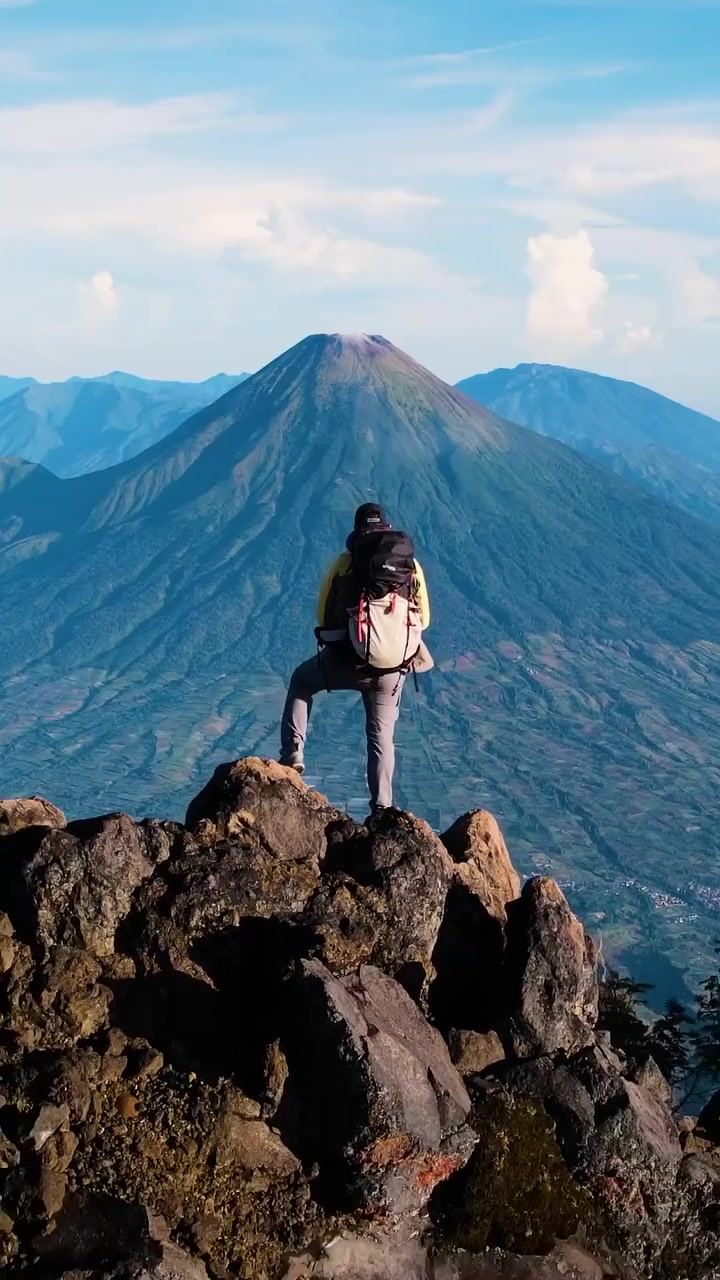
Hikers seeking a challenge find it in spades at Puncak Kawah Gunung Sumbing. In the Indonesian province of East Java, Mount Sumbing boasts 3,370 metres of steep, lush trails and one of the country’s most dramatic views. The supreme vista of Indonesia’s mythic Puncak Kawah, or 'Volcano Peak', makes it a high-stakes trek rewarded with spellbinding views of the surrounding countryside.
Epic vistas and legendary terrain of Puncak Kawah Gunung Sumbin
The trail to the top begins at an altitude of around 1,400 metres, rising through dense forests and grassy meadows before reaching the rocky summit. The trek typically covers around 19 kilometres, but the elevation gain is nothing short of grueling: It takes hikers from the low-altitude jungle floor to the 3,370 metre peak. Unlike those found in North America, Puncak Kawah’s trails are far less signposted. The ascent can be daunting without a guide or local knowledge, but those willing to endure the climb are rewarded with the rare chance to step into an active crater. Mount Sumbin's volcanic fumaroles are bubbling bits of the Earth’s tortured crust. Terrain varies as hikers climb steeply over rocky slopes, across muddy ravines, and through the thick tropical forests and grasses of Kalijati. The trail’s length and intensity can take up to 14 hours, as hikers must maintain a steady pace. The footpath can be difficult to see in some sections, but experienced hikers say the real challenge is the thick, humid air that hinders climbers from progressing as they continue to reach the sky-high peak. Funneled by towering ridges, the final stretch of the trail forces hikers to navigate between crater walls and impossibly steep slopes. The sky-draining ascent gives way to a viewpoint of the small village below and the crater lake at Puncak Kawah. Hikers traverse a 23 km loop, climbing through a lush jungle before reaching the rocky summit.
Indonesia’s Volcanic Connection to Outdoor Adventure
Hiking in Indonesia is a deeply spiritual experience for many. Indonesia boasts 130 active volcanoes. Volcanic peaks are often seen as the dwelling of gods and mythical creatures in Javanese folklore. Puncak Kawah, an active volcanic crater, is a testament to Indonesia's stunning volcanic landscape, which pulls inlets of tourism from around the world. Its lush trails and panoramic scenery reward trekking climbers with a powerful dose of majesty. Though, once Indonesia's economic capital, Kalijati’s rural centre of civilization has ground down to a few rooftops. Indonesia's extreme weather conditions add further strain to the paced climbing.
The geological power of the volcanic peak
The Summit climbers strive for is one of the most active and dangerous places on Earth. Volcanic puncak kawah demands respect from its hikers. The dramatic peak is no cinder cone, where the lava rises through a central channel. Instead, the eruptive power has channelled itself into cracks, fissures, and side vents, rather than a single, clear path. These features can make ascents of this legendary terrain a kind of geologic adventure, and more challenging than any outdoor enthusiast can anticipate. Climbing on the ridge of a volcanic puncak is a full-body workout, and it might involve some rock scrambling. It is about the climber’s strength, endurance, and mental resilience.
The Volcanic Peak’s dramatic view
Puncak Kawah Gunung Sumbing prepares climbers and adventurers for breathless vistas. Lush grassland and bamboo forests greet hikers as they work upwards. Upon reaching the top of the ridge, the surrounding landscape unfurls, revealing the vast expanse of the Indonesian countryside. The next leg of the journey involves scampering up rocks, navigating narrow passes, and discovering the top of the volcanic summit. Explorers must individually conquer the craggy terrain of the individual volcanic pinnacles. Once on top, they are rewarded with a view of the nearby volcanoes, mountains, and sea below.
Oases of calm and reflection
The plunge to the lower reaches of the volcano peak occurs in stages, and the ground opens up as climbers descend. Before reaching Kalijati, trekkers can step into the misty clouds and breathe in the cool mountain air. With each step, the mist resolves into a dense, tangled jungle, and the overlook reveals the twisty trails below. Then, the vista opens from the Province of Kalijati to the lush rolling hills of Gunung Gelang. This breathtaking view is one of the most hallowed parts of the trail. The spiritual value of the journey instills Puncak Kawah with an air of veneration. Each step closer to the summit brings with it a sense of pious reflection. The last part of the ascent of the volcanic peak is as staggering as the entire view, extraordinary above and below.
Living a day in paradise
No other details have been shared about the journey, but you can prepare for the following elements:
- Weather: Plenty of water, a sizable backpack, and light, quick drying clothes. The mountain offers protection from the sun. The top of the mountain is exposed to intense winds and rain. Take precautions to avoid heat exhaustion and dehydration.
- Hiking gear: Bring a sense of adventure and a solid pair of hiking boots. Proper hydration and nutrition — including snacks and light, energizing meals — are also essential for the trek.
- Guide: Though the trek isn't dangerous, it is possible to get turned around or lost without a guide. Puncak Kawah Gunung Sumbing offers a rare chance to step out on the edge of the world, and the mountain offers the best view of celestial change.
Watch the Reel
Questions readers ask
What kind of landscape can hikers expect on the trek to Puncak Kawah?
The trek to Puncak Kawah Gunung Sumbing takes hikers through a variety of landscapes, including dense forests, grassy meadows, and rocky slopes. The terrain is steep and challenging, with muddy ravines and thick tropical vegetation. The final stretch involves navigating between crater walls and incredibly steep slopes.
How long does it typically take to hike to the summit of Mount Sumbing?
The hike to the summit of Mount Sumbing can take up to 14 hours, covering around 19 kilometres. The elevation gain is significant, starting from approximately 1,400 metres and rising to 3,370 metres. Hikers need to maintain a steady pace to complete the trek.
Is it safe to hike to Puncak Kawah without a guide?
Hiking to Puncak Kawah without a guide can be daunting due to the lack of signposting and the challenging terrain. The trails are less marked than those in North America, and the thick, humid air can make the climb even more difficult. It's highly recommended to have a guide or local knowledge to ensure safety.
What makes the volcanic terrain of Puncak Kawah unique?
Puncak Kawah’s volcanic terrain is unique because it features fumaroles, which are bubbling bits of the Earth’s crust. Unlike typical volcanoes, Puncak Kawah’s eruptive power is channelled through cracks, fissures, and side vents, rather than a single central path. This makes the ascent more challenging and unpredictable.
How does the spiritual significance of volcanoes in Indonesia influence hiking experiences like Puncak Kawah?
In Indonesia, volcanoes are often seen as the dwelling of gods and mythical creatures in Javanese folklore. This spiritual significance adds a layer of depth to the hiking experience, making it a deeply spiritual journey for many. The majestic views and challenging terrain reward climbers with a sense of awe and connection to the natural world.
Related deep dives
Similar reads based on topic and creator.



Recent articles
Fresh deep dives from the latest Reels we unpacked.



Comments
Be the first to comment.