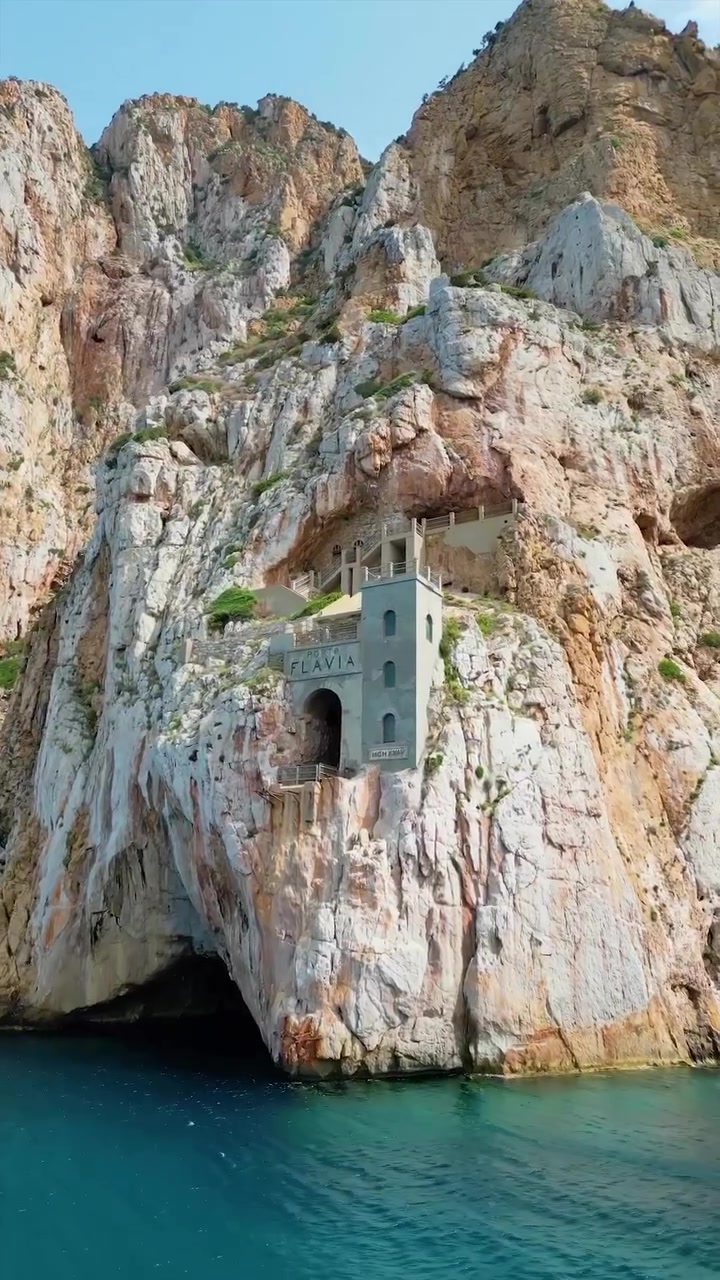
Porta Flavia stands as a testament to ancient Roman engineering, carved directly into a cliffside in an extraordinary display of human ambition and skill. The port's unique construction, with a prominent tunnel entrance and surrounding buildings, offers a glimpse into the past and provides context to the monumental engineering feats of the Roman Empire. Through its structure and the surrounding natural beauty, it reveals a story of how ancient Romans mastered the art of building and navigating the seas.
The Craft of a Cliffside Harbor
Porta Flavia is an ancient Roman harbour carved into the rugged face of a cliff. Its construction represents a remarkable feat of engineering. The port's distinctive feature is a tunnel that allows safe passage for vessels from the sea. The tunnel cuts through the cliff, leading into a protected harbor, and the natural landscape adds a layer of beauty to this architectural marvel. This tunnel is integral to the port. It's the key infrastructure that ensures safe navigation between the sea and the inner harbor. The port's location meant that the Romans could avoid the more open, exposed Roman harbour at the other end of the cliff, which was more susceptible to attack or storm damage, improving the site’s defensive capability and utility as a safe haven for maritime traffic, particularly trade. The port includes surrounding buildings, likely used for storage or habitation, making it a living space built into the cliffside. Porta Flavia stands out for its engineering and the way it shows the Romans' ability to adapt to and work with the natural environment—instead of simply dominating the land. Carving the harbor into a cliff highlights the Romans' skill in creating functional and durable structures by harmonizing with the natural landscape. Additionally, this strategy allowed them to avoid the risk of destructive storms and attacks by sea because it was naturally protected. This approach to building gives us a fascinating glimpse into the these ancient builders' ability to integrate human intervention with nature, ensuring longevity and resilience for the structure.
The Truly Epic Location
Porta Flavia is nestled in the rugged terrain of the ancient Roman Empire is a stark reminder of the Romans' mastery of both engineering and geography. Port construction often involved careful consideration of the terrain, and Porta Flavia is a prime example of this. It leverages its cliffside location to offer natural protection from storms and potential sea attacks. Porta Flavia exemplifies the ingenuity of Roman engineering and maritime strategies, blending seamlessly with the natural landscape. This unique setup reflects Rome’s ability to harness the power of geography. Situating the harbor in a cliffside location provided several strategic advantages. It protected the harbor from direct sunlight, ensuring the safety of the ships and crew, barring any invasions. The entire structure highlights the Romans' sophisticated understanding of maritime logistics, emphasizing the importance of securing naval access while maximizing defensive capabilities.
Underneath the Surface
The Inscription of Time
The visible inscription 'MCMXCIV' signifies a date in the Roman numbering system. MCMXCIV stands for 1994, indicating the date of construction or restoration. Though it's a date range, it places the structure within an era of Roman history. The visibility of this inscription against the rugged cliffside adds a layer of historical context. It suggests that Porta Flavia was either constructed or restored in 1994, providing a tangible link to a specific time period in Roman history.
The Tunnel’s Role in Trade
The tunnel that runs through the cliffside is a crucial part of Porta Flavia. It was the passageway that allowed for safe navigation. This tunnel effectively turned the port into a concealed, safe harbor. The passageway also played a vital role in trade, protecting not just the ships but also the goods they carried. The tunnel provided a secure route for ships to enter and exit the harbor and the port acted as a hub for maritime trade. This intricate design showcases the Romans’ understanding of the importance of maritime trade and their ability to engineer solutions for both safety and profitability.
Defending the Coastline
A key advantage of Porta Flavia’s design is its defensive capability. The tunnel and its elevation provided a natural barrier against potential attacks. This design offered a covert and resilient defense mechanism. Its elevation and the narrow tunnel entrance made it difficult for intruders to breach. This architectural strategy allowed the Romans to maintain control over maritime traffic, securing the coast and its valuable trade routes. The harbor became a crucial asset for defense and control of maritime activity.
Living in the Shadows
The surrounding buildings suggest a thriving community. These buildings were likely residences or storage facilities for the port workers or traders. The cliffside structures offer a unique living environment. This community lived in the shadows of the cliffs, living with and working by the sea. This unique setup demonstrates the adaptability of the Roman people as well as their resourcefulness, showcasing how they could thrive in even the most rugged of environments.
Making the Most of a Visit
To truly immerse yourself in the grandeur of Porta Flavia, it is best to visit in the morning. The early sun casts a warm glow over the structures. If you can, to get a fuller view, the best way to experience the port is through a boat tour.
- Arriving Early: Plan to visit in the early morning to take advantage of the soft, directional sunlight that emphasizes the architectural details of the port and its surrounding cliffs. The morning light provides the best possible view of the port, giving you a chance to see it when it's lit by the sun in a way that highlights its natural beauty.
- Local Tours: Always check with local tour operators for guided boat or hiking tours. Local guides provide valuable insights. Often these tours are a highlight for visitors, providing expert details about the port's history and construction.
- Maintaining distance: However the port is built into a cliffso avoid getting too close to the cliff and the tunnel, while the distance does nothing to diminish the awe inspired by the structures.
Why It's Still Surreal
Porta Flavia stands as a breathtaking example of ancient Roman engineering. Its integration with the natural cliffside landscape showcases Roman ingenuity. The intricate design, the engineering, and the historical significance make it a must-visit destination. Visiting the port allows you to experience the marvel of ancient engineering firsthand and appreciate the thoughtful design that has stood the test of time.
Watch the Reel
Questions readers ask
What makes Porta Flavia so special compared to other ancient harbors?
Porta Flavia stands out because it was carved directly into a cliff, which is a remarkable engineering feat. This design not only showcases Roman innovation but also provided natural protection from storms and sea attacks, making it a strategic and defensible port.
How did the tunnel in Porta Flavia work for maritime navigation?
The tunnel in Porta Flavia was a crucial part of the harbor's design. It allowed ships to pass safely from the open sea into a protected harbor, ensuring safe navigation and reducing the risk of damage from storms or attacks. This unique feature is a testament to the Romans' engineering skills and strategic thinking.
Can visitors explore Porta Flavia today, and if so, what can they expect to see?
As of now, there's no specific information provided about current access to Porta Flavia. However, if it is accessible, visitors would likely be able to see the carved cliffside, the tunnel, and possibly the surrounding buildings. The natural beauty and historical significance would make it a fascinating site to explore.
How did the Romans use the surrounding buildings at Porta Flavia?
The buildings surrounding Porta Flavia were likely used for storage or habitation. This suggests that the port was not just a place for maritime activities but also a living space, integrated into the cliffside to provide shelter and support for the people who worked there.
What strategic advantages did the cliffside location of Porta Flavia provide?
The cliffside location of Porta Flavia provided several strategic advantages. It offered natural protection from storms and sea attacks, as well as shade from direct sunlight, ensuring the safety of the ships and crew. This location also made the port a safe haven for maritime traffic, particularly for trade.
How does Porta Flavia demonstrate the Romans' ability to work with nature?
Porta Flavia showcases the Romans' skill in creating functional and durable structures by harmonizing with the natural landscape. Instead of simply dominating the land, the Romans adapted to the terrain, carving the harbor into a cliff. This approach not only ensured longevity and resilience but also reflects their sophisticated understanding of maritime logistics and defensive strategies.
Related deep dives
Similar reads based on topic and creator.


Recent articles
Fresh deep dives from the latest Reels we unpacked.


Comments
Be the first to comment.