They Whisper Stories of the Dead
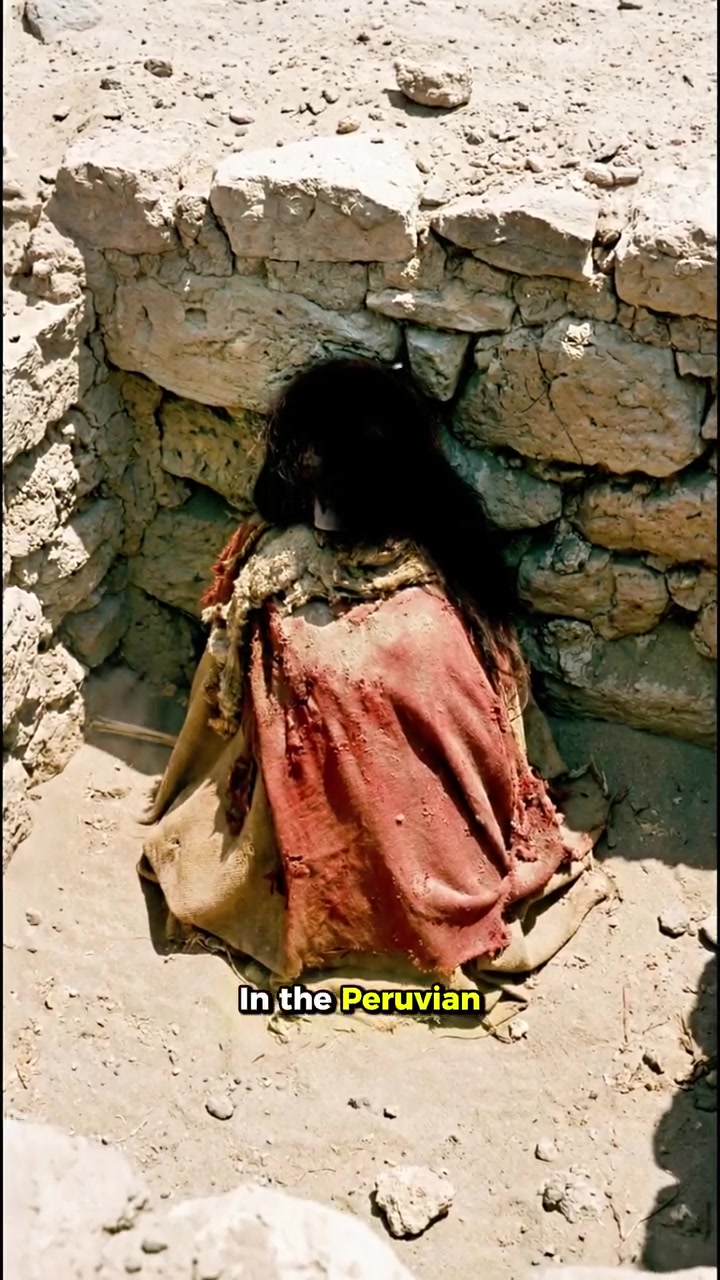
The Peruvian desert holds an astonishing secret: hundreds of mummies sitting upright, exposed to the open air, their skin and hair intact. With skin still intact, even long braids of hair and teeth that remain in their open mouths. Defying centuries, these ancient remains have been preserved by the arid climate, a natural mummification process that has captivated researchers and visitors alike.
The Unlikely Preservation of Peruvian Mummies
In the Peruvian desert, there are several ancient burial sites, covering a span of sites. Among the most notable, however, is Chauquila, an ancient cemetery near the Nazca lines. The desert climate is so dry that the bodies never rotted. Instead, they simply morphed into their current state, curing the long-dead into a timeless form. The Nazca people buried their dead over a thousand years ago. Today, the site is protected and the mummies still stare out from their graves. These burial practices lasted for over a thousand years. A thousand years later, they still wait in silence under the sun. Would you dare to look one in the eyes? The process begins with the body, which is curled up, wrapped in cotton. The bones are painted with resin and the long braids are laid out in a specific pattern. The purpose of this is still unknown, but it’s clear that the Nazca knew what they were doing. The world of the deceased, however, has not escaped human intervention. For years, grave robbers tore the tombs apart, hunting for treasure. They scattered bones and skulls across the sand, leaving the dead exposed, in search of riches. There is a local legend that the tomb raiders were cursed. Some of the villagers claim that they never knew peace again, casting the grave robbery as a haunted venture, where the rich pay an eternal toll with ceaseless nightmares or worse.
Between the Dry and the Restless
Today, the site is protected, but the preservation has not diminished its haunting power. The mummies stand upright in the open air, with their skin and hair still intact. They are mostly covered with resin instead of some form of embalming. They sit curled up, wrapped in cotton. Because of this, the mummies remain in stasis, curled up in their graves. The archaeological community continues to marvel at the bodies with long braids of hair. Now, the mummies remain untouched, but the sand bears the indelible mark of human greed left by the tomb raiders. The disgrace of the looting marks some of the graves, where the mummies remain in silence. Tourists can visit the site in Naqza, but the local government only allows a limited number of visitors each day. They do this due to the small size of the site, and the fragility of the mummies.
The Burial Practices of the Nazca
The Nazca people had a unique approach to death. The bodies were laid to rest in a curled-up position, wrapped in cotton, and their bones were often painted with resin. The Nazca people also left their dead with their hair intact, and in some cases, with long braids of hair. Some of the bodies still have teeth intact, with their mouth open. This burial practice is still a mystery to many researchers. The Nazca people were known for their intricate geoglyphs, but their burial practices have not yet been fully understood. Today, the mummies remain a site of awe and curiosity, a testament to the ingenuity of the people.
The Spectre of Time
The Nazca burial site, called Chaquilla is a thousand years old. It’s located in the Nazca lines, which is another ancient site with large geoglyphs etched into the ground. The Nazca site is a site of ancientude, despite being 1,000 years old. Much of the site is untouched, with mummies in graves, standing upright, looking into the abyss of time and space. However, some graves have been looted by grave robbers. These graves were left in a shocking disorder, with scattered bones and skulls across the sand. The Nazca site is protected by the Peruvian government, with a limit on the number of visitors each day. This protection is to ensure that the site remains intact for future generations. The mummies are a unique phenomenon, with their skin and hair still intact, even after a thousand years.
The Archaeological Allure
For archaeologists, the Nazca mummies are a treasure trove of information. The preservation of the mummies is an amazing example of how the conditions can protect the dead so well. The Nazca have left behind a wealth of knowledge that scientists continue to study to this day. The preservation of the mummies is a testament to the ingenuity of the Nazca people. The mummies remain a site of awe and curiosity, a testament to the ingenuity of the people.
Let the Desolation Haunt You
In the Nazca desert, far from the eyes of the modern world, the mummies stand as silent sentinels. Their long braids and open mouths whisper stories of ancient ritual and preservation. They serve as a reminder of the Nazca people’s ingenuity, their rituals, and their secrets.
Watch the Reel
Questions readers ask
What makes the mummies of Chauquilla Cemetery so well-preserved?
The mummies of Chauquilla Cemetery are remarkably well-preserved due to the extremely dry climate of the Peruvian desert. This arid environment prevented the bodies from rotting, allowing them to naturally mummify over time. The desert's lack of moisture and humidity has turned the bodies into a timeless form, with intact skin, hair, and even teeth. The bodies were also wrapped in cotton and painted with resin, which further aided in their preservation, but the climate is the key factor.
How were the bodies preserved by the Nazca people?
The Nazca people had a unique burial practice. They wrapped the bodies in cotton and painted the bones with resin. The bodies were laid to rest in a curled-up position, with their hair often left intact and sometimes braided. The long braids of hair and the resin are believed to have helped in the preservation process, but the primary factor was the desert climate. The bodies were then placed in graves, where they remained untouched until discovered.
Why are the mummies at Chauquilla Cemetery sitting upright?
The mummies at Chauquilla Cemetery are sitting upright due to the way they were buried by the Nazca people. The bodies were laid to rest in a curled-up position, and over time, the arid climate and the resin applied to the bones caused them to harden in this position. As a result, the mummies have remained in this upright, curled-up stance, with their skin and hair still intact, defying centuries of time.
Can tourists visit the Chauquilla Cemetery and see the mummies?
Yes, tourists can visit the Chauquilla Cemetery, but access is limited. The local government allows only a limited number of visitors each day to preserve the site's integrity and protect the fragile mummies. The small size of the site and the need to protect the mummies from further damage are the primary reasons for these restrictions. Visitors should plan accordingly and check for updates on visitation policies before their trip.
What is the significance of the long braids of hair on the mummies?
The long braids of hair on the mummies are a distinctive feature of the Nazca people's burial practices. The purpose of these braids is still unknown, but they are believed to have played a role in the preservation process. The braids were laid out in a specific pattern, suggesting that they held some significance in the Nazca culture. Researchers continue to study these braids to better understand the Nazca people's beliefs and rituals surrounding death.
Related deep dives
Similar reads based on topic and creator.




Recent articles
Fresh deep dives from the latest Reels we unpacked.



Comments
Be the first to comment.