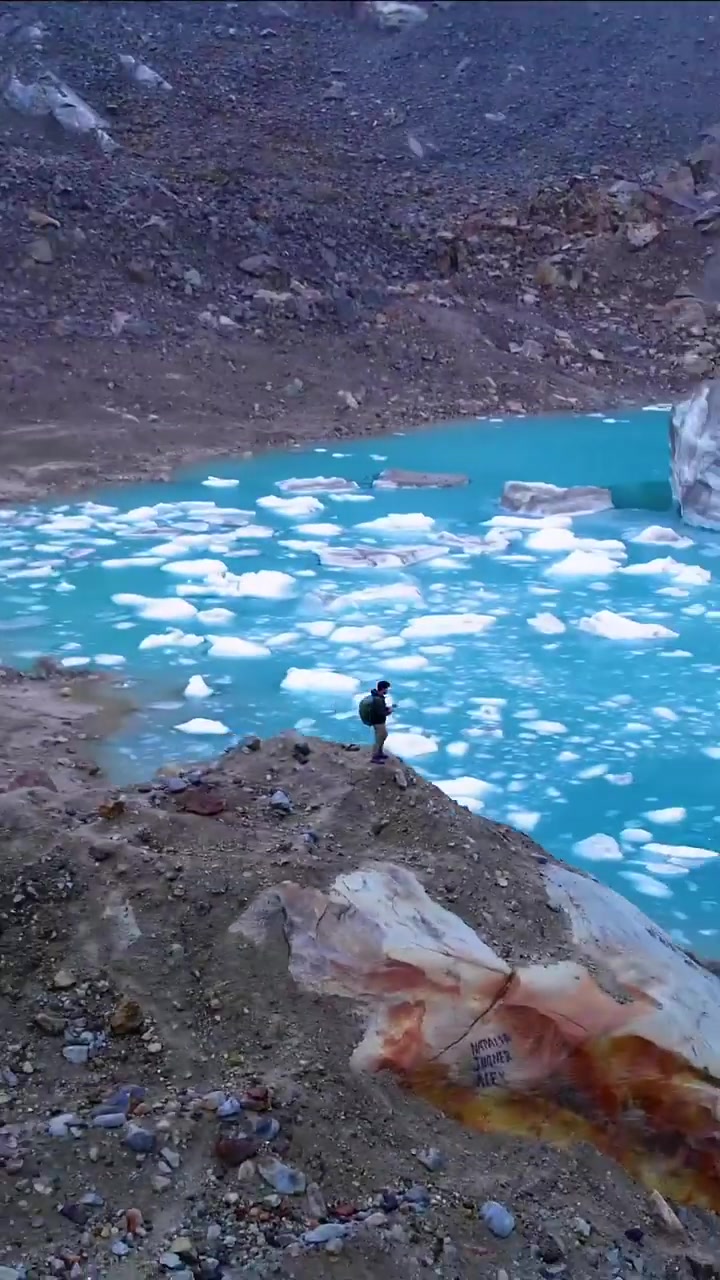
Alpine glaciers are ice fields are kept frozen and preserved by altitude, but are melting due to human heating, and they can be dangerous. They don’t usually dump snow on you from on top of the mountain. Mountaineer @josemostajo has just finished his first glacier, in Peru. He describes how the weather go from rain, to snow to several mini-avalanches as a “equally fun and cool to see." Weather forecast had not mentioned this. This turned his adventure into a treacherous and memorable one.
Adrenaline Trekking
The glacier hiking adventure in Peru combines spectacular natural beauty with physical challenges. The trek involves navigating a rocky slope with icy blue water and large ice formations. The weather forecasts did not mention any snow or rain. These proved key ingredients to the unexpected avalanches. The mountain is in Peru and is described by the adventurer as “equally fun and cool to see”! Glaciers have a reputation for impressiveness, with steep inclines, rocky slopes, and pristine environments. The video of @josemostajo showcases a vast expanse of snow and rocky terrain. The glacier environment is not entirely pristine, but still keeps its character and landscape despite the threat of rapidly melting. Glaciers receive more albedo from the sun, raising temperatures of the terrain faster. The glacier includes the icy blue water, large ice formations, and rocky terrain.
We have a long-term extinction problem
Glaciers are melting faster than the humans and trees can keep pace with their physicality. Glaciers are unseen heroes of our climate. They're responsible for keeping rainfall consistent, water streams flowing, and our forests alive. Peru’s glaciers are melting faster than the usual glacier rate.. Climate change is the main driver. Wildlife that depends on the glaciers are suffering. Forests are becoming more sparse. Scientists say Peruvian glaciers are melting faster than previously thought. The impact of melting glaciers in Peru extends far beyond the mountains. This affects the lives of people and ecosystems downstream. The glaciers contribute to the water supply for agriculture, hydroelectric power, sustainable farming, and urban areas. Rapid melting can lead to water shortages and increased risk of flooding. It is problematic that glaciers in Peru have melted faster than in other places on Earth. Their melting impacts ecosystems negatively, but Peruvians are adapting, and have managed to harness new economic opportunities for the last few years.
Weather turns at whim
@Josemostajo says “My love. Baby don't hurt me. Baby don't hurt me.” He is enjoying his surroundings while weather changes drastically. Peru is experiencing a season of weather patterns that are unpredictable. Variables include climate, precipitation, and super El Niño. Glaciers in Peru are melting faster than in any other place on Earth. El Niño impacts glacier melt rates across the country to worse. El Niño's high atmospheric temperatures cause snowfall in dry highland landscapes. The weather forecast in Peru was not accurate for the foreseeable future. The glaciers are especially susceptible to temperature increases.
The Glaciers’ layout
The high-altitude snowy peaks and deep valleys really take the cake for these glaciers. These frostblighted mountains sit high above the clouds, often for several kilometers. The snout of the glacier is where the ice field meets the valley floor. On the way to the snout, there are rock debris where the glaciers have been. The glaciers are active, with snow and ice piled up on steep mountain slopes. The glaciers crack and move throughout the season.
The glaciers’ lifecycle
Glaciers form when more snow accumulates in an area than melts. Over time, the weight of the snow compresses the lower layers, turning them into ice. Gravity pulls the ice downhill, forming a glacier. Glaciers can be categorized into two main types: alpine glaciers and continental glaciers. Alpine glaciers form in mountainous regions, while continental glaciers cover vast areas of land, such as those found in Antarctica and Greenland. Mini-avalanches are common in glaciers. Ice rubs eventually against stones and dust. When the glacier moves, this debris falls to the surface.
What it’s like to be there
A lot of people like @Josemostajo enjoy the feeling of exhilaration and adrenaline that comes with hiking glaciers. The glaciers are dynamic, and the adventure is unpredictable. You may experience an avalanche at any time. Glaciers can be dangerous. You may fall into a crevasse or get buried by snow and rock debris. Always wear a helmet and bring a rope.
Solo hiking thrills
Of the countries, Peru is the only one with glaciers in the hills. It is also common to experience unpredictable weather changes. The climate is unpredictable, but the seasons are still calculatable. For @Josemostajo, snow, rain, and mini avalanches break a typical alpine hiker’s pattern. The ice formations are large and majestic. The icy blue water fills the valleys. You are required to have a compass when climbing the glaciers. Glaciers can be dangerous, and you must be careful. There are areas that are not exposed to the sun, and they are darker.
This is how you can engage with it
You cannot do this without a lot of planning, preparation, and also training. I can't recommend behind the mountains to prepare you for the trip. They will give you tips and guide you to the right equipment. Here are the things you need to know:
- Research Hikes. If you are planning a visit, it is important to choose routes that match your fitness level. These routes should be simple.
- Check Weather. Weather in Peru can be unpredictable. Check the latest forecasts and be prepared for sudden changes in conditions.
- Prepare the Proper Equipment. Make sure the group is well-equipped to handle the sudden avalanches.
- Hire a Guide. It is important to have an experienced guide who knows the routes and can navigate through the glaciers. They can anticipate avalanches. This trip is definitely for the adventurous. We wouldn’t blame you if you didn't want to let the glaciers do any damage.
Watch the Reel
Questions readers ask
What kind of terrain can I expect on a glacier hike in Peru with Josemostajo?
You can expect a mix of rocky slopes, icy blue water, and large ice formations. The terrain is rugged and challenging, with steep inclines that make for a thrilling adventure. The environment is still impressive despite the impacts of melting.
How does the weather in Peru affect glacier hiking adventures?
Peru's weather can be unpredictable, with rapid changes from rain to snow and even mini-avalanches. This unpredictability can turn a hike into a treacherous yet memorable experience. The weather forecasts in Peru may not always accurately predict these conditions.
What makes Peru's glaciers unique compared to others around the world?
Peru's glaciers are melting at an accelerated pace compared to others around the world, making them particularly vulnerable to climate change. Their melting can cause weather extremes, and they provide crucial water resources for agriculture, hydroelectric power, and urban areas.
What are the environmental impacts of melting glaciers in Peru?
The melting of Peru's glaciers affects water supply, ecosystems and wildlife. It can lead to water shortages and increased flooding, impacting both people and wildlife that depend on the glaciers. The ecosystem and landscape are rapidly changing.
How do Peru's glaciers contribute to the local economy and environment?
Glaciers in Peru are crucial for water supply, which in turn supports agriculture, hydroelectric power, and sustainable farming. They also contribute to urban water supplies. Rapid melting poses serious threats to these resources, but Peruvians are adapting and finding new economic opportunities despite the challenges.
What kind of preparation should I have for a glacier hike in Peru with Josemostajo?
Preparation for a glacier hike in Peru should include being ready for unpredictable weather conditions and rugged terrain. It is important to be physically fit and have the right gear for navigating icy slopes and potentially hazardous conditions. Josemostajo’s adventure highlights the need for adaptability and preparedness.
Related deep dives
Similar reads based on topic and creator.
Recent articles
Fresh deep dives from the latest Reels we unpacked.

Comments
Be the first to comment.