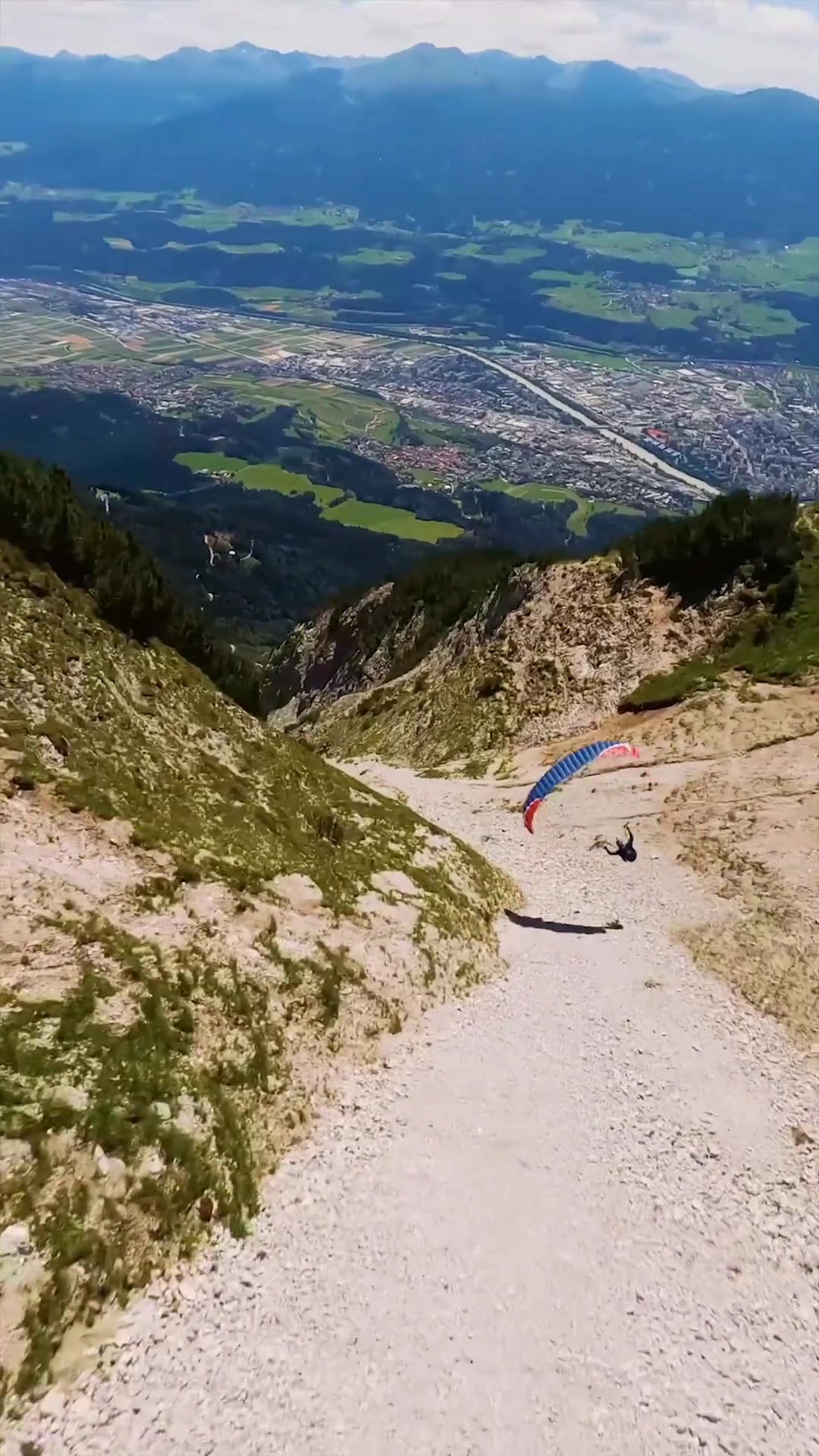
Paragliding is a soaring adventure. With a bright wing of fabric overhead, a flier launches into an alpine wind and an undulating high-altitude dance. This is a way to climb a peak — and then to leave it behind.
How paragliding defies the mountain
Paragliding is an adventure sport that captures your attention when you hear the starter’s countdown — One, 2, 3, four — and the flier leaps into the wind. The gear is a close cousin to a backpacker tent: a wing, a harness, a helmet & protective gear, and with a light touch on controls the flier flies over mountains and canyons without a motor or engine. The term paragliding is a mashup of "parachute" and "gliding." It was lost for decades in the world of parachuting. But in the 1970s, in France, it evolved into an independent version of the sport. In the early 1980s the world’s first paragliding competition took place in South France, near the Alps. In a world of adventure sports, paragliders stick to the peak of a cliff or mountain range, and leap into the sky. To take off, the forward motion is often initiated by running. To soar (or "stay airborne"), you rely on upward currents and turn tightly, like a bird of prey. That means smaller, compact manoeuvring – flying is, after all, an elegance contest to keep in the air. The wind will lift you up, and an average paragliding trip could last for 30 minutes.
Paragliding as an alpine experience
Paragliding gives you a life-changing perspective on the world below, and it’s becoming an increasingly popular adventure sport. Unlike hiking and biking, paragliding gets you into the air and lets you float above the mountain, and forests. The goal of paragliding is to soar. “This is an experience where you can enjoy the sensation of flight, with an expert and you are free!" But the sport has its roots in skydiving, which began as a means for military personnel to escape planes in the event of a crash. Skydiving only gets you from point A to B, usually taking you to a freefall experience. Paragliding takes you on a journey, soaring and gliding above the scene. If you’re planning an adventure and want to take it to the next level, consider paragliding. It is actively inviting pilots to share in its exhilaration, with a growing number of clubs and adventures available globally. Many pilots describe paragliding as a true sense of freedom, peaceful and full of fun.
An Alpine display of the world
What a paraglider is
The paraglider is constructed of a lightweight plane of fabric, supported by fabric, and with a harness attaching to the pilot. The setup must be capable of creating lift. The pilot also uses controls to flatten the wing by the hands, and harness controls by the legs to evolve the wing’s symmetry. These are linked by a set of stackable lines, which connect to risers with carabiners, and then to the pilot’s harness. This creates a working connection between pilot and wing. Weights, that connect to the harness as a form of stability, can also create lift by the harness and the wing working together.
Paraglider performance
The canopy of the paraglider is made of lightweight fabric and is shaped somewhat like a wing. The pilot influences the wing’s speed and direction with control on the harness, which is connected to carabiners and harness lines and risers. The canopy is made of a fabric, which may be treated with transpiration and other properties, that is wrapped by harness lines designed to support and connect the pilot to the canopy. The leading edge of the canopy is designed to create lift, and the wing is designed to create lift. The pilot can use the wing to create lift, and can fly this wing by operating the control on the harness. The wing is designed to be stable in flight.
Alert and cautious control
The pilot is responsible for controlling the wing. They can use the harness to manage the wing and maintain flight. The pilot can influence the wing’s direction and speed. There are safe locations, and extreme locations, for the sport. Wind speeds in the air are a major factor in paragliding. The instructor would be responsible for:
- checking the conditions to ensure that it is suitable for flying, and
- checking the equipment to ascertain that it is suitable for flying, and
- issuing instructions for the paraglider in flight, and
- observing the paraglider to ensure that it is flying in a controlled manner. The instructor is responsible for the paraglider's safety. The instructor can be alert, and can teach the paraglider pilot about different types of air currents, including thermals and turbulence. These currents can influence the paraglider’s speed and movement. Piloting involves listening to the wind and air. It requires a clear path of visibility and attentiveness to air currents.
A total-body encounter with the environment
Flying in the vertical space
Paragliding is an aerial sport that does not require an engine to fly. It requires a wing, a harness, and protective equipment. The pilot launches into the air by running, jumps, and flies the paraglider. The pilot controls the wing with the harness and a set of lines. The wing is designed to create lift by the leading edge. The pilot can fly the wing by operating the control on the harness. The paraglider is designed to be stable in flight. You would fly the wing with a harness, which is connected to the risers, and can connect to the carabiners.
A paraglider's anatomy
The leading edge of the wing, where the air meets the wing, is important for creating lift. It is the part of the wing that increases lift. The lines, which connect the harness to the wing, are important for controlling the wing. The risers, which connect the lines to the harness, are important for connecting the lines to the harness. The lines, which connect the harness to the wing, are important for controlling the wing. The risers, which connect the lines to the harness, are important for connecting the lines to the harness. The wing, which is a structure that creates lift, is important for flying. The wing is constructed of a lightweight fabric, and is supported by a set of lines and risers. The leading edge of the wing, where the air meets the wing, is important for creating lift.
Reaching the peaks
Paragliding requires a constant sense of awareness and preparation. The ascent to the launch site should be made with a light and minimum load, with no unnecessary objects, but some food and fluids are recommended. Visibility should be good, with a clear view of the landing site and all potential obstacles in the nearby area. The wind conditions should be good for the intended route. The ascent should be made with a clear path of visibility and attentiveness to the flight elements. The flier leans forward while they are standing, holding the small line in one hand, and the brake line in the other. They remain in position, and carefully monitor the wind conditions, until they are ready to launch. The pilot is responsible for controlling the wing and taking off. They can use the harness to manage the wing and maintain flight. They lean forward while they are standing, holding the small line in one hand, and the brake line in the other. They remain in position, and carefully monitor the wind conditions, until they are ready to launch. They manage the wing by leaning forward while they are standing, holding the small line in one hand, and the brake line in the other, and they can use the harness to manage the wing and maintain flight. One advantage of paragliding is that the pilot is in constant contact with the ground.
Taking flight
To start paragliding, you’ll need to find a club or instructor in your area and book a session. If you want to try out paragliding before investing the time and money into a longer course, the tandem flight might be a good option:
- Location: Choose a place with a mountain range or peak. It is important to know the weather conditions and the wind speed before paragliding.
- Equipment: Gear setup, including a paraglider, a harness, a helmet, and a helmet. Also, a reserve parachute, and a radio. You can rent the equipment from a paragliding school. It is important to know that the equipment is in good condition before using it.
- Safety: Ensure that you have a reserve parachute, helmet, and a harness. Choosing a good school is the first step to taking your first flight. It is important to get the necessary training and equipment.
- Scenery: Paragliding requires landforms, including valleys, mountains, and hills. The paraglider launches from a cliff or mountain range, and soars over the landform below.
- A sense of freedom: Start paragliding by taking a class. The instructor can teach the basics of paragliding. It is important to get the necessary training and equipment before trying the sport. The instructor can help the student to launch the wing, and fly the wing. Many pilots describe paragliding as a true sense of freedom, peaceful and full of fun.
Watch the Reel
Questions readers ask
What exactly is a paraglider and how does it work?
A paraglider is a lightweight, fabric wing that's supported by a harness and controlled by a pilot. The setup includes lines and risers that connect the wing to the pilot, allowing for control and lift. The pilot uses hand and leg controls to manipulate the wing's shape and symmetry, creating the necessary lift for flight.
How does paraglidering compare to skydiving?
Paragliding and skydiving are both thrilling adventure sports, but they offer different experiences. Skydiving typically involves a freefall experience from a high altitude, while paragliding allows you to soar and glide above the terrain for an extended period. Unlike skydiving, paragliding offers a more serene and prolonged flight experience, allowing you to enjoy the scenery and sensation of flight.
How long does an average paragliding trip last?
The duration of a paragliding trip can vary, but on average, it lasts around 30 minutes. This includes the time spent taking off, soaring, and landing. The exact duration depends on the weather conditions, the pilot's skill level, and the specific location.
What is the history of paragliding?
Paragliding evolved from parachuting in the 1970s in France. Initially, it was a means for military personnel to escape planes in case of a crash. However, it quickly developed into an independent adventure sport, with the world's first paragliding competition taking place in South France, near the Alps, in the early 1980s. Today, it's a popular adventure sport with a growing number of clubs and enthusiasts worldwide.
How do paragliders stay airborne for such long periods?
Paragliders stay airborne by relying on upward currents and tight turns, much like a bird of prey. The wind lifts the paraglider, and the pilot uses controls to maneuver the wing, maintaining lift and staying in the air. This requires skill and precision, as the goal is to keep the paraglider airborne for as long as possible.
What kind of experience can a beginner expect from paragliding in the Alps?
A beginner can expect an exhilarating and peaceful experience when paragliding in the Alps. With an expert guide, you'll enjoy the sensation of flight and the stunning views of the mountains and forests below. The experience is actively inviting, with a growing number of clubs and adventures available to help you get started.
Related deep dives
Similar reads based on topic and creator.

Recent articles
Fresh deep dives from the latest Reels we unpacked.

Comments
Be the first to comment.