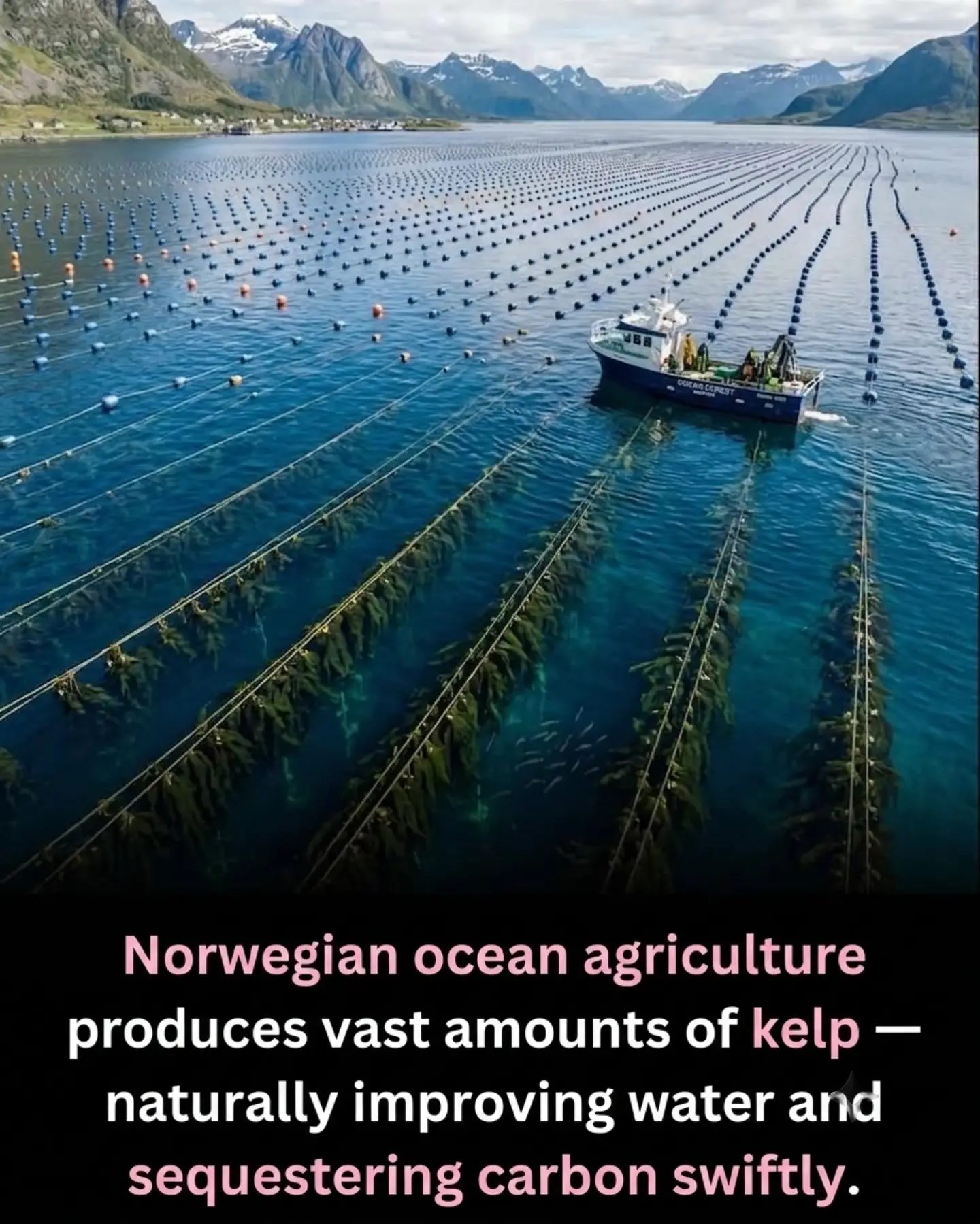
Ocean Agriculture
Underwater kelp forests are a fascinating sight, but they are more than just a spectacle. In Norway, these underwater farms, part of a growing industry known as ocean agriculture or blue farming, are playing a crucial role in environmental sustainability. These kelp farms are transforming the way we think about agriculture and its potential to mitigate climate change.
Context / Why this matters
Ocean agriculture, particularly kelp farming, offers a unique solution to some of the most pressing environmental challenges. Unlike traditional land-based agriculture, kelp farming does not require fresh water, fertilizer, or soil. Instead, it harnesses the power of the ocean to grow a versatile and sustainable resource. This makes kelp farming an attractive option for regions with limited arable land and freshwater resources.
Main discussion
Kelp farming holds significant potential in several key areas, making it a game-changer for environmental sustainability.
Carbon Sequestration
One of the most compelling benefits of kelp farming is its ability to sequester carbon. Kelp is one of the fastest-growing organisms on Earth, and as it grows, it absorbs massive amounts of carbon dioxide (CO2) from the atmosphere. This rapid growth rate makes kelp an effective tool for combating climate change, as it can capture and store carbon more efficiently than many land-based forests. By integrating kelp farming into our environmental strategies, we can accelerate the reduction of atmospheric carbon levels, contributing to a healthier planet.
Water Purification
In addition to carbon sequestration, kelp also acts as a natural water purifier. While it absorbs carbon, it also pulls other excess nutrients, such as nitrogen and phosphorus, from the water. This process helps clean the ocean and prevent harmful algae blooms, which can degrade marine ecosystems and disrupt local fisheries. By maintaining healthy water quality, kelp farming supports the overall health of marine life and coastal communities.
Sustainable Superfood
Kelp is not only environmentally beneficial but also a versatile and sustainable resource. It requires no fresh water, no fertilizer, and no land, making it an ideal candidate for sustainable agriculture. Kelp can be used in a wide range of applications, from food and animal feed to sustainable bioplastics and even biofuels. Its versatility makes it a valuable addition to the growing movement toward sustainable and eco-friendly products.
Practical tips
Are you interested in supporting or even starting your own kelp farming enterprise? Here are some practical tips to help you get started:
Research and Planning
Before diving into kelp farming, it's essential to conduct thorough research. Understand the specific requirements for growing kelp in your region, including water temperature, salinity, and nutrient levels. Engage with local experts and organizations that can provide guidance and support. The Norwegian approach to kelp farming, showcased by specialized vessels like the "DORAS COMENT", offers valuable insights into effective farming practices.
Selecting the Right Species
Not all kelp species are created equal. Different species have varying growth rates, nutrient requirements, and environmental tolerances. Choose a species that is well-suited to your specific conditions and has a proven track record in sustainable farming. For instance, the kelp species used in Norwegian ocean agriculture is known for its rapid growth and high carbon-sequestration capabilities.
Implementing Sustainable Practices
To maximize the environmental benefits of kelp farming, it's crucial to implement sustainable practices right from the start. This includes using eco-friendly equipment and avoiding practices that could harm marine life. By adhering to sustainable guidelines, you can ensure that your kelp farm contributes positively to the environment and supports local biodiversity.
Important takeaways
As we delve deeper into the potential of ocean agriculture, there are several key takeaways to keep in mind:
- Kelp farming offers a sustainable alternative to traditional agriculture, with minimal environmental impact.
- The rapid growth of kelp makes it an effective tool for carbon sequestration, helping to combat climate change.
- Kelp's ability to purify water and prevent harmful algae blooms supports the health of marine ecosystems.
- The versatility of kelp makes it a valuable resource for various industries, from food and animal feed to sustainable bioplastics and biofuels.
Conclusion
Ocean agriculture, particularly kelp farming, represents a significant shift in how we approach sustainability and environmental stewardship. By harnessing the power of the ocean, we can produce a valuable resource while mitigating some of the most pressing environmental challenges. Whether you're an environmental enthusiast, a farmer, or simply curious about innovative solutions, exploring the world of ocean agriculture can provide valuable insights and inspire action.
Watch the Reel
Questions readers ask
How do Norwegian kelp farms contribute to carbon dioxide absorption?
Norwegian kelp farms act as massive carbon sinks. Kelp, a type of seaweed, rapidly absorbs carbon dioxide from the water as it grows. This process helps to mitigate climate change by removing significant amounts of this greenhouse gas from the atmosphere and ocean.
What are the benefits of kelp farming for marine ecosystems?
Kelp farms support marine ecosystems by filtering excess nutrients from the ocean, such as nitrogen and phosphorus, which can otherwise lead to harmful algal blooms. Additionally, they provide habitats for various marine species, promoting biodiversity and supporting healthier underwater environments.
How does kelp farming in Norway differ from traditional agriculture?
Unlike traditional land-based agriculture, kelp farming in Norway does not require fresh water, soil, or chemical fertilizers. It leverages the ocean's natural resources to grow kelp, making it a more sustainable and environmentally friendly farming practice.
What is ocean agriculture, and why is it important?
Ocean agriculture, or blue farming, involves cultivating crops in the ocean. It is important because it offers a solution to pressing environmental challenges, such as climate change and water scarcity, by providing a sustainable alternative to traditional farming methods.
How does kelp farming help in water purification?
Kelp farming aids in water purification by absorbing excess nutrients and pollutants from the ocean. The kelp plants filter out nitrogen and phosphorus, which can otherwise cause harmful algal blooms and oxygen depletion, resulting in healthier marine environments.
What role do Norwegian kelp farms play in sustainable agriculture?
Norwegian kelp farms exemplify sustainable agriculture by utilizing the ocean's resources to grow a renewable and eco-friendly crop. This method reduces the demand for land, water, and fertilizers, contributing to a more sustainable and greener planet.
How does underwater kelp farming support a greener planet?
Underwater kelp farming supports a greener planet by absorbing large amounts of carbon dioxide, reducing the impacts of climate change. It also revitalizes marine ecosystems by purifying water and creating habitats for marine life, ultimately promoting a cleaner and healthier ocean environment.
Related deep dives
Similar reads based on topic and creator.

Recent articles
Fresh deep dives from the latest Reels we unpacked.




Comments
Be the first to comment.