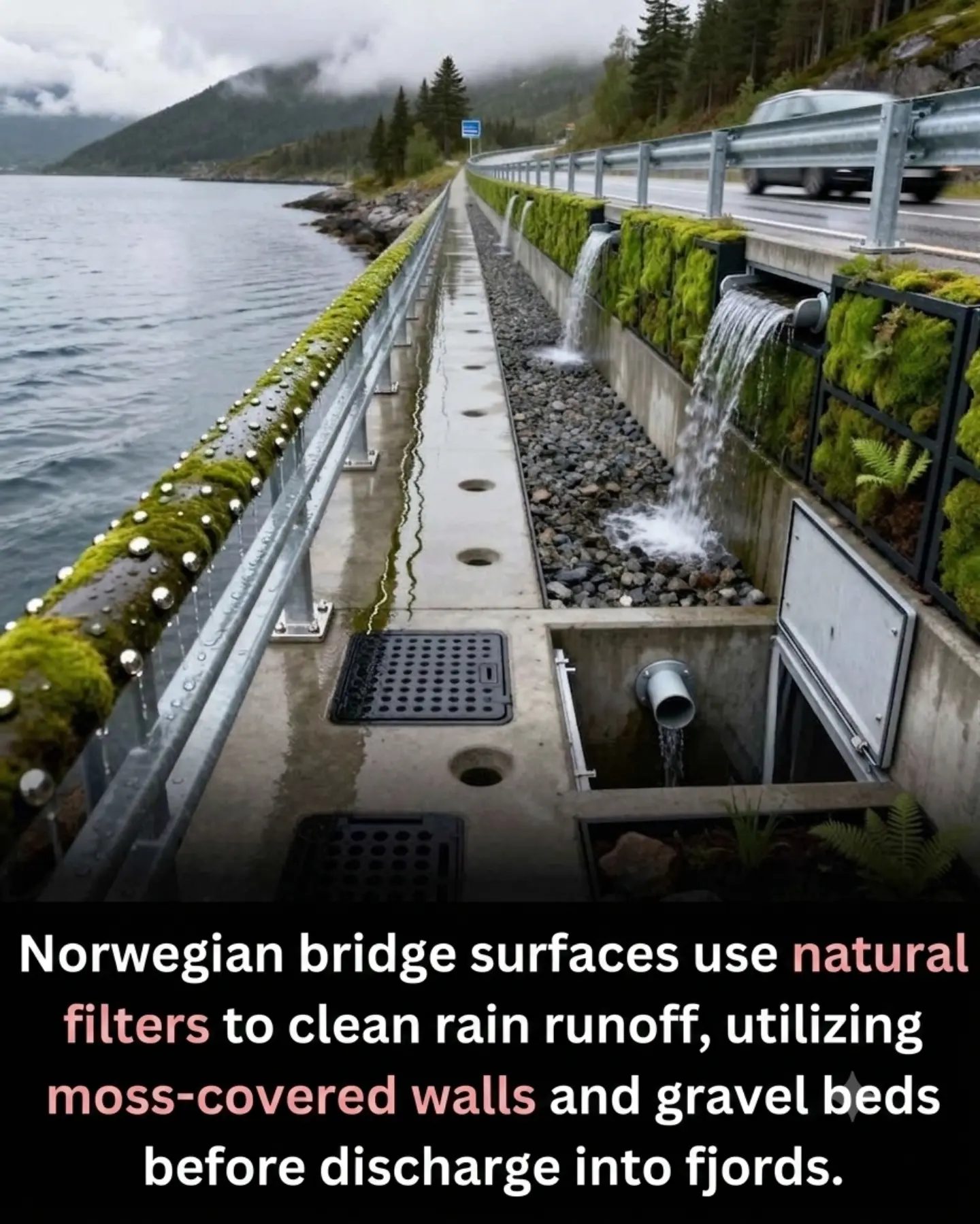
Natural Water Filtration
The integration of natural filters into coastal and highway infrastructure in Norway represents a pioneering approach to managing polluted road runoff. This innovative solution, known as nature-based solutions (NbS), is designed to safeguard the pristine aquatic ecosystems of fjords from the toxic mix of pollutants that heavy rainfall or snowmelt washes over vehicular surfaces.
Why This Matters
Norwegian infrastructure faces a significant challenge in managing road runoff, which carries a cocktail of pollutants including heavy metals, microplastics, tire wear particles, and seasonal road salt. These pollutants pose a substantial threat to the delicate marine life in the fjords. The innovative use of natural filters not only helps mitigate these environmental risks but also promotes sustainable engineering practices that can be replicated in other regions facing similar challenges.
Main Discussion
The Role of Moss and Gravel
Norwegian coastal and highway infrastructure increasingly uses moss and gravel beds to filter rainwater runoff. These natural elements serve as biological filters, cleaning the water as it flows over them. Moss-covered walls act as living filters, absorbing organic pollutants and excess nutrients, while gravel beds slow the water's velocity. This reduction in speed allows the gravel to trap coarse sediments and total suspended solids (TSS), ensuring that the water discharged into the fjords is significantly cleaner.
Moss-Covered Walls
The vertical moss walls are more than just an aesthetic feature; they play a critical role in the filtration process. Moss has a remarkable ability to absorb and break down organic pollutants, making it an effective natural filter. The living moss structures on the bridge surfaces help in reducing the toxicity of the runoff water, ensuring that the delicate marine ecosystems in the fjords remain protected from urban and industrial contamination.
Gravel Beds
Gravel beds, on the other hand, work by physically trapping coarse sediments and total suspended solids. The porous nature of the gravel allows water to flow through while capturing larger particles that would otherwise contaminate the fjords. This dual filtration system, using both moss and gravel, ensures that the runoff water is thoroughly cleaned before being discharged.
The Sustainable Engineering Approach
The use of moss and gravel in Norwegian infrastructure is part of a broader sustainable engineering approach that aims to reduce the environmental impact of highway drainage. By integrating natural elements into the design, engineers can create systems that not only filter pollutants effectively but also blend seamlessly with the natural landscape. This approach ensures that the ecosystem remains intact while also addressing the practical needs of modern infrastructure.
Practical Tips
Implementing natural filters in infrastructure can be a game-changer for preserving aquatic ecosystems. Here are some practical tips for incorporating natural filtration systems:
- Design Integrating Moss: When designing new infrastructure, consider incorporating moss-covered walls or vertical gardens. This not only adds an aesthetic appeal but also serves as a natural filter for runoff water.
- Use Gravel Beds: Install gravel beds in areas where water runoff is expected to collect. This will help trap larger particles and slow down the water flow, allowing for better filtration.
- Regular Maintenance: Regularly maintain the moss and gravel beds to ensure they continue to function effectively. This includes removing any accumulated debris and checking for any signs of wear and tear.
- Monitor Water Quality: Regularly test the water quality of the discharge to ensure that the filtration systems are working as intended. This will help identify any areas that need improvement.
- Community Engagement: Engage the local community in the implementation and maintenance of these systems. This can help raise awareness about the importance of natural filtration and encourage community involvement in environmental conservation efforts.
Important Takeaways
The Norwegian approach to natural water filtration demonstrates a harmonious blend of engineering and nature. By using moss and gravel, this system effectively reduces the environmental toxicity of highway drainage, safeguarding fragile marine life in the fjords. Key takeaways include the importance of integrating natural elements into infrastructure design and the necessity of regular maintenance to ensure the system's effectiveness.
Conclusion
Natural water filtration through moss and gravel beds represents a significant advancement in sustainable engineering. By leveraging the natural properties of these materials, Norwegian infrastructure can effectively manage road runoff, protecting the delicate ecosystems of the fjords. This approach not only benefits the environment but also sets a benchmark for other regions to follow, showcasing the potential of nature-based solutions in addressing modern environmental challenges.
Watch the Reel
Questions readers ask
What are the main pollutants found in Norwegian road runoff?
The primary pollutants in Norwegian road runoff include heavy metals, microplastics, tire wear particles, and road salt. These contaminants are particularly harmful to the aquatic ecosystems of Norwegian fjords, which is why Norway has implemented innovative natural filters to mitigate the problem.
How do moss and gravel help in filtering road runoff?
Moss and gravel act as natural filters that absorb and trap pollutants from road runoff. Moss can filter out particles and absorb nutrients, while gravel slows down the flow of water, allowing more time for pollutants to settle and be captured. This process helps to clean the water before it reaches the fjords.
What are nature-based solutions (NbS) and how are they used in Norway's infrastructure?
Nature-based solutions (NbS) are approaches that use natural processes and elements, such as moss and gravel, to address environmental challenges. In Norway, NbS are integrated into coastal and highway infrastructure to filter and clean road runoff, protecting nearby aquatic ecosystems.
Why is managing road runoff so important for fjord water quality?
Fjords are delicate marine environments that are particularly vulnerable to pollution. Effective management of road runoff reduces the influx of pollutants, helping to maintain the purity and health of the fjord ecosystems, which are critical for both marine life and local communities.
What role do moss-covered walls play in Norway's green highway infrastructure?
Moss-covered walls are a key component of Norway's green highway infrastructure. They act as natural filters, capturing and absorbing pollutants from road runoff as it flows down. This innovative use of moss helps to reduce the environmental impact of highways, especially near coastal areas.
How does gravel contribute to sustainable engineering in Norway's runoff management?
Gravel is used in Norway's runoff management systems to create gravel beds and filters. As runoff flows through these gravel layers, contaminants are trapped and filtered out, resulting in cleaner water. The use of gravel in this way is a sustainable and cost-effective way to manage runoff and protect the environment.
What are the benefits of using natural filters for runoff management?
Natural filters offer several benefits for runoff management, including reduced environmental impact, lower maintenance costs, and improved water quality. They also contribute to sustainable engineering by incorporating natural elements into infrastructure, enhancing both functionality and environmental stewardship.
Related deep dives
Similar reads based on topic and creator.

Recent articles
Fresh deep dives from the latest Reels we unpacked.




Comments
Be the first to comment.