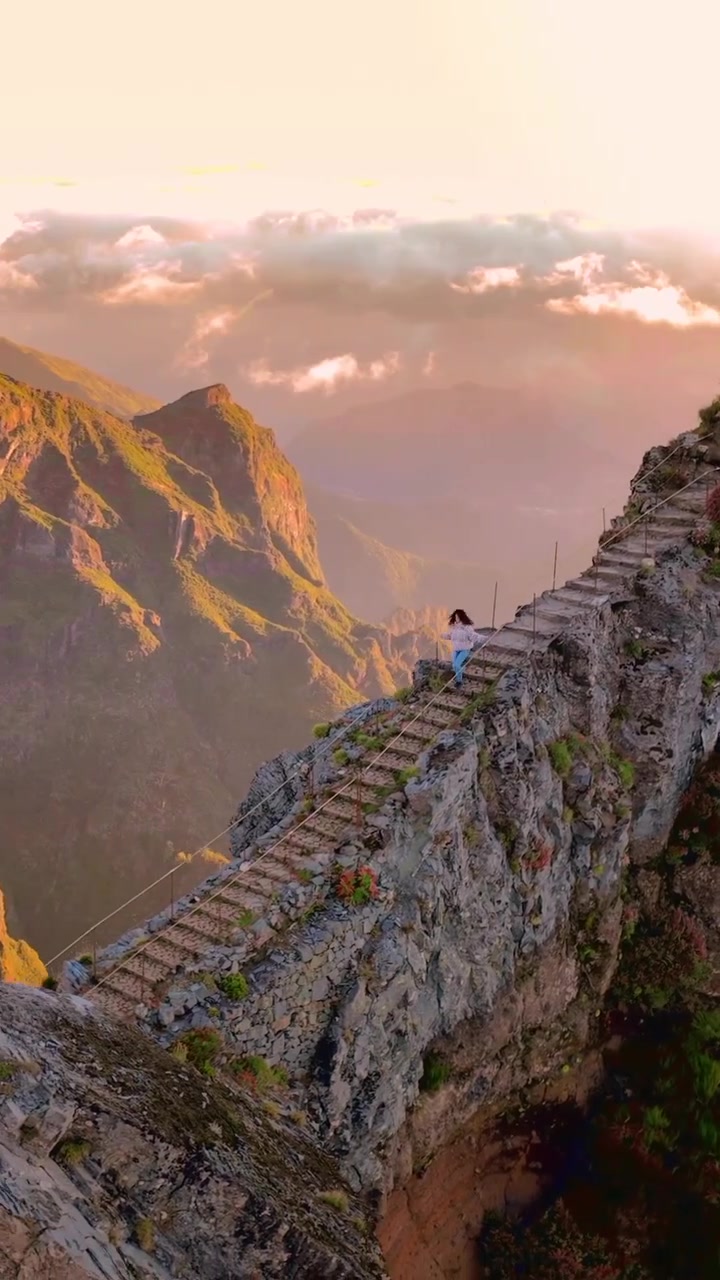
About halfway up the side of an Alpine cliff, the stone staircase winds upwards. It offers a sense of adventure, a lifeline against the spectacular beauty of the surrounding mountains and valleys. The mountain staircase transforms a steep face into an accessible experience, proving how humans can shape nature in a way that retains awe. As the staircase winds upwards, it carves across the side of the mountain. How does it do that? What did that project demand, and why was it worth it? What journey does it offer? Why do people hike these trails? How are these staircases built? About the experience.
A Trail of Thousands of Steps
The staircase is not a dizzying flight of stairs, rising to a peak above the clouds. The trail is built into the side of the mountain as a culmination of steps — a joyfully steep ascent. The staircase seems to be the beginning of a journey. Each metal railing is a lifeline along the edge of the trail, and each stone step is a testament to human endurance as the stair climbs higher. To build something in nature the way one lives in it demands respect and meticulous craftsmanship. Building such a trail requires meticulous construction and engineering. It’s not just a series of steps but a stonework sculpture in the harsh microclimate. Some steps are built into the hillside, and others are constructed over suspension bridges, even incorporating intricate retaining walls that reinforce the entire structure. It is a way of ascension, transforming the mountain and the person who climbs it. Mountain staircase construction is a seamless blend of the natural and the man-made. But it means something when people build a staircase into the side of a mountain. The staircase tells a story about humanity’s enduring fascination with nature and the desire to conquer it.
The Quest for Adventure
Mountain staircases are not just thrilling destinations; they are a testament to the rise of adventure travel experiences. There is an implicit challenge, a display of devotion to the natural world, a promise of awe-inspiring landscapes and a steep ascent. These staircases are an invitation to a singular experience. People have constantly sought out extreme environments and activities for the rush of adventure. Loved as a unique way of experiencing nature, built trails and staircases offer a controlled and engineered experience. Plus, they offer a streamlined, guided experience. The tourism industry itself is a true adventure. Construction of these staircases demands a great deal of planning, engineering, and infrastructure. It caters to an increasing desire for adventure travel. The stairs are found along hiking trails, climbing routes, and mountain passes at varying altitudes. In Europe’s Alps, the Pyrenees and the Caucasus mountains, the mountain staircases later became tourist attractions. These staircases are a way of experiencing nature. But they also offer a thrilling adventure that has become increasingly sought after in today’s world. Mountain staircases have an almost spiritual aura — they foster awe and self-reliance.
What kind of adventure is that?
The Gradient of Achievement
Mountain staircases carry echoes of pilgrimage and mountain sports. They showcase the wildness of the outdoors. The gradient of achievement is the physical and psychological challenge that travelers take up. The rawness of it is part of the experience. The staircases offer a rugged landscape, with steep mountains and valleys. The staircases show commitment, dedication, and endurance. Yet the feeling of adventure is not just in the climbing but in the very idea of it. The gradient of achievement is also about the challenges that travelers face along the way. The ascent is challenging both physically and mentally. With a constructed staircase, the mountain becomes a guided adventure. With the staircases’ metal railings and sturdy steps, travelers can navigate challenging but beautiful landscapes. The staircases offer an escape from the routine. They act as a security blanket in the wilderness. Then the sheer climb becomes an activity itself and the staircase becomes a grounding experience. This is where the gradient of achievement comes in: travelers gain satisfaction from overcoming each climb.
Rock and Railings
There is a particular kind of stone: granite. The type of stone that staircases usually use is granite, which is sturdy and very hard. You can find other rock types — like limestone and sandstone — but their durability is questionable. Using granite for staircase construction promises stability, durability, and longevity. The stone itself comes in various types, with granite being a popular choice. Not only is granite easy to work with, but it also has a natural resistance to weathering and erosion. This means that the staircases can withstand the elements for years to come, providing a safe and reliable path for hikers. The rock must be worked to shape because the shape you carve into the rock itself will determine the ergonomics of the trail. The stairs usually run from ten or twenty feet, but the railings are ten or more times wider. Each step is designed for easy footing. Each handrail ensures safety. Furthermore, the stairs are built for endurance and physical fitness. Why not? It seems to make climbing a mountain into an act of self-discovery and survival. The staircases not only add to the experience but also make mountain climbing safer.
From Mountain Vertigo to Mountain Clearance
The staircase has a dual impact — it feels like climbing a mountain, but it also becomes an inspiring trail of achievement. The climbers can always look forward; there is a trail before their feet and a view before their eyes. This trail of stone stairs is an act of achievement. The staircases are a way to channel the body's energy. It’s about the journey upwards, the ascent. It hones the ankle and the knee muscles. Its effect on the joints and the heart is well recorded. The staircase is also a unique adventure that seems to offer clarity and fulfillment. The climb is a real achievement in itself. The staircase is an experience that changes how an adventurer views the world. Steam from the lungs, pains in the thighs, and a steady stream of sweat down the cheeks. The staircases offer a hike, but it also hones the muscles.
Finding the Best View
For many, the journey of climbing a staircase is the destination itself. A staircase on the side of a mountain is a self-sufficient experience in itself. Choosing the best staircase involves looking at the incline, the height, the view, the difficulty, and the equipment. The staircase should leave one breathless. The staircase should end at a point that proves its existence worthwhile.
- Where to Go?: Choose a staircase with a view. The best staircases usually come with a great view. You might as well choose a staircase that caters to your adventurous side. They ideally connect two spots, offering a view that is worth hiking for.
- What to Pack?: Choose the right gear. Pack a sturdy pair of gloves, food, a mountain map, water, and proper clothing. You should choose a backpack that doesn’t weigh you down, and the equipment should not be too cumbersome.
- Respect Nature: Leave no trace. It’s not uncommon to see trash on mountains. Choose the right time to hike. The best time to hike is usually autumn. The weather is not too hot or cold, and the environment is not too crowded.
- Stay Safe: All the steps should be clearly marked. Take breaks if needed. Remember to climb by yourself if possible. It will be easy to relax and calm your mind. Always carry a way to call for help. Rescue services would take a while to reach you.
Travel to a Different World
Familiarity has rendered the natural ‘mountain’ landscape as unattainable. Mountain staircases, in a way, make a mountain accessible again. It requires a great deal of brainstorming and creativity. Every mountain staircase becomes a journey of climbing up an artificial trail that transforms a mountain into a controllable wilderness. These staircases not only add to the experience but also make mountain climbing safer. And they invite the climber to plant their feet, anchor their hands, and take on the hill.
Watch the Reel
Questions readers ask
How are mountain staircases typically built to withstand harsh conditions?
Mountain staircases are constructed with meticulous craftsmanship and engineering, often using stone and metal. The steps are built into the hillside and sometimes over suspension bridges, with intricate retaining walls reinforcing the structure. This ensures they can endure the harsh microclimate and provide a safe ascent.
What makes mountain staircases so appealing to adventurers?
Mountain staircases offer a unique blend of nature and human engineering, providing a thrilling and awe-inspiring experience. They cater to the growing desire for adventure travel, offering a controlled yet challenging ascent with stunning landscapes.
Are these staircases only found in the Alps, or are there similar trails in other mountain ranges?
While the Alps are famous for their mountain staircases, similar trails can be found in other mountain ranges like the Pyrenees and the Caucasus. These staircases have become popular tourist attractions, offering a unique way to experience nature and adventure.
How do these staircases compare to traditional hiking trails?
Mountain staircases differ from traditional hiking trails as they offer a more structured and engineered experience. They provide a steep ascent with a clear path, often including metal railings and suspension bridges, which can make the journey more accessible and thrilling.
What kind of engineering is involved in building a mountain staircase?
Building a mountain staircase involves a lot of planning and engineering. It includes creating retaining walls, constructing suspension bridges, and ensuring the steps are securely built into the hillside. The goal is to blend the natural landscape with man-made structures seamlessly.
Why do people find hikes like the Matterhorn Trekking Route so appealing?
Hikes like the Matterhorn Trekking Route are appealing due to their unique blend of adventure and natural beauty. The stone staircase offers a sense of achievement and awe, transforming a steep mountainside into an accessible experience that retains the majesty of the surroundings.
Can anyone hike these mountain staircases, or is it only for experienced hikers?
While some mountain staircases are accessible to a range of hikers, others may require a certain level of fitness and experience. It’s important to research the specific trail to ensure it matches your skill level. Many trails offer a mix of challenging and rewarding experiences, but safety should always be a priority.
Related deep dives
Similar reads based on topic and creator.

Recent articles
Fresh deep dives from the latest Reels we unpacked.




Comments
Be the first to comment.