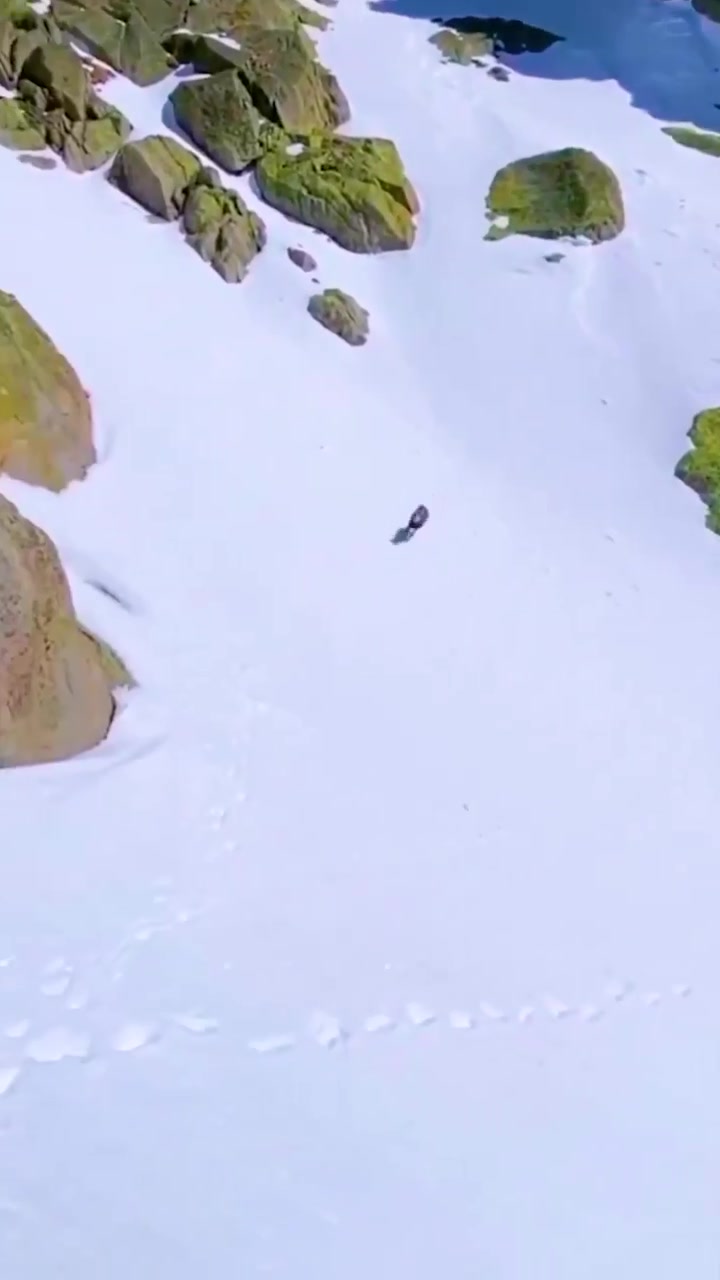
A mountain goat surveys a rocky perch, its sure-footedness a stark contrast to the skiers navigating the snowy slopes below. The video is a dramatic representation of mountain skiing, showcasing the thrill of the sport while hinting at the natural beauty that frames it.
The heart-pounding allure of mountain skiing
The allure of mountain skiing lies in its thrill and challenge. What sets it apart from other winter sports is that it’s hard to define precisely. Mountain skiing is an umbrella term that encompasses various disciplines, including alpine, freestyle, and backcountry skiing. The key defining element is the terrain itself, the snow-covered mountains. The terrain, the mountain and weather dynamics, make it unpredictable, but that’s exactly what makes it exciting. Mountain skiing uses skis with fixed-heel bindings, providing less flexibility than other disciplines. Unlike flat races on snow, mountain skiing presents various slopes and tracks. It evolved from transportation to recreation. Skis, as simple tools for winter travel, transformed into essentials of a fast-paced sport. As it progressed, ski equipment took many forms, adapting to various terrains and snow conditions. Altitude is an important factor. The higher the peak, the better: altitude compression suits, high-quality boots, and lighter skis are crucial. Skiers are constantly pushing boundaries, seeking new terrains. While the exact statistics are hard to find, mountain skiing has gained popularity in the last decade. It's an adrenaline-fueled, high-stakes pursuit for many.
The modern quest for adventure
Mountain skiing has transcended its original, utilitarian purpose as a means of winter travel, transforming into an icon of adventure and a symbol of modern-day culture. This pastime is a risk-taking activity that has been romanticized over the years. In popular culture, people have been seen obsessed over skiing as a reflection of one's daring and passion for adventure. In recent years, mountain skiing has found its way into high-profile events and competitions. It's also become a media sensation. The thrill of conquering untouched slopes and the camaraderie among fellow skiers have made it an enduring symbol. Additionally, there's something uniquely magical about skiing through trees, around boulders, or over rocky outcrops, escaping the crowded pistes. Nature is a close ally in mountain skiing, and conversely, getting lost in a mountain wilderness is a serious problem that mountain skiers are always vulnerable to. Mountains offer a respite from the digital world, and the risk of slipping off a cliff, breaking a leg, or freezing to death adds to the thrill.
Mastering the trails
The types of skiing
Under this broad category, three main types of skiing can be distinguished by their equipment, techniques, and the terrain it uses. Alpine skiing, also known as downhill skiing, is the most popular. Skis have fixed-heel bindings. Alpine skiers can't lift their heels. Alpine skiers need to know how to control their speed and direction. They do this with skis and poles. Ski poles help skiers move in the proper direction. Freestyle skiing is a more modern, playful variant. Freestyle skiers use continuously binding skis, like snowsports, and they can lift their heels. Freestyle skiing is a mix of traditional skiing and acrobatics. It is just as exciting as alpine skiing, but it also has more emphasis on technical skills. Skiers usually do tricks and jumps. Freestyle skiers have a reputation for being more daring and adventurous. Once you've mastered the basics, backcountry skiing may be a fun new challenge. Backcountry skiing is wild and untouched. Backcountry skiers travel with minimal gear. Backcountry skiing allows skiers to navigate dangerous terrain and minimize risks. The goal is to stay safe in unfamiliar, high-risk locations. Backcountry skiers need more exercise and equipment. They must study maps, organize trips, and monitor weather before skiing. Backcountry skiers need snow safety gear. Avalanche transceivers or tracking devices, avalanche rescue beacons, avalanche rescue shovels, and avalanche airbags are examples.
Key skills
Navigating difficult routes and slopes requires basic skiing knowledge, avalanche training, and survival training. Mountain skiing is a sport where you get to show off your skills. Skiers should get the right equipment: high-quality boots, lightweight skis, and specialized clothing. Skiers must also understand the weather to avoid dangerous conditions.
A beginners journey
Some mountain skiers prefer to follow well-trodden trails, while others enjoy exploring new terrain. The risk of falling is always present, regardless of the type of skiing. Skiers should enjoy the experience and prepare for the worst. Skiers must keep moving forward, no matter how steep or icy the slopes get. Skiers should always maintain a safe distance from one another, avoid crowded slopes, and adhere to all safety instructions. Mountain skiers should always wear a safety helmet and gloves.
Gear for the mountain
Safety gear
Safety precautions are vital in mountain skiing, including avalanche safety gear. An avalanche beacon is used to locate buried individuals. Avalanche backpacks include an avalanche airbag and are required. These airbags serve as a last resort by quickly inflating to protect skiers. Recommended: Piste maps, avalanche transceivers, survival kits, and avalanche shovels are recommended. Although avalanches are rare, mountain skiers should always be prepared. It is a life-saving boon to have the correct survival kit. This includes tea lights, a multipurpose tool, a shovel, a knife, and a small heating device. As safety takes priority in risky sports, more importance is given to the brand's quality and durability.
How to choose the right skis
Choosing the right ski is essential for performance. Skis are available in various sizes, widths, and flex patterns. There are six types of skis: all-mountain, big mountain (BM), cross-county, freestyle, urban terrain, and racing skis. Each type of ski is best suited for a different terrain and skiing style.
Rejuvenate in the mountain air, both body and mind
Mountain skiing offers an invigorating experience for those seeking adventure. Skiers find it thrilling to ski down steep slopes. Despite its risks and challenges, mountain skiing remains popular because of its exhilarating adrenaline rush. The sensory experience is unrivaled, whether acrobatic stunts, skimming fallen snow along a timber laden route, or racing down the slopes at high speeds. Going on a ski trip is more than just an adventure. The mountain’s natural beauty gives skiers a sense of well-being. The whole experience of mountain skiing is profound and transformative for some. It can be a spiritual journey and a test of one's limits. So, when trekking up the slopes, remember to take a deep breath and enjoy the scenery.
Watch the Reel
Questions readers ask
What equipment is essential for mountain skiing and why does it matter?
The article highlights that skis with fixed-heel bindings, high-quality boots, and lighter skis are crucial for mountain skiing. These elements are important because they provide the necessary control and stability needed to navigate the unpredictable terrain and varying snow conditions. Altitude compression suits are also mentioned, indicating that the right gear can help skiers adapt to higher altitudes.
How does mountain skiing differ from other winter sports like alpine and freestyle skiing?
Mountain skiing is an umbrella term that includes various disciplines like alpine and freestyle skiing. Alpine skiing is characterized by skis with fixed-heel bindings, focusing on speed and direction control. Freestyle skiing, on the other hand, is noted for its more varied and dynamic movements. The key difference lies in the terrain: mountain skiing embraces the unpredictable nature of snow-covered mountains, making each descent a unique adventure.
What are the risks involved in mountain skiing, and how can they be managed?
The risks in mountain skiing include getting lost in the wilderness, slipping off a cliff, or freezing to death. These risks are inherent to the sport and add to the thrill. To manage these risks, skiers need to be well-prepared with the right equipment and knowledge. Staying on marked trails, skiing with a partner, and carrying essential safety gear can help mitigate some of these dangers.
Why has mountain skiing gained popularity in recent years, and what role does it play in modern culture?
Mountain skiing has gained popularity due to its thrilling and adventurous nature. It has been romanticized in popular culture as a symbol of daring and passion for adventure. The sport has also found its way into high-profile events and competitions, further boosting its popularity. Additionally, the camaraderie among skiers and the allure of conquering untouched slopes contribute to its enduring appeal.
What are the benefits of skiing in the backcountry compared to skiing on groomed pistes?
Skiing in the backcountry offers a unique and magical experience, allowing skiers to escape the crowded pistes and immerse themselves in nature. It involves skiing through trees, around boulders, or over rocky outcrops, providing a more adventurous and less predictable experience. However, it also comes with increased risks, such as getting lost or encountering hazardous terrain, which requires skiers to be well-prepared and knowledgeable about the area.
How has mountain skiing evolved from a means of transportation to a recreational sport?
Mountain skiing has evolved significantly from its origins as a means of winter travel. Over time, skis transformed from simple tools for transportation into essentials for a fast-paced sport. This evolution was driven by the desire to push boundaries and seek new terrains, leading to the development of various disciplines and specialized equipment. Today, mountain skiing is a thrilling and adventurous pursuit that combines adrenaline and natural beauty.
Related deep dives
Similar reads based on topic and creator.



Recent articles
Fresh deep dives from the latest Reels we unpacked.


Comments
Be the first to comment.