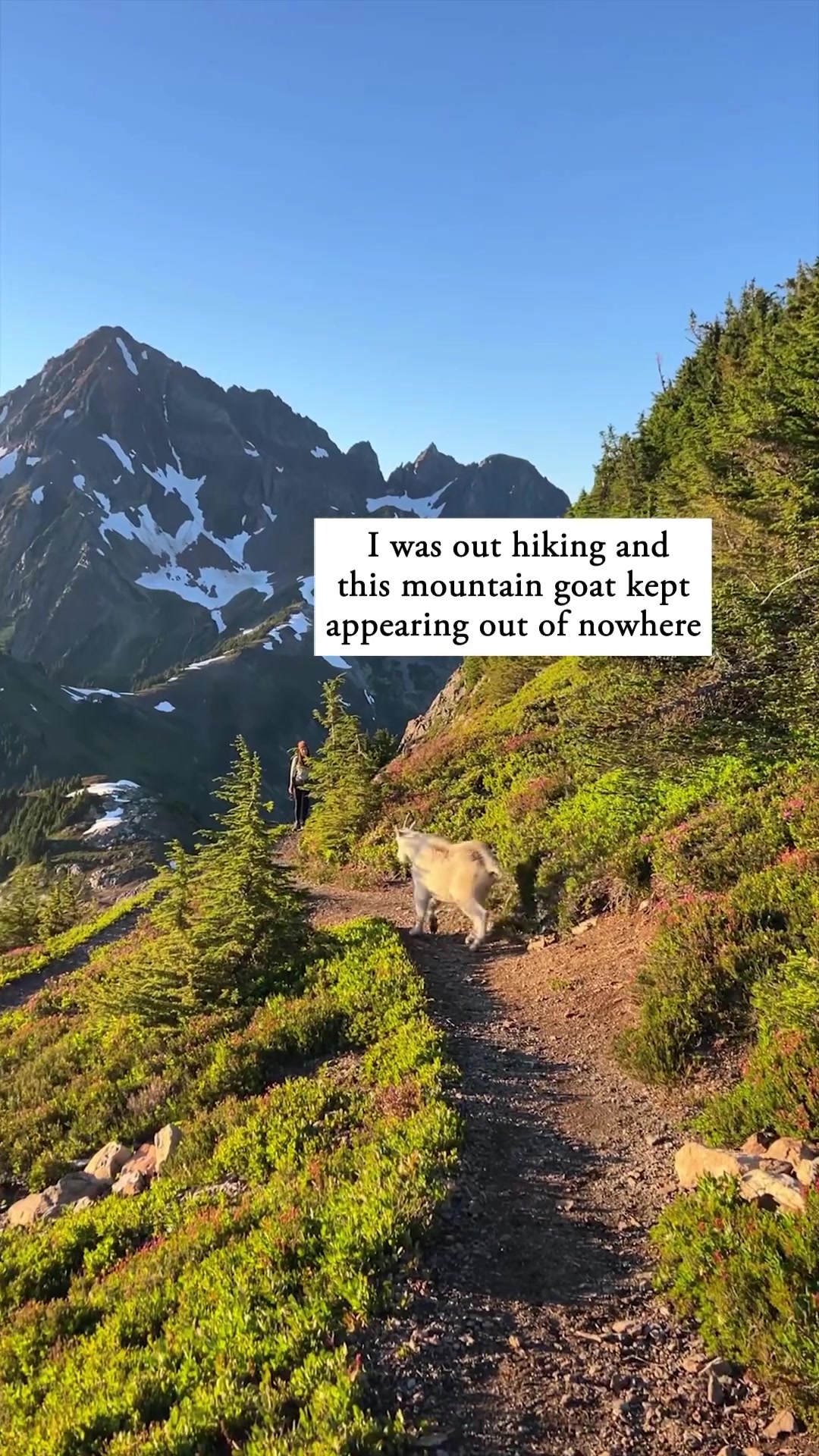
The mountain goats of the Rockies might resemble cheerful woodland mascots, except their behavior is anything but predictable. But does unexpected wildlife sightings enhance or disrupt a hiking experience?
The Unseen Companions of Rockies Hiking
Every hike can turn into an encounter with some non human residents. Mountain goats inhabit altitudes above 10,000 feet that are dotted with steep cliffs and snowy peaks. Despite their agility, mountain goats are surprisingly elusive, which makes them more exciting to encounter. The sudden appearance of one, as in the video, can make a hike memorable. The rocky trails they traverse are often narrow and winding, and the vegetation offers little cover. So, a goat seems to appear out of nowhere. These non-human residents are not expected to cross paths. This is why the sighting is remarkable. The goats' coats are thick and shaggy, primarily white but with darker underbellies and legs. When they blend in with the snow, they can be difficult to spot unless one is familiar with their behavior and trails.
Goats vs. the Hiking Boom
Mountain goats might be more approachable to hikers and campers than the National Park Service’s warnings suggests. More than 250 million people visit national parks each year — many hoping to capture a glimpse of wildlife, like this one. As the park expands there is a lot more wildlife activity on trails. The video captures this new reality.
Watching the Watchers
Keeping a Neighborly Distance
Mountain goats are friendly creatures but one should not get too close. Unlike the person in the video, an ideal approach is to be cautious. One of the most important things a person hiking in the Rocky Mountains can do is stay aware. If a goat abruptly appears on the trail, or in the surrounding vegetation, this is the time to stop immediately. One of the common ways people interact with wildlife is by taking their photos. But when hiking, the best practice is not to focus on getting a close-up photo, but rather to enjoy the moment.
Identifying Mountain Goats
Mountain goats are not to be confused for other animals, such as ibex or bromo. The mountain goat looks like a goat, with a bushy tail, muscular body, and a pair of inward-facing horns. The sighting here is a mountain goat because they have rotating, groove-shaped hooves that allow them to grip rocky surfaces. The goat’s behavior differs from other wildlife. While hiking, if you are following a path that is surrounded by vegetation, the chances of encountering a mountain goat are high. Mountain goats are often seen grazing on grass, leaves, and twigs near trails.
Scenic Vineyards
Although the rocks are often bathed in a warm glow, the scene in the video is a sight to behold. As sunset approaches, the mountains are often bathed in a warm, rosy glow, creating a breathtaking backdrop for a hike. People notice the vibrant colors, the lush greenery, and the snowcapped peaks. The range often looks like the one in the video. This part of the trail is also where mountain goats are known to frequent, making it a prime location for a hike.
Wildlife Respect
Mountain goats have a fear of humans. Disturbance to their habitat can cause them to disperse or avoid potential predators. It is important to keep a safe distance from wildlife, as well. If there is an encounter with a mountain goat, avoid approaching, feeding, or touching them. Keep a safe distance and monitor the behavior. One needs to respect the animal’s boundaries. If a goat appears frightened or agitated, back away slowly and calmly. If the animal charges, stay calm and slowly face the animal to make oneself appear larger and more intimidating.
Be Prepared Before You Go
The cooler weather and snow-covered ground make the hike more challenging. The hike is smooth and steady, but it involves some technical skills and a bit of training to make it safer.
- Learn the terrain: Prior to hiking, get familiar with the terrain. Be wary of narrow and winding trails. Be aware of some of the natural dangers that come. The mountainous scenery includes snow-capped peaks, lush greenery, vibrant colors, and sunsets.
- Be prepared: Carry water, a map, and a first aid kit. A GPS device can also be a great help. Pack some snacks for a quick energy boost. Wear appropriate hiking gear, including sturdy boots, warm clothing, a hat, and gloves. Use a backpack to carry your supplies, and a camera or binoculars if desired.
- Stay Safe: Go with a friend. Watch for mountain goats on trails, and keep a safe distance. If you encounter a goat, do not approach or feed it. If the animal appears frightened or agitated, back away slowly and calmly. If the animal charges, stay calm.
Watch the Reel
Questions readers ask
What should I do if a mountain goat suddenly appears on the trail during my hike?
If a mountain goat suddenly appears, the best course of action is to stop immediately and give the goat space. Avoid getting too close, as this can startle them and cause them to act unpredictably. Enjoy the moment from a safe distance rather than trying to get a close-up photo.
How can I tell the difference between a mountain goat and other similar-looking animals?
Mountain goats have a distinctive appearance with a bushy tail, muscular body, and a pair of inward-facing horns. Their rotating, groove-shaped hooves enable them to grip rocky surfaces. They often graze near trails, which can help identify them.
Are mountain goats dangerous to hikers?
Mountain goats are generally not aggressive but can be unpredictable. It's important to keep a safe distance and avoid startling them. They have a fear of humans, so disturbing their habitat can cause them to act defensively.
Why are mountain goats so elusive despite their rocky habitat?
Mountain goats are elusive because their shaggy coats blend well with the snowy landscape, making them hard to spot. Additionally, the narrow and winding trails with sparse vegetation contribute to their sudden appearances, enhancing the excitement of encountering them.
How common are mountain goat encounters on Rocky Mountain trails?
Mountain goat encounters are not extremely common but can happen, especially in areas above 10,000 feet with steep cliffs and snowy peaks. Their elusiveness and the rugged terrain make sightings memorable when they occur.
Why are mountain goats more approachable than the National Park Service's warnings suggest?
The National Park Service's warnings are in place to ensure safety and respect for wildlife. Mountain goats might seem approachable, but their unpredictable behavior and the need to maintain a safe distance are crucial. More than 250 million people visit national parks each year, increasing the likelihood of wildlife encounters, so these warnings are important to follow.
What makes the Rocky Mountains a prime location for mountain goat sightings?
The Rocky Mountains provide an ideal habitat for mountain goats with their steep cliffs, snowy peaks, and rocky trails. As sunset approaches, the mountains are often bathed in a warm, rosy glow, creating a breathtaking backdrop for a hike and a prime location for mountain goat sightings.
Related deep dives
Similar reads based on topic and creator.



Recent articles
Fresh deep dives from the latest Reels we unpacked.




Comments
Be the first to comment.