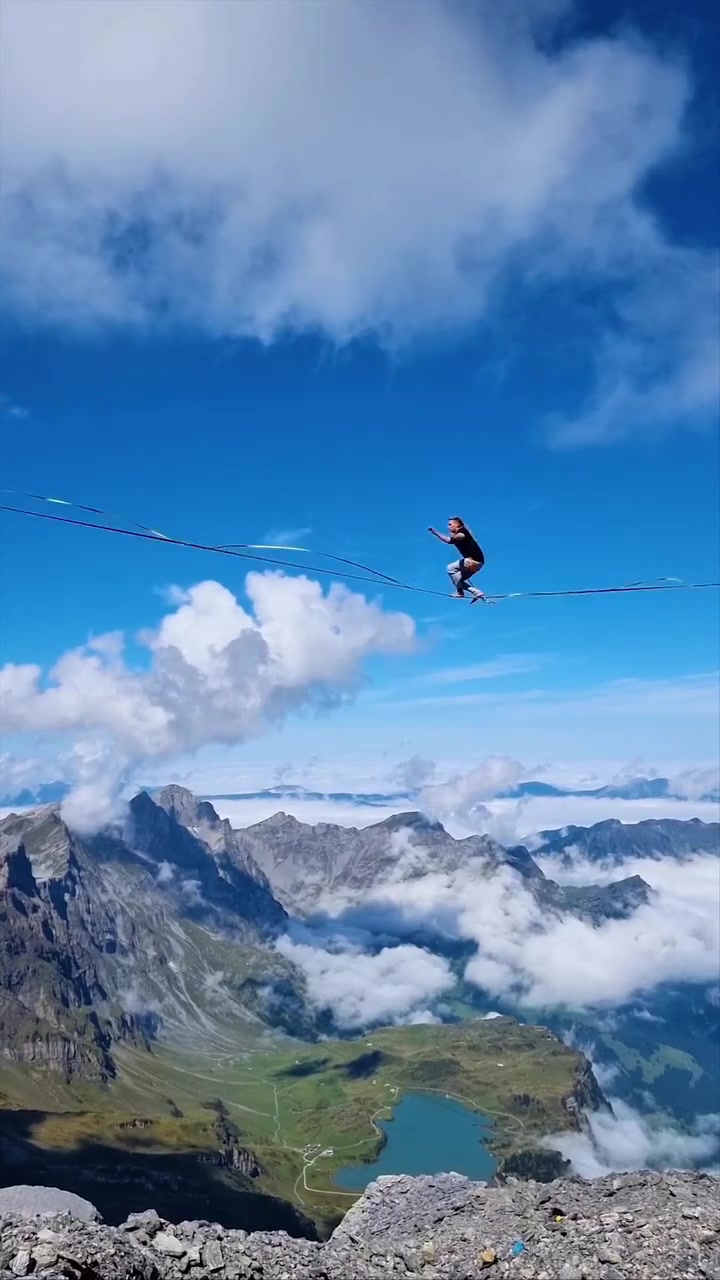
The Swiss Skywire: Mount Titlis’s daring high-altitude slackline
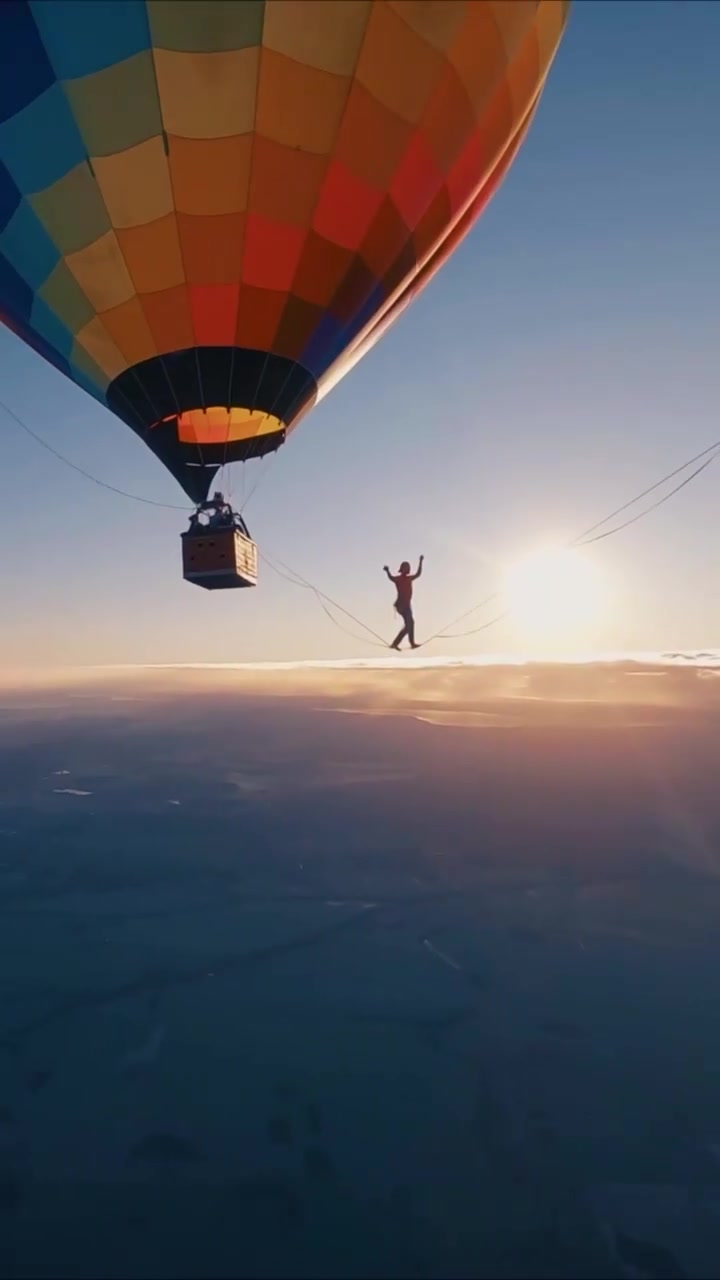
Rising through the clouds at Mount Titlis, a person suspended high above mountain valleys and peaks attempts a daring act of balance on a slackline. The Swiss peak, one of Europe's highest and most-visited, offers panoramic views from a cable car or chairlift, but this person is instead, with an extraordinary level of skill and daring, traversing a minute line of tensile strength, viewing the world below through a lens of clouds and mountains. Though no obstacle race could possibly include this one-off, the thrill of the 360-degree view from this summit is a requisite for any extreme sports participant.
The Vertiginous Joyride: Slacklining Over Swiss Alps
Brief: Slacklining is an exhilarating and precise exercise of walking on a narrow, flexible line between two points. The tension of the line and the balance required to traverse it combine to produce a unique challenge for both mental concentration and physical poise. Tricking, tricks, jumps, flips, and even 360° spins on a slackline have been performed. A slackline is an incredibly thin band of material suspended between two points of connection and typically pulled into place by an anchor point. Slackliners adjust the tension on the line that serves as the balance beam for their performance. Slacklining equipment can vary depending on the setting. A basic set up for slacklining involves a large, flexible section of webbing or a similar material. At one end, a tree or a pole serves as the anchor or support point, which also serves as a stable point for balancing the line. Verdant peaks surround Switzerland's highest point, Mount Titlis, and visitors can hike trails and feast on panoramic views from chilling platforms.
Alpine Extremism: The Peak Pursuit
There is a natural human desire to push boundaries, seek thrills, and bask in the adrenaline-fueled sense of accomplishment that follows the pursuit of extraordinary feats. More than just the beautiful view, the location itself is a story of complexity and competitive drive. Switzerland is known for its alpine trails and the people who pursue them – athletes who test the limits of their own bodies against the most extreme of landscapes. Slacklining is the newest of these feats of puissance. By combining sheer physical fitness with the will to traverse the most dangerous and slender of lines, it attracts some of the world's most talented athletes to claim the sport.
The Perils and Thrills of Postern Panoramas
The Ultimate Aerial Panorama
Slacklining enthusiasts can enjoy 360° views. There are few places on earth with easily accessible views at near vertical heights and with panoramic reach in the direction. This feat is rare, because there are few places on earth, and even fewer in Switzerland, where a slackline can be strung between two points.
The Challenge
The mountaintop journey starts with a cable car tour and a climb to a viewing platform. The sheer distance between the two points, which are separated by distance and elevation, dramatically raises the difficulty of the challenge. First, the only things between the peak and the valley are the slackliner and their equipment. Then, one must learn to navigate a narrow band of tensile strength while also managing the emotional and psychological impact of descending from a high altitude. Watching the video, I'm framing up my ADD baby. This view must be enjoyed in balance, in the very rarefied air. Slacklining combines physical fitness and mental fortitude with extreme environmental risk.
The Duality of Skill
Mastering this form of slacklining demands a duality of skill: both meticulous planning and rigorous training. These slackliners face a physical challenge that requires exceptional balance and flexibility, strength and patience. There is also the emotional aspect of facing the fear of the void. When planning a high-altitude slackline, these individuals must first develop a keen sense of the topography, weather patterns, and other external factors that can affect performance. They also need to build the physical strength, flexibility and coordination of their bodies to execute the trick.
Enabling the Adventure
Interested in trying slacklining, or at least visiting the site of one of the most spectacular? Some will enjoy the challenge of balancing high above the earth. And while there are only a few locations where one can go slacklining as on this mountain, visitors to Mount Titlis can enjoy a range of other activities.
- Cable Car Tour: Take in the stunning views of the surrounding Alps as you ascend the mountain on a cable car. It will take you to 3,047 meters above sea level. The car has revolving floors for panoramic views.
- Eat Among the Clouds: Savor the view with a meal at the mountain restaurant. Sometimes the food is as adventurous as the activities.
Watch the Reel
Questions readers ask
What exactly is slacklining, and how does it differ from tightrope walking?
Slacklining is a sport where you walk on a narrow, flexible line suspended between two points. Unlike tightrope walking, the line in slacklining is not taut, which requires more balance and constant adjustment. This makes it unique and challenging, both physically and mentally. The article describes slackliners performing tricks on the line, which is unlike tightrope walking.
How high above the ground is the slackline on Mount Titlis?
The article doesn't specify the exact height, but it mentions that the slackliner is suspended high above the mountain valleys and peaks. Given that Mount Titlis is one of Europe's highest peaks, the height is likely significant, adding to the thrill and challenge of the experience.
What kind of equipment is needed for slacklining?
Slacklining equipment typically includes a large, flexible section of webbing or similar material for the line itself. It also requires anchor points, which can be trees or poles, to secure the line. The tension of the line can be adjusted, and this setup allows slackliners to perform various tricks and stunts.
Is slacklining on Mount Titlis open to the public, or is it a special event?
The article does not explicitly state whether the slacklining on Mount Titlis is open to the public or a special event. Given the extreme nature of the activity and the need for specialized skills, it is likely that only experienced slackliners with the proper equipment and training would attempt this feat. It would be best to contact local authorities or tour operators for the most accurate and up-to-date information.
Are there any safety measures in place for slacklining at such high altitudes?
The article does not detail specific safety measures for slacklining on Mount Titlis. However, given the extreme nature of the activity, it is reasonable to assume that experienced slackliners would take necessary precautions, such as wearing appropriate gear and ensuring the line is securely anchored. Additionally, the presence of a cable car and viewing platforms suggests some level of infrastructure to support visitors, though specific safety measures for slackliners are not mentioned.
Related deep dives
Similar reads based on topic and creator.

Recent articles
Fresh deep dives from the latest Reels we unpacked.

Comments
Be the first to comment.