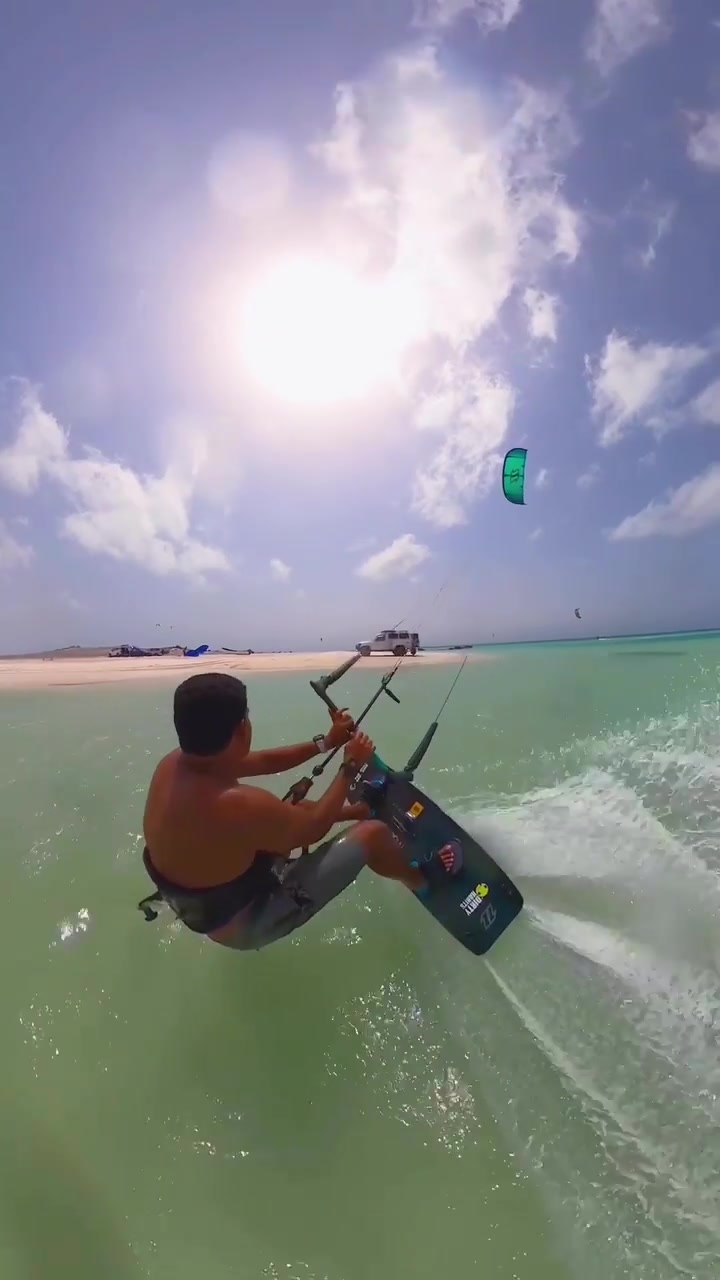
On the coasts of Oman, kiteboarding is a picture of simplicity and thrill. Under a bright sun and blue skies, boarder Mostafa Abbas bound over the waves of turquoise ocean, his kite pulling him across the water’s surface. This water sport has become popular for drawing recreation seekers into nature.
The Way of the Wind
Kiteboarding is an adventure sport that combines elements of surfing, wakeboarding, and paragliding — a bright blend of boardsports and flying. The sport harnesses the simple idea of getting a large, controllable kite to pull a round board through the water. The kite generates lift and drag forces, converting wind energy into speed, which propels the rider across the water. The kite surfer uses a board to maneuver and perform tricks. Wanting to surf the wind, and wanting to fly at the same time, riders seize momentum and soar through the air in jumps and stunts. As the caption puts it, “while Oman is most known for its sprawling modern capital of Muscat, it’s also home to marvelous beaches and tranquil stretches of coast that are nature lovers’ playgrounds.” These natural playgrounds are perfect for kiteboarding. The sport requires favorable conditions, like steady wind and flat water. When these elements align, the result is breathtaking. This 13-second clip shows a kiteboarder pulling his board through the water. The viewer witnesses the sport from the kitesurfer’s perspective as you view the water under the board. In 13 seconds the boarder skims the water and uses the kite to make maneuvers through the water’s surface.
Water and Wind
Kitesurfing has gained traction in the last two decades, becoming a highly popular water sport. The sport that is gaining popularity globally, was found in coastal areas in countries like France, Spain, South Africa, and North America. This sport is favored by those who enjoy other water sports as well as paragliding. People appreciate the simplicity and efficiency of using wind as the primary power source. Oman offers ideal conditions for kiteboarding, with its long stretches of coastline, and seasons and areas of consistent wind. While much of the world’s focus has been on the desert interior, these shores are rapidly emerging as premier destinations. These spots hold competitions and world records, proving their worth as top-built places for athletes to perform. Local athletes like Mostafa Abbas put Oman on the map for kiteboarding.
Kitesurfing Essentials
The kite is the most important and crucial element of kiteboarding, and the face of the sport. It is vital to the enjoyment and safety of kiteboarding, and these are the main factors to consider: Types: Different kits are designed for different conditions. Brightly colored, a standard kite has a structure made of inflatable tubes around the edges, these handle wind inflated, giving the kite shape and curves to provide lift, and is also used in wakeboarding. C-arch, which is most popular, injects energy and aids in jumping while providing more stability. Hybrid kites offer a balance of fun and ease across a wide range of wind conditions, some of them offering a more relaxed feel, and some offering reliability and good efficiency. These are also preferred by beginners. S Shape kites provide precision control and responsiveness. Weight: Kites range in weight and portability. A lighter and smaller kite is more portable and easier to carry, while larger kites offer better stability and performance. Size: Kites came in sizes ranging from small to large. The size of the kite is usually determined by the wind conditions and the rider’s skill level. Smaller kites are generally easier to control and are better suited for lighter winds and beginners, while larger kites offer more power and are better suited for stronger winds and more experienced riders.
Board Basics
The kiteboard is the second key piece of equipment. It is a small, usually round, surfboard with foot straps to keep the rider’s feet in place. Without the straps, the rider cannot handle the speed and power from the kite. Modern boards have padded surfaces and can bear dramatic wear. Materials: Boards are typically made of fiberglass, wood, or foam. Fiberglass offers a good blend of strength and flexibility, while wood provides a sturdy and natural feel. Foam boards are lighter and offer more buoyancy, making them a popular choice for beginners. Type: These boards are available in various styles. Directional boards have a distinct front and back, designed for riding in a specific direction and are often more stable. Bidirectional boards can be ridden in either direction and are more versatile. Twin-tip boards are designed with tips on both ends, providing better maneuverability and control. Surfboards with more rounded noses and tails are the best for waves.
From Windsurfing to Kiteboarding
Kiteboarding traces its roots back to the 19th century, when early kite pioneers experimented with using kites to harness wind power. Starting around 1900, kite enthusiasts strapped themselves to large kites and let themselves fly, building momentum and speed. However, the sport as we know it today was once developed by a small group of windsurfers in North America and Europe. In the 1980s, they began experimenting with using kites to power their surfboards. This transformation yielded the basics of kiteboarding, creating a powerful combination. The day marked the official start of kiteboarding as a competitive sport. In 1997, both the Frenchman, Pascal Boisson, and fellow Alex Seabrook, an American, had developed their own vey specific proliferation of the sport, with individual components and boards. On June 1, 1997, Australian Mark Thompson made the world’s first kiteboard jump in North Carolina, USA, flying a 3 meter cannonball. In 1999, sport pioneered by windsurfers, kitebug is an extreme sport that involves flying over the water with a kite. Over the years, the sport has moved towards more controlled and safer versions. Nowadays, kiteboarding is a thrilling activity that’s enjoyed by people of all ages. Kiteboarding has become recognized as a legitimate sport with the International Kiteboarding Organization.
The Decisions to Make, and the Kite to Fly
For someone captivated by the thrill of kiteboarding as seen in this video, the journey to your first flight begins with some basic decisions: Finding the right instructor: When first getting into kiteboarding, finding the right instructor is crucial. Prioritize instructors who are experienced, certified, and can provide personalized guidance. The right instructor will not only teach you the essential techniques but also ensure your safety. Consider price, location, and availability when finding instructors and classes, and certifications/check the reputation of the instructors. Choosing the right gear: A kiteboard, a kite, a harness, a control bar, and safety equipment are the key pieces of your gear. When choosing your kiteboard, consider board size, shape and flexibility, as well as the material it is made of. Newcomers might gravitate towards larger kites initially, providing stability, before prefer a smaller kiteboard. Safety precautions: Kiteboarding comes with risks, including collisions, falls, and impacts. Wear appropriate safety gear, including a helmet, impact vest, and leash. Follow safety guidelines and always be aware of your surroundings. Be watchful of the wind, water, and other riders in the area. Always check the weather conditions before you hit the water. Understand the local regulations and rules: 98% of the beaches, in addition to the sea, are public property in Oman, meaning anyone can access them. However, some actions are regulated, including kiteboarding. Check the local regulations and rules that govern kiteboarding in Oman, whether there are any age restrictions, location restrictions, safety measures. Always follow these rules to ensure a safe and enjoyable experience.
Watch the Reel
Questions readers ask
What exactly is kiteboarding and how does it work?
Kiteboarding, also known as kitesurfing, is a water sport that combines elements of surfing, wakeboarding, and paragliding. It involves using a large, controllable kite to harness wind power and pull a board across the water. The kite generates lift and drag forces, converting wind energy into speed, allowing the rider to maneuver and perform tricks.
What makes Oman a great place for kiteboarding?
Oman's long stretches of coastline and consistent wind conditions make it an ideal destination for kiteboarding. The country's natural playgrounds, with their steady winds and flat water, provide perfect conditions for this thrilling sport. Additionally, Oman is home to several world-class kiteboarding spots that host competitions and set world records.
What are the different types of kites used in kiteboarding?
There are several types of kites used in kiteboarding, each designed for different conditions. The most popular is the C-arch kite, which is known for its energy, stability, and ability to aid in jumping. Hybrid kites offer a balance of fun and ease across a wide range of wind conditions, providing a more relaxed feel or reliability, depending on the design.
Can I try kiteboarding if I have experience with other water sports?
Absolutely. Kiteboarding is often favored by those who enjoy other water sports as well as paragliding. If you have experience with surfing, wakeboarding, or similar sports, you'll likely find kiteboarding to be a thrilling and enjoyable addition to your repertoire. The simplicity and efficiency of using wind as the primary power source make it accessible even to beginners with some water sport experience.
Are there any risks or precautions I should be aware of before trying kiteboarding?
Kiteboarding can be risky if not approached with the right precautions. It's essential to have proper instruction and equipment to ensure safety. The sport requires favorable conditions, like steady wind and flat water, so it's important to choose the right location and time of day. Additionally, always be aware of the weather and water conditions and know your limits as a rider.
Related deep dives
Similar reads based on topic and creator.



Recent articles
Fresh deep dives from the latest Reels we unpacked.

Comments
Be the first to comment.