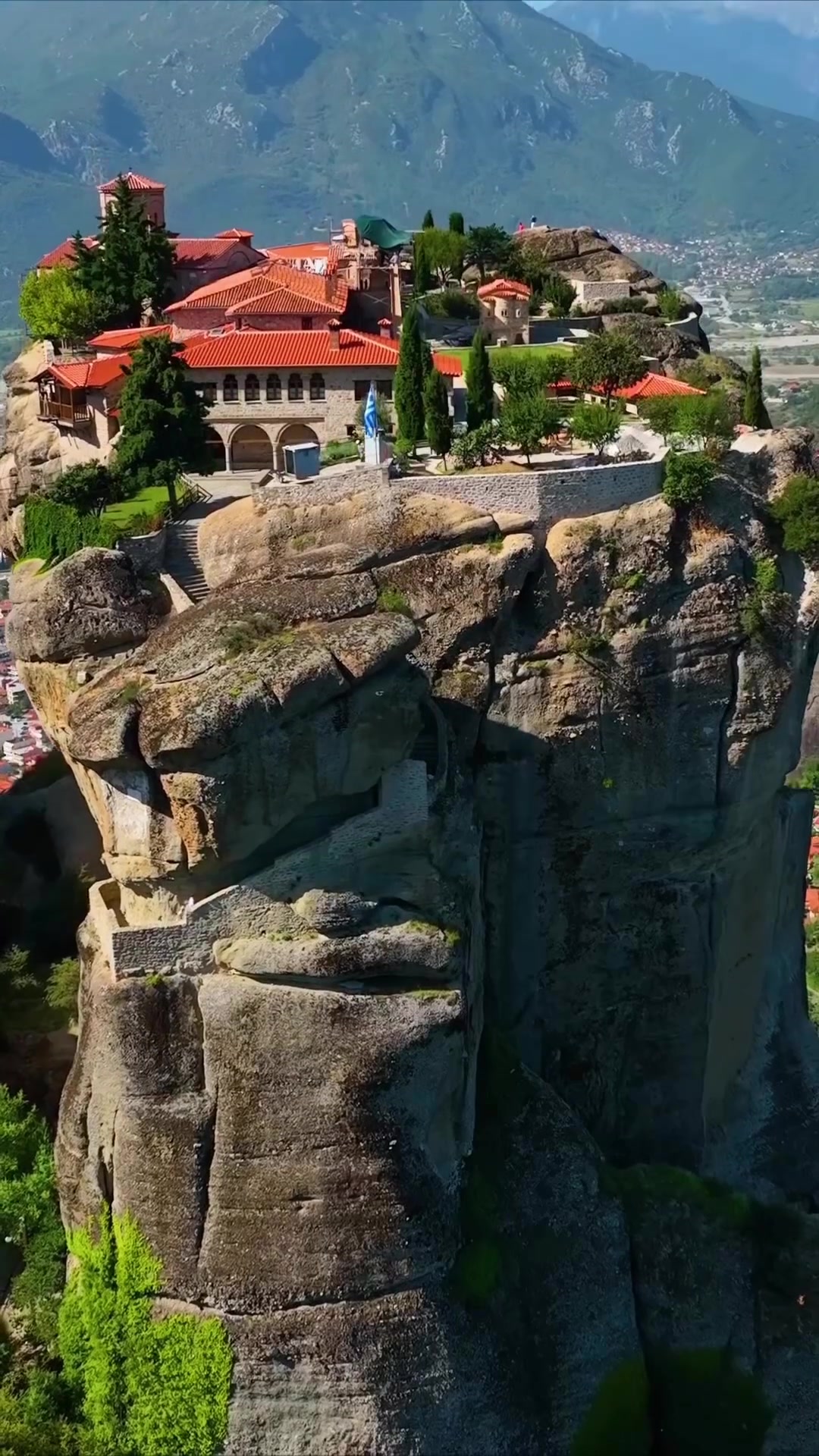
The Meteora Monasteries appear high above a stunning panorama of rolling landscapes and rugged peaks. The monasteries of Meteora are not merely built on the landscape; they are an integral part of it. The Meteora complex encompasses six monasteries and other buildings that visitors can explore. Each monastery is uniquely situated, taking advantage of the natural fortress-like rock formations, with origins dating back as early as the 14th century.
What makes Meteora Monasteries unique
1000 feet above the plains of Thessaly in Greece, the Meteora monasteries stand on natural sandstone pillars. These sandstone formations, the Pindus Mountains, formed from the erosion of a plateau over millions of years. The monks who built the monasteries, meteors' meaning in Greek, in the 14th century sought safety and seclusion for their ascetic way of life. The Greek monasteries are nestled atop these rock pillars, offering dramatic panoramic views, sweeping vistas, and a serene atmosphere. The flat-top rocks of the Pindus Mountains offer the monks an escape from Ottoman persecution and enable them to continue their monastic lifestyle. The monasteries at Meteora are an engineering marvel and are often considered to be the second most popular religious touristic destination in Greece, after Mount Athos. The Holy monasteries are connected by steep paths and bridges built into the rock formations. The monasteries' architecture reveals the hardships of life during medieval times. The monasteries' steep paths and staircases to reach the monasteries are astonishing, and the spectacular landscape adds to the experience.
Why it matters
Meteora Monasteries are an essential part of Greece's religious and historical heritage. The stunning vista isn't just the draw — these monasteries hold priceless artifacts that tell the story of Greek Orthodoxy and its resilience through centuries of political upheaval. As a UNESCO World Heritage Site, Meteora Monasteries draws thousands of visitors daily. The monasteries are significant for its religious, historical, and architectural value. The monasteries' unique location and architecture have inspired novels and movies, including the James Bond film "For your eyes only."
The journey to the monasteries
Climbing atop the Pindus
The rock formations of the Pindus Mountains offer a challenging and exhilarating climb. Climbing the rock formations provides an unforgettable experience and a sense of accomplishment for adventurers. The rock formations are divided into six monasteries, each with its unique history and architecture. The monasteries are connected by steep paths and bridges built into the rock formations. The routes offer unforgettable views, allowing visitors to absorb the stunning vistas.
Six holy sanctuaries
The Great Meteore
The Great Monastery, or Megali Meteora, is the largest of the six monasteries. The Great Metropolitan Church, which is dedicated to the Transfiguration of Jesus, is the primary church of the monastery. The frescoes in the church date back to the 14th and 16th centuries, while the monastery's architecture dates back to the 14th century. The monastery offers visitors panoramic views of the surrounding area. Guests will find the monastery's museum of religious art and many other churches and chapels.
Varlapi Village
Varlam Monastery, founded by Varlam of Philotheou, is known for its picturesque setting. The monastery's Church of the Transfiguration of Jesus is dedicated to the Transfiguration of Jesus, and its frescoes date back to the 16th century. The monastery's museum contains numerous religious artifacts and offers panoramic views of the surrounding area. Guests can explore the monastery's grounds and gardens, admire the architecture, and take in the panoramic views.
Others monastery sanctuaries
The monastery of the Holy Trinity was the last of the six monasteries to be built and dates back to 1458. The Holy Trinity Monastery is home to the ruins of ancient monasteries, which are scattered throughout the area. The monastery stands out for its architecture and also for being filmed in the James Bond film "For your eyes only." St. Stephen monastery is the smallest of the six monasteries and is only open to male visitors. The monastery is known for its spectacular views and its unique architecture. St. Nicolaos monastery is one of the oldest monasteries in the complex. The monastery is dedicated to St. Nikolaos and is known for its frescoes, which date back to the 14th and 15th centuries. The monastery offers visitors panoramic views of the surrounding area. The Assumption of the Holy Virgin (Roussanou Monastery) is the second smallest of the six monasteries and is dedicated to the Assumption of the Virgin Mary. The monastery is also known for its architecture and frescoes, which date back to the 15th and 16th centuries.
Spectacular views and panoramas
The panoramic views from the complex are breathtaking, with the mountains' jagged peaks and the Thames plains stretching out below. The panoramic views from the monasteries are one of the most awe-inspiring sights in Greece, offering a panoramic effect that is unforgettable. Climbing the steep paths and staircases to the monasteries offers a sense of adventure and accomplishment, and the spectacular views make the experience worthwhile.
What to bring
Travelers looking to visit the monasteries can prepare with the following tips:
- Essentials: Carry water, comfortable walking shoes, a hat, and sunscreen. There is no water available in the monasteries.
- A Guidebook: A comprehensive guidebook on Greece's monasteries offers valuable insights into the monasteries' history, architecture, and religious significance. A guidebook can aid in navigating the monasteries and help visitors understand the significance of the artifacts and architecture they encounter.
- Modest Atire:
- Dress: Visitors must dress modestly. The monasteries require visitors to wear long pants, skirts, and covered shoulders. No shorts, or tank tops allowed.
- Women must wear long skirts, and men must wear long pants. Covered shoulders are required while men must sit with legs covered.
- Stick to the Path: Be aware of the ground below. The ground may be uneven, and there are no guardrails, so visitors must stick to the path and keep a safe distance from the edge.
- Cultural Sensitivity: The monasteries are places of worship and are still active today. Visitors should behave respectfully and quietly inside the monasteries.
What's ahead
Meteora Monasteries face challenges, such as earthquakes and climate change, which threaten to topple the buildings atop the rocks. But the monasteries' resilience mirrors that of the Christian faith they represent, earning millions of visitors annually. In 1995, the restoration project of the monasteries would see the monasteries fully restored and accessible to the public. The monasteries in the complex are well-maintained and offer a unique and unforgettable experience for visitors.
Watch the Reel
Questions readers ask
How many monasteries are there in Meteora, and what makes each one unique?
There are six monasteries in Meteora, each uniquely situated on natural sandstone pillars. What sets them apart is their distinct history, architecture, and the way they integrate with the surrounding rock formations. For example, the Great Monastery, also known as Megali Meteora, is the largest and features stunning frescoes from the 14th and 16th centuries.
What is the best way to get to the monasteries, and how challenging are the climbs?
To get to the monasteries, visitors typically start from the base of the Pindus Mountains and climb steep paths and bridges built into the rock formations. The climbs can be quite challenging, offering an exhilarating experience with unforgettable views, but they are manageable for most adventurers. Some monasteries have easier access than others, and there are guided tours available to help visitors navigate the terrain.
What are the historical significance and cultural impact of the Meteora monasteries?
The Meteora monasteries are significant for their historical and religious value, holding priceless artifacts that tell the story of Greek Orthodoxy and its resilience through centuries of political upheaval. They have inspired novels and movies, including the James Bond film 'For Your Eyes Only,' and are a UNESCO World Heritage Site that draws thousands of visitors daily, making them a major cultural attraction in Greece.
How do the monasteries' unique locations help preserve their religious and historical heritage?
The monasteries' locations atop natural sandstone pillars have historically provided safety and seclusion, protecting them from Ottoman persecution. This isolation has helped preserve their religious and historical heritage, allowing the monks to continue their ascetic way of life and maintain the monasteries as they are today.
What is the best time of year to visit Meteora monasteries, and what should visitors expect to see and do?
The best time to visit Meteora monasteries is during the spring or fall when the weather is mild, and the crowds are smaller. Visitors can expect to see stunning panoramic views, explore the monasteries' unique architecture, and learn about their rich history. Activities include climbing the rock formations, visiting the churches and museums within the monasteries, and enjoying the serene atmosphere.
Are there any specific rules or guidelines visitors should follow when exploring the monasteries?
Yes, visitors should dress modestly, as the monasteries are active places of worship. Additionally, it's important to follow the guidelines set by the monasteries, such as respecting the monks' routines and being mindful of photography restrictions. Some monasteries may have specific rules, so it's a good idea to check before visiting.
Related deep dives
Similar reads based on topic and creator.

Recent articles
Fresh deep dives from the latest Reels we unpacked.


Comments
Be the first to comment.