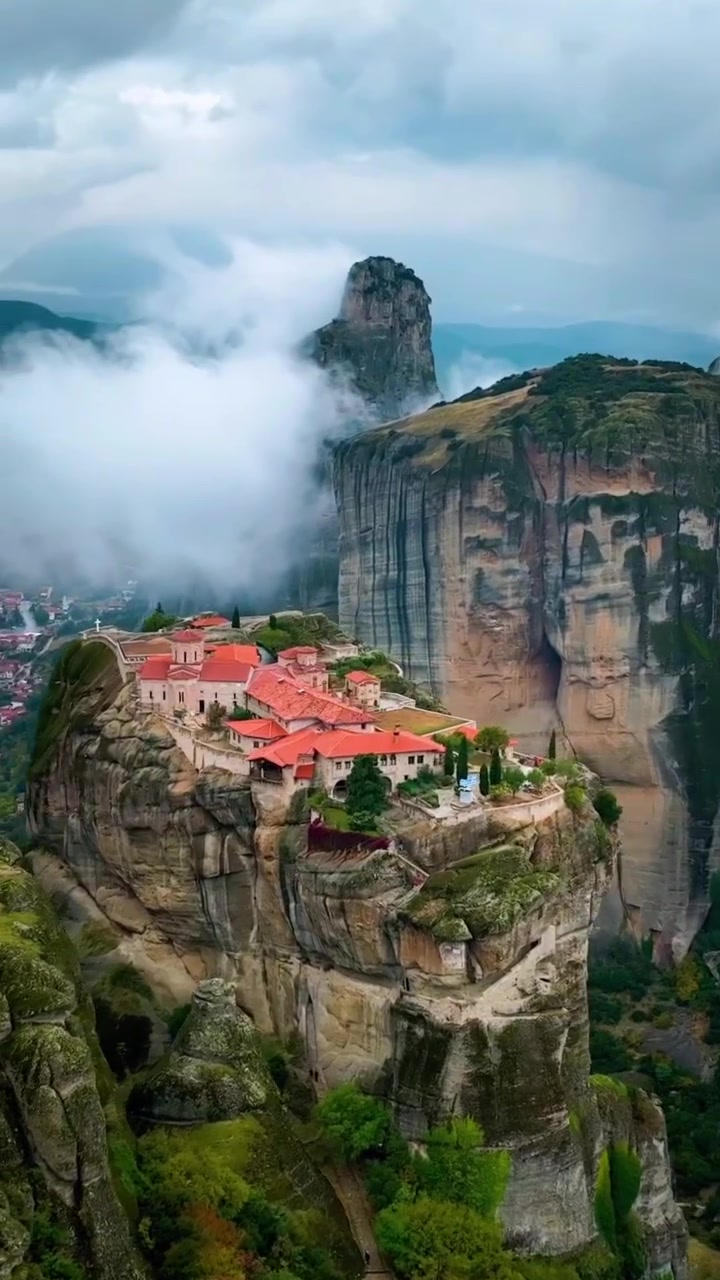
Meteora’s monasteries are tucked away in a small cluster of villages in Greece just a century and a half ago. (You'll find them near Kalampaka, Greece.) Their most distinctive feature is the natural sandstone pillars they stand on— the rocks are not man-made supports. A different monastery stands on each chunk of rock. Today, the complex is a UNESCO World Heritage site. One of the most common questions about the monasteries is how people got up the rock formations to live there. The monks were clever. They found a way to carve hand and foot holds into the rock and also crafted ladders to help them climb up and down the rocks.
A 이야기를교회, Raised on Pillars
Mere steps away from civilization flies the mythology of these monasteries over centuries. Some are only accessible by bridge. The monasteries date back to the 14th century, when a group of hermits fled Constantinople to escape religious persecution. A whole generation of monasteries were built right into the cliff, reachable to the outside world only by ropes and ladders. The natural shape of the rocks helped determine the architecture. This use of the rocks as the literal foundation to the structure makes them unique.
Spiritual isolation in the modern day
A century ago, the monasteries were more isolated. Yet today, this isolation has turned into a magnet that draws thousands of tourists, spiritual explorers, and Honduran climbers. All want to engage with the mystery of what it means to live on top of a cliff while trying to make sense of the purpose behind the ancient structures. People are drawn to the settlements for a brief glimpse of the monastic life of the past. To get there, you can physically hike or climb to the top if you're a few hours or a day's worth of the climber. Over the years, the paths, bridges, and steps carved out of the rocks have been upgraded.
The Protection from an Age of Hell
Fortress monastery
After the Ottoman Turks invaded Greece, the metamorphosis of the monasteries was a blessing in disguise. The high walls and narrow corridors were a fortress-like environment which provided the monks with a safe space enabling them to prevent the Turks from invading and decimating their way of life. Some monks had chosen to die rather than leave their monasteries. The Byzantine castles and decorations that were both ambitiously and carefully etched onto the rock around them, unlike anything else in the world, add to its uniqueness. The Byzantine Empire was famous for its Byzantine churches and art, well suited for this environment.
Narrow walkways
Bridges built over centuries connect the monasteries. Some are even joined by staircase bridges that are self-supporting and narrow walkways which are spread across the mountain tops. These routes are supported by chains and handrails to withstand the powerful winds.
The nudges
The actual graffiti seen in the monasteries are often in the form of inscriptions and drawings inspired by powerful ascetics. This shows that the priests who lived there were not just in communion with the Bible. However, they made efforts to both communicate and connect with the time and place they lived in. Their carvings allowed them to be free of earthly cares.
The unbuilt monasteries
Six monasteries were made accessible to the public at one point in time. However, only 20 monks remained in Greece after the end of the Second World War. Therefore, the monasteries that weren’t inhabited were closed, and no one is allowed to visit them. Central The only monastery remaining is Great Meteoron.
Staying a Night in the Monastery
People can experience the joy of living in the monastery in the past in the 20th century. A few monasteries offer rooms to spend the night, simple wooden beds and a mat, a toilet, and a basin. Some monasteries even provide guests meals twice a day. Ultimately, the best way to appreciate the monasteries is having conversations with the monks. You’ll learn about their lifestyle, their history, and the monasteries themselves. Most of the time, the monastery is open to visitors to see what it was like to be in a monasterial community in the past.
All Outdoors and Prayer
The path to the monasteries is relatively simple. Fewer than 5kms from the village, you can climb the mountain by car. While you are free to wander from one monastery to the next, you should plan on spending 1–2 days to explore them fully. Timing can be tricky. Most monasteries are busiest on Saturday and Sundays. Some do visit the monasteries by hike. You can connect to the adjacent map to see the best hiking trail for you.
- Footwear: Comfortable shoes. The roads are often rocky, and some of them are uphill.
- Maps: You can find a map of the monasteries easily on the internet. It will mark the monasteries, the bridges, and walking routes.
- Appropriate clothing: Some monasteries have dress codes. The stress upon modesty is high, and they will refuse to carry those who are not dressed appropriately.
- Camera: The monasteries have been beautifully built, with amazing views, and are surrounded by amazing landscapes. Carry your camera, but do not take pictures inside and respect the rules.
Watch the Reel
Questions readers ask
How did the monks originally access the monasteries atop the sandstone pillars?
The monks carved hand and foot holds into the rock and crafted ladders to climb up and down the formations. This ingenious method allowed them to reach the top of these towering pillars and establish their sanctuaries. The natural shape of the rocks also played a role in determining the architecture of the monasteries, making them uniquely adapted to their surroundings.
Why were the monasteries of Meteora built in such a remote and inaccessible location?
The monasteries were built in remote locations to escape religious persecution, particularly after the Ottoman Turks invaded Greece. The high walls, narrow corridors, and inaccessible terrain provided a fortress-like environment that protected the monks and preserved their way of life.
What makes the architecture of the Meteora monasteries unique?
The architecture of the Meteora monasteries is unique because they are built right into the natural sandstone formations. The shape of the rocks influenced the design, and the monks carved steps, bridges, and handholds directly into the rock. This integration with the natural landscape is a key feature that sets these monasteries apart.
Can visitors still experience the isolation that the monks originally sought?
Today, the monasteries are more accessible and have become popular tourist destinations, so visitors will not experience the same level of isolation as the original monks. However, some monasteries are still only accessible by bridge or narrow walkways, offering a sense of the challenges the monks faced.
What role did the monasteries play during the Ottoman invasion?
During the Ottoman invasion, the monasteries served as fortified sanctuaries. Their high walls, narrow corridors, and remote locations provided a safe space for the monks to live and practice their religion without fear of persecution. The monks were even willing to die rather than leave their monasteries, showcasing their commitment to their faith and way of life.
What are the most common ways to visit the Meteora monasteries today?
Visitors can reach the monasteries by hiking or climbing the paths, bridges, and steps carved into the rocks. Some routes are supported by chains and handrails to ensure safety. These upgraded paths make it easier for tourists to explore the monasteries, although some areas may still require a bit of climbing.
Are there any unique features or artifacts within the monasteries that reflect the monks' way of life?
The monasteries contain Byzantine castles and decorations, including inscriptions and drawings inspired by powerful ascetics. These carvings show that the monks were not only in communion with the Bible but also connected with the time and place they lived in, offering a glimpse into their daily lives and spiritual practices.
Related deep dives
Similar reads based on topic and creator.

Recent articles
Fresh deep dives from the latest Reels we unpacked.


Comments
Be the first to comment.