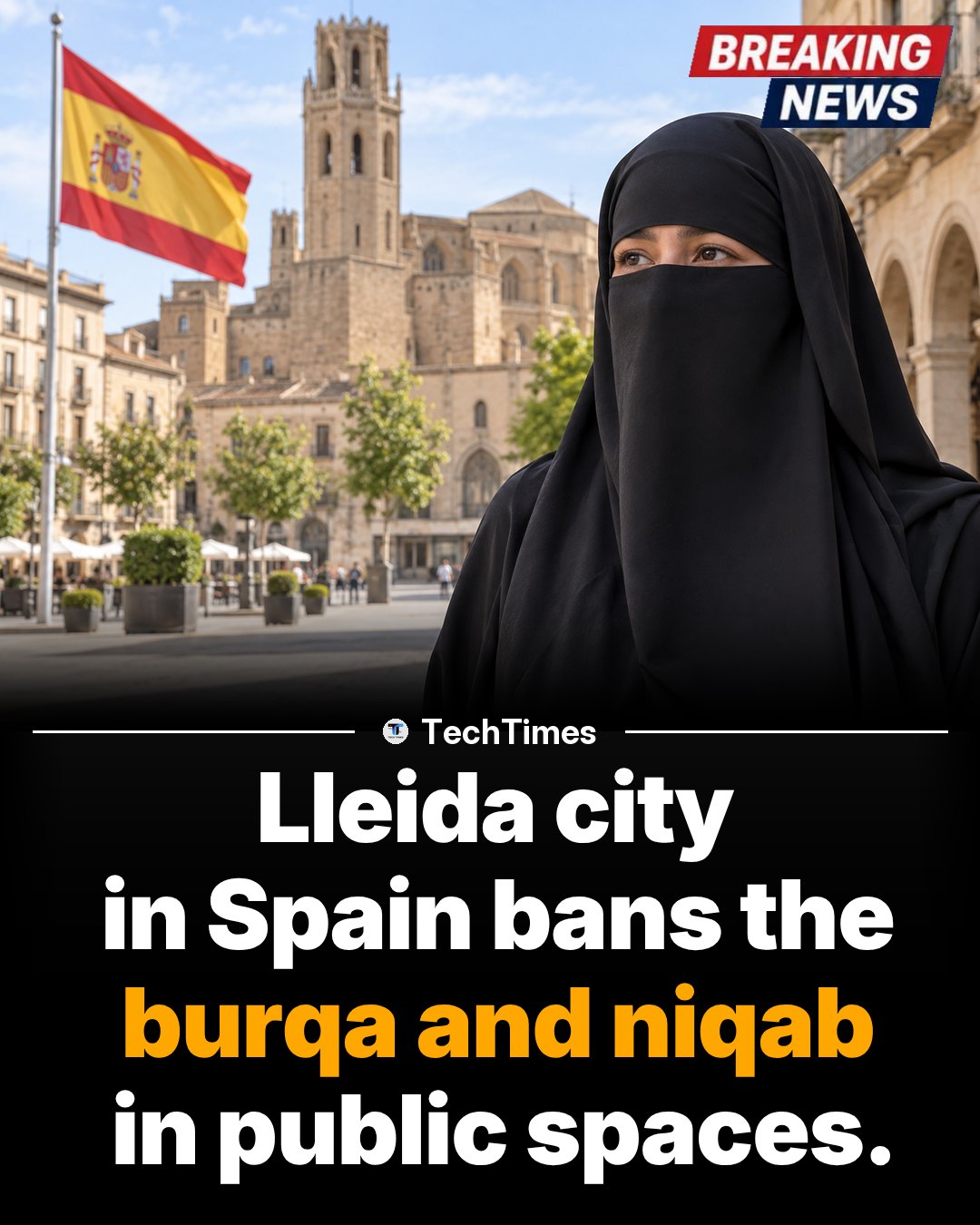
Lleida, Spain has banned the burqa and niqab in all public spaces. This decision impacts more than 140,000 people. The ban has caused a whirlwind of discussion on the topic of religious freedom.
What is the burqa and niqab controversy?
Wearing the burqa and niqab can be traced back thousands of years ago and the history around them is rooted in Islam. The burqa is an envelope-like veil that covers the entire body and typically has a mesh cloth over the eyes. The niqab is a veil that covers the face, leaving the eyes visible. The two garments have been the subject of controversy worldwide. Advocates say that the burqa and niqab promote modesty and religious freedom. Critics argue that they hinder social interaction and pose security risks. The latest controversy comes from Spain, in the city of Lleida, where authorities have banned face coverings in public spaces. The ban includes wearing the burqa and niqab. The news comes from a local news outlet. The image accompanying this news was a picture of a woman in a niqab at the front of a building in the city. The graphic news announcement included this statement:
Lleida city in Spain has banned the burqa and niqab in public spaces.
The debate over public face coverings
Public face coverings are a topic that has led to intense discussion about religious freedom, women's rights, and security. In 2004, France banned the burqa and niqab in public schools. In February 2017, Denmark joined others such as Bulgaria and Norway in extending the ban into public spaces. Spain’s ban on the burqa and niqab in public spaces follows the reasoning of these countries. The ban stems from security concerns. Spain has the second-largest Muslim population in Western Europe, with significant Muslim communities in Catalonia.
What’s Really Underneath
There is a push-and-pull between personal expression and public safety.
The religious implications around face coverings
For many women, wearing burqa and niqab is a religious duty. The Quran, Islam’s holy book, encourages women to dress modestly. Some women feel the face covering is a key part of that. The Qur'an says, “Tell the believing men to lower their gaze and be mindful of their private parts. That is purer for them. Indeed, Allah is Acquainted with what they do.” (24:30) " Verbreitung", the Muslim World League's Chairman, Muhammad bin Abdulkarim Al-Issa considers it a moral and social imperative to “vexe” women. The idea of wearing the burqa and niqab is to protect the honor and modesty of women.
The arguments for banning
Critics of the burqa and niqab argue that face coverings hinder social interaction and integration. The argument is that face coverings — particularly full-face veils like the burqa and niqab — create a barrier between the wearer and others, making it difficult to communicate and build relationships. Critics also point to security risks. Face coverings can make it difficult to identify individuals, which can pose a problem in situations where identification is crucial, such as in airports or other secure locations. Since 2000, Le Bataclan in Paris had banned the entry of people wearing the burqa or niqab. The security issue is particularly relevant in the post-9/11 era, where there has been an increase in terrorism-related incidents around the globe. Spain’s move follows the European Union (EU) 2018 Report on the Implications of the European Convention of Human Rights.
Benefits of a faceless society
Yet, face covering bans hold a significant importance in some communities.
Masked Individuals in World History
The acts of covering one’s face to protect identity are not new. For example, the Athenian democracy promoted a faceless existence where public participation was prioritized through the use of masking in public ceremonies. Some of these public ceremonies involved victims offering sacrifices to appease the gods for a material need.
Masked reality
“Masked reality” is a term used to describe the idea of wearing a mask to conceal one’s true identity. Masked reality has been an important cultural practice throughout history. For example, the Zulu people of South Africa have a tradition of wearing masks during initiation ceremonies. The masks are believed to protect the wearer from evil spirits and provide a connection to their ancestors. In medieval Europe, the use of masks during carnivals and other celebrations was common. For example, the Venetian Carnival is famous for its elaborate masks, which were often worn to conceal the wearer's identity during the celebration. The masks also provided a way for people to express their emotions and feelings without fear of judgment.
What can we do to balance religious freedom and public safety?
Dealing with face covering controversies If you find yourself in the middle of a debate about face coverings, consider the following pointers:
- Learn what the face covering means to others. Face coverings can have significant cultural and religious meanings. Take the time to learn about the traditions and beliefs of others.
- Understand the arguments for and against bans. There are valid arguments on both sides of the debate. Be open to hearing the perspectives of others.
Watch the Reel
Questions readers ask
What are the specific differences between a burqa and a niqab?
The burqa is an envelope-like veil that covers the entire body, with a mesh cloth over the eyes, while the niqab is a veil that covers the face, leaving the eyes visible. Both garments are worn for religious and cultural reasons, but their designs differ significantly.
Why did Lleida, Spain, decide to ban the burqa and niqab in public spaces?
Lleida's ban on the burqa and niqab is primarily driven by security concerns. Authorities argue that face coverings can make it difficult to identify individuals, which poses a risk in public settings where identification is crucial. This decision also follows similar bans in other European countries, such as France and Denmark, which have cited security and integration issues as reasons for their restrictions.
How has the Muslim community in Lleida, Spain, responded to the ban?
The Muslim community in Lleida, which includes the city's 140,000+ Muslim residents, has likely been impacted significantly by the ban, though the article does not provide specific details on their responses. Many Muslim women consider wearing the burqa and niqab a religious duty, and the ban may be seen as an infringement on their religious freedom.
Are there any exceptions or specific circumstances under which the ban might not apply?
The article does not detail any exceptions to the ban. It seems to apply broadly to all public spaces, which suggests that there may not be specific circumstances under which the ban would not apply. However, it's possible that certain private or religious settings might be exempt, but this is not clarified in the article.
How does Spain's ban compare to similar bans in other European countries?
Spain's ban on the burqa and niqab in public spaces is similar to restrictions in countries like France, Denmark, Bulgaria, and Norway, which have also implemented bans based on security and integration concerns. These bans are part of a broader European debate on religious freedom, women's rights, and public safety.
What are the religious implications of wearing the burqa and niqab, and how do they factor into the debate?
For many Muslim women, wearing the burqa and niqab is a religious duty rooted in the Quran's encouragement of modesty. The garments are seen as a means to protect women's honor and modesty, as interpreted by some religious leaders. This religious significance is a key factor in the debate, as critics and proponents of the ban grapple with the balance between personal religious expression and public safety and integration.
Related deep dives
Similar reads based on topic and creator.

Recent articles
Fresh deep dives from the latest Reels we unpacked.


Comments
Be the first to comment.