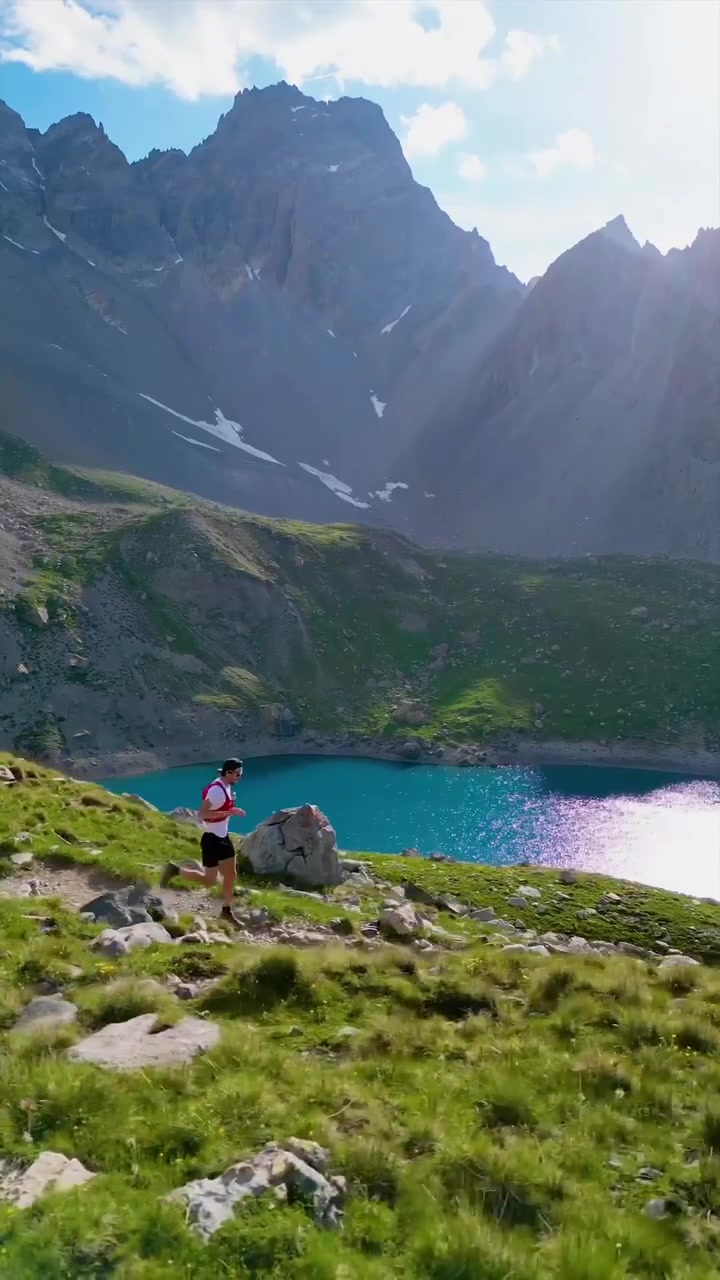
Lac Sainte Anne: Frontier of Alpine Trail Running
France’s Lac Sainte Anne holds a secret for athletes searching for the peak experience. This most is more than an eye-popping glacial lake framed by mountains. A hike around the lake is a strenuous loop of forest paths and steep climbs. The lake itself is as big and cold as an Olympic swimming pool, nearly a mile across and covered by a glacier 8000 years ago. The mountain path is a sweet spot for trail runners craving a true alpine adventure. Trail runners come here for jagged ascents, rugged terrains and nearby vertical rock faces. France’s Parc national des Écrins, a national park, guides the lake south of the village of Ceillac en Queyras.
A True Alpine Challenge
As with all hiking trails, the intake is where Lac Sainte Anne separates from other trails. The trail around the lake is called a trail because it’s more than just a walk — it’s a challenge. The path is steep with muddy, uneven ground. The elevation gain is a 1,522-ft. decrease. While trail running is an outdoor sport known for its difficulty, there’s a difference between the terms. There are many sports to enjoy outdoors, like hiking or swimming. Trail running and mountain hiking are different. Mountain hiking is climbing a mountain and descending it, which is repetitive. This can cause muscle damage and isn’t healthy for most, unlike trail running. More than mountains, Lac Sainte Anne has a cultural draw. It is near a historic site, a pilgrimage route called the Via Alta dei Papi, that dates back to the witches of the region who were persecuted in the 1500s and 1600s. Many legends about the lake persists, including a claim that it once had a monastic community. Hiking around the lake connects you to the natural beauty of the mountain and a glimpse of historic France deep within the alpine mecca. Lac Sainte Anne’s appeal to trail runners is not just in the surrounding Alpine air. The lake is terrifing as well as serene. It has freezing cold water. It holds up to 100,000 cubic feet of water and is 37,460 ft.². It is watched over by the Pic de la Fonte Sancte, an 9,476ft. summit. Lac Sainte Anne is known for its specific microclimate. The valley where it is located has a dry Mediterranean climate, and it is surrounded by glaciers. The alpine lake is a significant attraction.
Watch the Reel
Questions readers ask
What makes Lac Sainte Anne a unique destination for trail runners?
Lac Sainte Anne stands out for its high-altitude setting, steep ascents, and rugged terrain. It's surrounded by mountains and offers a challenging loop of forest paths. The lake's glacial origins and the nearby historic sites add a cultural depth to the trail running experience, making it a true alpine adventure.
How does the trail around Lac Sainte Anne differ from typical hiking trails?
The trail around Lac Sainte Anne is notably more challenging than typical hiking trails. It features steep, muddy, and uneven ground with a significant elevation gain and loss. Unlike repetitive mountain climbing, this trail is designed to be run, making it a unique and demanding experience for trail runners.
What is the significance of the Via Alta dei Papi in relation to Lac Sainte Anne?
The Via Alta dei Papi is a historic pilgrimage route that passes near Lac Sainte Anne. It's a journey rich in history, connected to the region's past and the persecution of witches in the 1500s and 1600s. This route adds a cultural dimension to the trail running experience, allowing runners to explore both natural beauty and historic significance.
How does the microclimate around Lac Sainte Anne influence the trail running experience?
Lac Sainte Anne's microclimate, characterized by a dry Mediterranean climate and surrounded by glaciers, creates a unique environment for trail runners. The alpine lake and its surroundings offer a mix of serene and dramatic landscapes, with the nearby Pic de la Fonte Sancte summit adding to the awe-inspiring scenery.
What should trail runners expect from the terrain and elevation changes around Lac Sainte Anne?
Trail runners should prepare for steep ascents and descents, uneven and potentially muddy terrain. The trail features a significant elevation loss of 1,522 feet, making it a strenuous loop. The challenging terrain is part of what draws athletes to this high-altitude destination, offering a true alpine challenge.
Is it possible to combine trail running with cultural exploration at Lac Sainte Anne?
Yes, Lac Sainte Anne offers a unique blend of natural beauty and cultural history. Runners can explore the historic Via Alta dei Papi pilgrimage route and learn about the region's past, including legends and persecutions. This combination of adventure and history makes the experience at Lac Sainte Anne truly special.
What kind of preparation is necessary for trail runners planning to visit Lac Sainte Anne?
Trail runners should be in good physical condition and prepared for a challenging run. The trail's steepness, uneven terrain, and significant elevation changes require a high level of fitness and endurance. Additionally, runners should be aware of the lake's freezing cold water and the potential for a demanding microclimate.
Related deep dives
Similar reads based on topic and creator.



Recent articles
Fresh deep dives from the latest Reels we unpacked.



Comments
Be the first to comment.