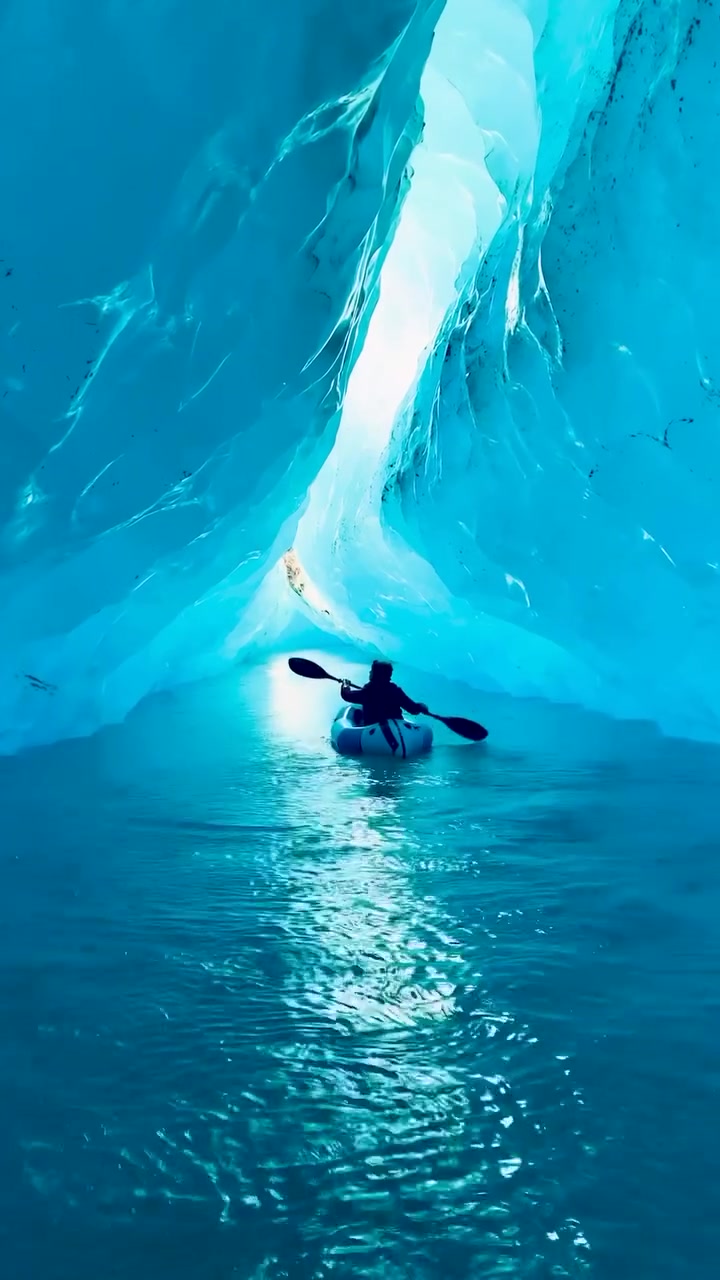
Kayaking in the Frozen Serenity of Ice Caves
Kayaking doesn't usually conjure up images of ice and snow. But the stunning ice caves of Alaska offer a winter getaway for the adventurous. Rodtrvn, a seasoned kayaker, gracefully navigates through the frozen waterways. The experience combines the thrill of exploration and gliding through a natural, undisturbed environment. Add in the harmonious sound of gentle water humming. Ice caves also provide the most beautiful backdrop of visual color–the blue hue, that is. In this serene dance of nature, a splash becomes a symphony. Nature's blue hue shines in Rodtrvn's kayak adventure in Alaska's ice caves. In exploring these caves, you have to realize that not all ice is created equal. Each cave is distinct.
Nature's Blue Cathedral
Ice caves captivate with their azure interiors, a marvel of glacial formation. The ice in these caves is a frozen masterpiece of nature's careful work. Centuries of freezing and thawing sculpt these formations. The effect on one's eyes, or the experience in one's ears is unique. At first glance, ice caves may seem eerie, but the glaciers and the constant dripping are said to resemble a soothing melody. The water droplets have been described as a gentle symphony. The phenomenon of blue ice is fascinating. Close up, ice crystals reflect and absorb light. Light passes through the blue and green spectrums, absorbing the reds and yellows. This gives the ice caves this unique blue hue.
Why This Ice Dive Matters
The ice cave kayak trip captivates more than just as a thrilling adventure. It provides a glimpse into the delicate balance of glacial ecosystems. Increasing ice melt trends can devastate these fragile environments. Cold water and air in these interconnected systems feed rivers and forests. Studying and preserving these environments show how humans can interact with nature. Ice caves are environmentally important. They are also one of the great forgotten spaces in the world. They are unspoiled by tourists. But these caves often develop within popular hiking areas. They’re tucked away from the well-trodden paths. Kayaking in Alaska's ice caverns, then, invites us to explore nature more deeply. And to enjoy gliding through a glacier.
Alaska’s Ancient Glacial Sculptures
The ice caves near Juneau, Alaska are remnants of ancient glaciers. These have been carved out over thousands of years. The combination of freezing temperatures and pressure creates ice so dense as the water creates air bubbles. The exact formation of the caves is still an area for exploration. However, there is much to learn. The slow melt of snowpack is the cause of Alaska's glaciers that form themselves into ice caves.
The Enchanting Colors of Ice
Ice caves create a vivid visual feast. As mentioned, the hues captivate. The blue color of the ice is due to the absorption of red light by the ice crystals. You see less red and yellow light too. Blue wavelengths are readily absorbed, while the green waves reflect a blue hue to one's eyes. This stunning sight deserves an explanation. “The ice itself absorbs reds, and since that [light] is being absorbed, we see more blues than reds,” Rodtrvn said.
Unheard Harmonies of Glacier Drip
Kayaking through an ice cave is spectacular. When the kayak hits the water, you hear a melody. Currents create a gentle symphony of water droplets. "The dripping and the ambient sound it creates," Rodtrvn describes in his caption, "is almost enough to put you to sleep. Like a gentle lullaby.”
Diving Beneath the Alaska Glacier
The rivers flowing into these caves tend to be narrow. And frozen. Only experienced kayakers will want to venture into these waters. They are hazardous to anyone not used to kayaking. The ice cave routes are also difficult to navigate.
Glacier navigation: a slow process
Water freezing and thawing creates these caves. The process is slow, often taking thousands of years to carve or expand the caves. Even the kayaker's route is a narrow corridor. The kayaker must navigate a small opening. Even though the kayaker needs to navigate the cave, the main formation is not remarkably transformed as time passes. Ice caves don’t collapse or disappear overnight.
If you dare, explore the frozen world
Kayaking in an ice cave promises a unique, albeit dangerous experience. But if you want to explore the glacial world in Alaska, then you should. The cave itself is produced by nature. But serious preparation gets your first. First, visit an experienced guide. They will be able to give you the right equipment. You need to watch for signs of danger. Be sure to wear a life jacket and ensure your kayak is equipped with a whitewater paddle.
- Safety First: Always wear a life jacket and a helmet.
- Choose an Appropriate Kayak: A rigid kayak with a flat backrest is a good choice for the unique conditions.
- Secure Gear: Your equipment should be secured to your kayak.
- Professional Guide: Navigate these waters only if you are experienced. Kayaking in ice caves should only be attempted under the guidance of a professional.
Watch the Reel
Questions readers ask
What exactly causes the blue color in Alaska's ice caves?
The blue color in Alaska's ice caves is a result of how ice crystals absorb and reflect light. The ice absorbs the red and yellow light, while the blue and green wavelengths are reflected, giving the ice its characteristic blue hue. Rodtrvn, the kayaker, notes this phenomenon in a simple way: since red light is absorbed, we see more blue than red.
How are these ice caves formed?
The ice caves in Alaska are formed over thousands of years by a combination of freezing temperatures and pressure. Ancient glaciers carve out these caves, and the slow melt of snowpack contributes to their formation. Each cave is unique and distinct, shaped by the constant freezing and thawing of the ice.
What can we learn from kayaking in these ice caves?
Kayaking through these caves offers more than an adventure; it provides a glimpse into the delicate balance of glacial ecosystems. These ecosystems feed rivers and forests, and studying them helps us understand how to interact with nature. Additionally, you get to experience the natural symphony of the dripping water and the visual feast of the blue hues.
Are these ice caves accessible to the public?
Ice caves are often tucked away in popular hiking areas, but they are not typically overrun with tourists. However, they are not always accessible to the general public due to their remote locations and the need for specialized equipment and knowledge. Kayaking through them, as Rodtrvn does, requires a certain level of expertise and preparation.
How do the ice caves contribute to the environment?
Ice caves play a crucial role in the environment by feeding cold water and air into interconnected systems that support rivers and forests. They are environmentally important and offer a glimpse into the delicate balance of glacial ecosystems. Preserving these environments is essential for understanding how humans can interact with nature.
What makes kayaking in ice caves different from other kayaking experiences?
Kayaking in ice caves is a unique experience because it combines the thrill of exploration with the serenity of gliding through a natural, undisturbed environment. The blue glow of the ice, the harmonious sound of gentle water humming, and the distinct formations of each cave make it a visually and audibly captivating adventure. It's unlike the usual kayaking experience, which often involves open water and typical landscapes.
Is kayaking in ice caves dangerous?
Kayaking in ice caves can be dangerous due to the cold temperatures, the risk of ice melt, and the need for specialized equipment. It requires a certain level of expertise and preparation. However, with the right precautions and guidance, it can be a safe and rewarding experience. Always ensure you have the necessary skills and equipment before attempting such an adventure.
Related deep dives
Similar reads based on topic and creator.



Recent articles
Fresh deep dives from the latest Reels we unpacked.



Comments
Be the first to comment.