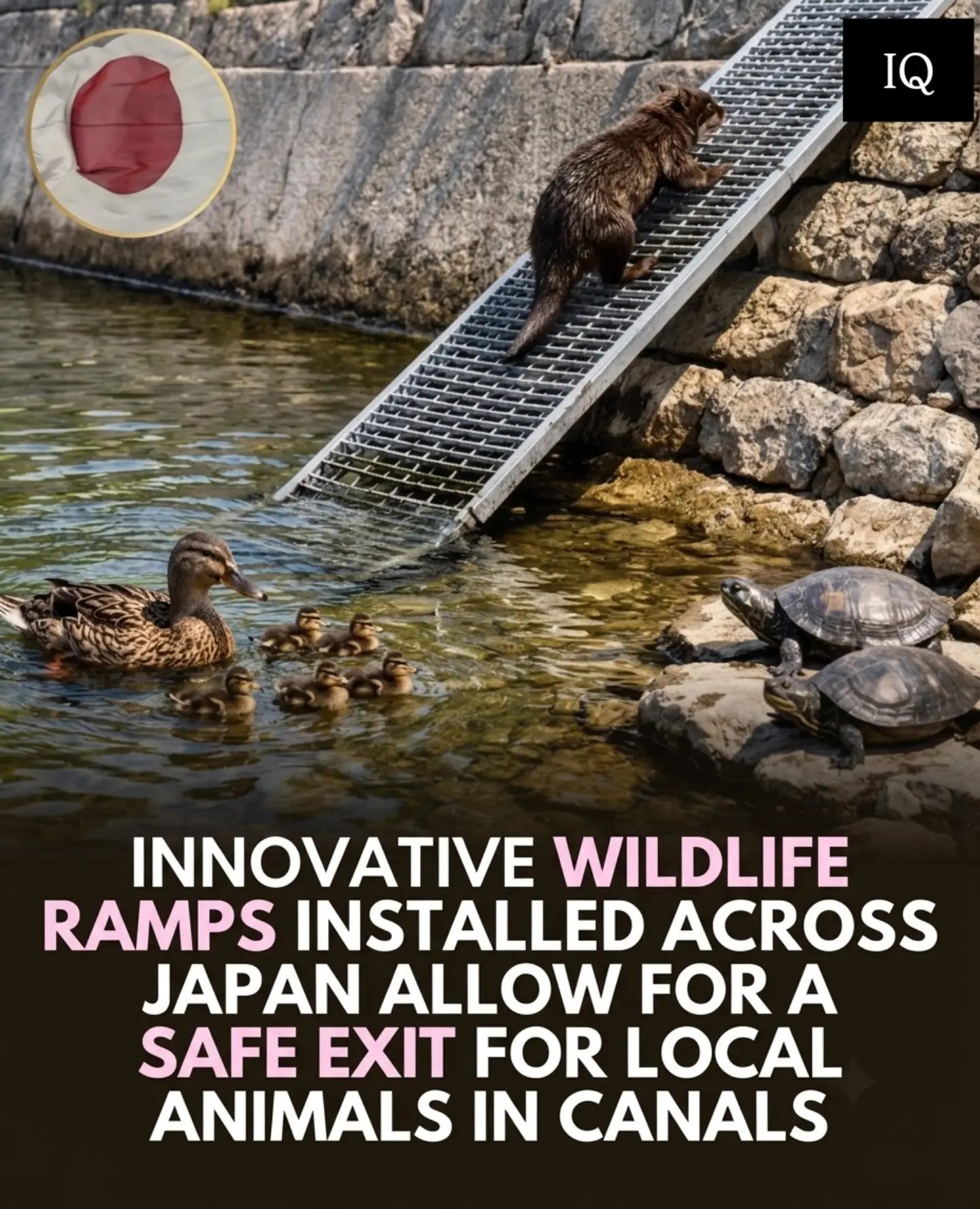
Wildlife Conservation in Urban Japan: Innovative Wildlife Ramps
In response to urban development, Japan has implemented an innovative solution to protect local wildlife: installing ramps in canals. These ramps serve as safe exits for various animals, enabling them to navigate urban waterways more securely.
Context / Why This Matters
Urbanization often leads to habitat loss and fragmentation, posing significant threats to wildlife. In densely populated areas like Japan, finding ways to coexist with animals is crucial. The installation of wildlife ramps in canals addresses this challenge by providing safe passage for animals that might otherwise struggle to escape waterways.
Wildlife Ramps: Design and Purpose
What Are Wildlife Ramps?
Wildlife ramps are specially designed structures installed in canals to help animals exit the water safely. These ramps typically feature a gentle incline and textured surfaces to provide traction for animals like turtles, ducks, and other wildlife. The ramps are strategically placed along canal walls, ensuring that animals have easy access to dry land.
Types of Wildlife Benefiting from These Ramps
The ramps primarily benefit aquatic and semi-aquatic species that frequently inhabit urban canals. Turtles, ducks, and ducklings are among the key beneficiaries. These animals often fall into canals and struggle to climb out due to the smooth, vertical walls. The ramps offer a much-needed solution, allowing these creatures to escape and return to safer areas.
Practical Tips for Wildlife Conservation in Urban Environments
Community Engagement
Community engagement is essential for the success of wildlife conservation initiatives. Local residents can play a crucial role by reporting animals in distress and helping to monitor the effectiveness of the ramps. Encouraging community involvement can foster a sense of responsibility towards wildlife and ensure the longevity of such projects.
Regular Maintenance
Regular maintenance of the ramps is crucial to ensure their continued effectiveness. This includes cleaning the ramps to remove debris and algae, which can make the surfaces slippery. Additionally, inspecting the ramps for any structural damage and making necessary repairs can help maintain their functionality.
Public Awareness
Public awareness campaigns can help educate people about the importance of wildlife conservation in urban areas. By raising awareness, more people can understand the benefits of these initiatives and support similar projects in their communities. This can also reduce human-wildlife conflicts and promote a harmonious coexistence.
Important Takeaways
Wildlife ramps in Japan serve as a model for urban wildlife conservation. These innovative structures provide a safe exit for animals trapped in canals, helping to mitigate the impact of urban development on local wildlife. By implementing similar solutions, other urban areas can also create more wildlife-friendly environments. Community engagement, regular maintenance, and public awareness are key factors in the success of such initiatives.
Conclusion
The installation of wildlife ramps in Japan's canals is a testament to the country's commitment to wildlife conservation in urban environments. These ramps offer a practical and effective solution for protecting animals like turtles, ducks, and ducklings, ensuring their safety in urban waterways. By embracing innovative approaches and fostering community involvement, other urban areas can also create safer habitats for their wildlife.
Watch the Reel
Questions readers ask
What types of animals benefit from wildlife ramps in Japan's urban canals?
Wildlife ramps in Japan's urban canals primarily benefit aquatic and semi-aquatic species. This includes turtles, which can safely exit the water to find food and nesting sites. Ducks also utilize these ramps to access land, increasing their safety and mobility in urban environments.
How do wildlife ramps help in urban wildlife conservation?
Wildlife ramps in urban areas are essential for wildlife conservation as they ensure that animals can safely exit waterways. This is particularly important in cities where natural habitats are limited. The ramps provide safe passages that help animals to navigate urban landscapes, reducing the risk of drowning or being trapped in water.
Who is responsible for installing these wildlife ramps in Japan's urban canals?
The installation of wildlife ramps in Japan's urban canals is typically a collaborative effort. Local governments, environmental organizations, and sometimes private entities work together to implement these structures. This collective approach ensures that the ramps are strategically placed and well-maintained to maximize their benefits for local wildlife.
What are the key design features of wildlife ramps in Japan?
Wildlife ramps in Japan are designed with specific features to ensure accessibility for various species. These features include gentle slopes that allow animals to easily climb out of the water, as well as non-slip surfaces that provide traction. The ramps are often constructed from durable, environmentally friendly materials to withstand the elements and support long-term use.
Why are wildlife ramps important for turtle conservation in Japan?
Wildlife ramps are vital for turtle conservation in Japan as they provide safe exits from waterways, preventing turtles from becoming trapped. This is particularly important in urban areas where natural escape routes may be limited. By ensuring turtles can safely access land, these ramps support their ability to find food, bask in the sun, and lay eggs, contributing to their overall survival.
How do wildlife ramps enhance urban wildlife safety?
Wildlife ramps enhance urban wildlife safety by providing clear and secure pathways for animals to escape waterways. This reduces the risk of injury or drowning, especially for species that are not strong swimmers. By offering a safe exit, these ramps help animals navigate urban environments more effectively, minimizing the threats posed by human activity and infrastructure.
Can wildlife ramps be implemented in other countries facing similar urban wildlife struggles?
Yes, wildlife ramps can be implemented in other countries facing similar urban wildlife challenges. The design and installation of these ramps can be adapted to suit local species and environmental conditions. Countries with significant urban development and wildlife populations can benefit from these innovative solutions, fostering a more harmonious coexistence between humans and animals.
Related deep dives
Similar reads based on topic and creator.

Recent articles
Fresh deep dives from the latest Reels we unpacked.




Comments
Be the first to comment.