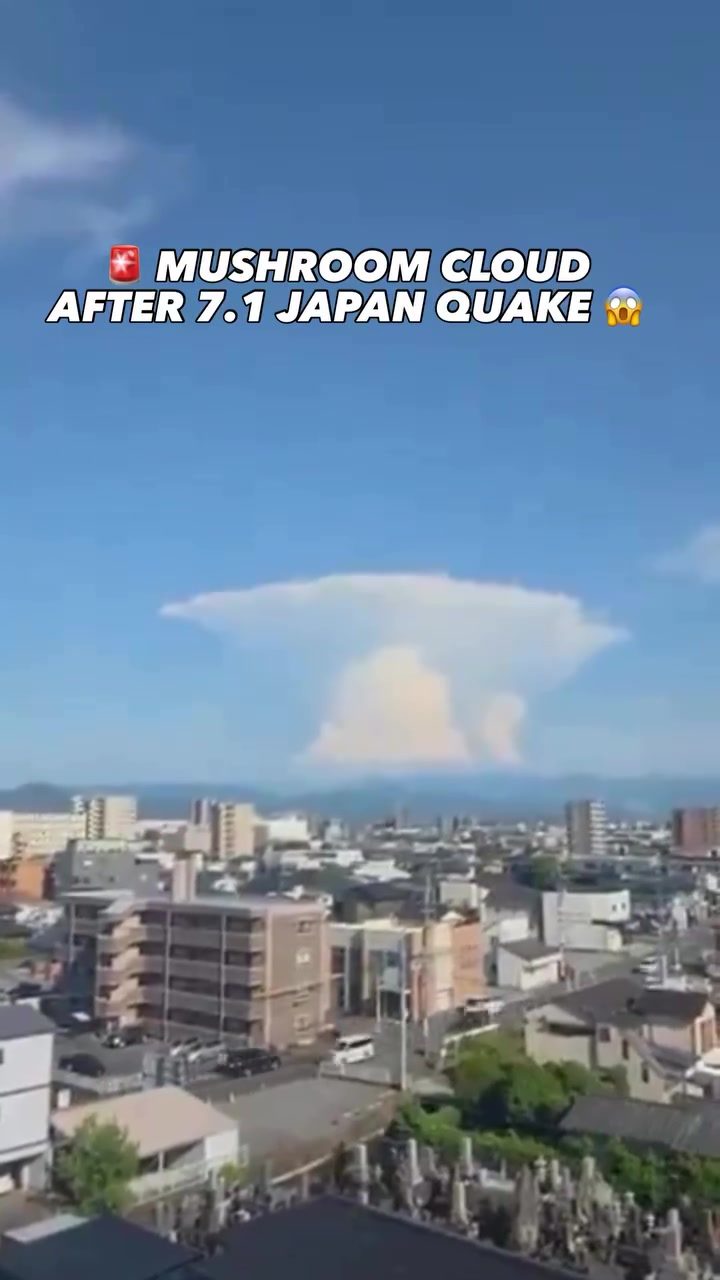
Japan Earthquake and Mushroom Cloud
A 7.1 magnitude earthquake in Japan resulted in a striking and unusual sight: a large, mushroom-shaped cloud formation visible in the city skyline. This phenomenon is both fascinating and alarming, raising questions about its causes and implications.
Context / Why this matters
The appearance of a mushroom cloud, typically associated with nuclear explosions, in the aftermath of an earthquake is a rare and dramatic occurrence. Understanding the science behind this event is crucial for several reasons. First, it helps demystify a potentially frightening sight, offering reassurance that it does not indicate a nuclear incident. Second, it provides insights into the geological and atmospheric conditions that can lead to such a phenomena. Finally, documenting this event can contribute to our overall understanding of earthquake aftereffects and preparedness.
Main discussion
Earthquakes and Atmospheric Effects
Earthquakes can have a variety of atmospheric effects, ranging from ground-level disturbances to changes in the upper atmosphere. One of the most striking examples is the appearance of a mushroom-shaped cloud, which, although rare, has been documented in the aftermath of powerful seismic events.
The mushroom cloud seen in Japan is likely a result of a combination of factors, including the release of energy from the earthquake and the subsequent displacement of air. As the ground shakes, it can cause a sudden release of energy that propels dust, smoke, and other particles into the air. If the conditions are right, these particles can form a distinctive mushroom-shaped cloud.
The Geology of the Earthquake
The 7.1 magnitude earthquake in Japan occurred in a seismically active region, where the Pacific Plate is subducting beneath the Eurasian Plate. This subduction zone is responsible for the frequent earthquakes and volcanic activity in the region. The specific geological mechanisms behind the earthquake would have influenced the atmospheric effects, including the formation of the mushroom cloud.
Atmospheric Conditions and Cloud Formation
The formation of a mushroom cloud after an earthquake is not solely due to the seismic activity but also depends on atmospheric conditions. Factors such as wind direction, temperature, and humidity can all play a role in shaping the cloud. In the case of the Japan earthquake, the specific atmospheric conditions would have contributed to the distinctive shape of the cloud.
Practical tips
Staying Safe During Earthquakes
While the mushroom cloud phenomenon is rare, it serves as a reminder of the importance of earthquake safety. Here are some practical tips for staying safe during and after an earthquake:
- Duck, Cover, and Hold: Remember the classic earthquake safety drill. Duck under a sturdy table or desk, cover your head and neck with your arms, and hold onto the leg of the furniture.
- Stay Away from Windows: Glass can shatter and cause injuries. Stay away from windows and exterior walls.
- Be Prepared for Aftershocks: After the main shock, be prepared for aftershocks, which can be almost as strong as the initial quake.
- Check for Injuries and Damage: Once the shaking stops, check yourself and others for injuries. Look for any damage to your surroundings and report any hazards.
Understanding Post-Earthquake Phenomena
Being aware of the various phenomena that can occur after an earthquake can help alleviate fears and promote a quicker recovery. Understanding that a mushroom cloud is a rare but harmless atmospheric effect can prevent unnecessary panic and ensure a more effective response to the actual hazards posed by the earthquake.
Important takeaways
- Mushroom clouds can form after earthquakes due to the release of energy and displacement of particles.
- Atmospheric conditions play a significant role in the formation of these clouds.
- The 7.1 magnitude earthquake in Japan occurred in a seismically active region, influenced by the subduction of the Pacific Plate beneath the Eurasian Plate.
- Staying safe during and after an earthquake involves knowing how to respond to the shaking and being aware of potential aftershocks.
- Understanding post-earthquake phenomena can help alleviate fears and ensure a more effective response to actual hazards.
Conclusion
The appearance of a mushroom cloud after a 7.1 magnitude earthquake in Japan is a striking and rare phenomenon. Understanding the science behind this event helps demystify the sight and provides valuable insights into the interplay between geological and atmospheric conditions. By staying informed and prepared, we can better respond to the challenges posed by earthquakes and other natural disasters.
Watch the Reel
Questions readers ask
What causes a mushroom cloud to form after an earthquake?
A mushroom cloud after an earthquake is typically caused by the release of energy and the displacement of debris. When a powerful earthquake occurs, it can loft large amounts of dust, dirt, and other particles high into the atmosphere, creating a distinctive cloud formation.
Why did the mushroom cloud in Japan appear in the city skyline?
The presence of a mushroom cloud in the city skyline was likely due to the earthquake's intense shaking and the subsequent release of debris. Buildings and structures may have been damaged, releasing particles and dust into the air, amplified by the earthquake's energy.
Is a mushroom cloud after an earthquake a sign of a nuclear incident?
No, a mushroom cloud after an earthquake is not indicative of a nuclear incident. This phenomenon is a result of the earthquake's energy release and the displacement of debris, not an atomic explosion.
How rare is it to see a mushroom cloud after an earthquake?
Seeing a mushroom cloud after an earthquake is quite rare. It requires a combination of specific geological and atmospheric conditions, and the release of a significant amount of energy and debris. The 7.1 magnitude earthquake in Japan is a notable example of this rare occurrence.
Are there any videos or footage of the recent 7.1 magnitude earthquake in Japan that show the mushroom cloud?
Yes, several videos and footage of the recent 7.1 magnitude earthquake in Japan have captured the mushroom cloud. These visuals can provide a clear view of the phenomenon and help in understanding the scale of the event.
What should people do if they witness a mushroom cloud after an earthquake?
If you witness a mushroom cloud after an earthquake, it is important to remain calm. Understand that this is a natural phenomenon and not a sign of a nuclear incident. Focus on following safety protocols and staying informed through official channels about any potential hazards or instructions from local authorities.
Related deep dives
Similar reads based on topic and creator.

Recent articles
Fresh deep dives from the latest Reels we unpacked.




Comments
Be the first to comment.