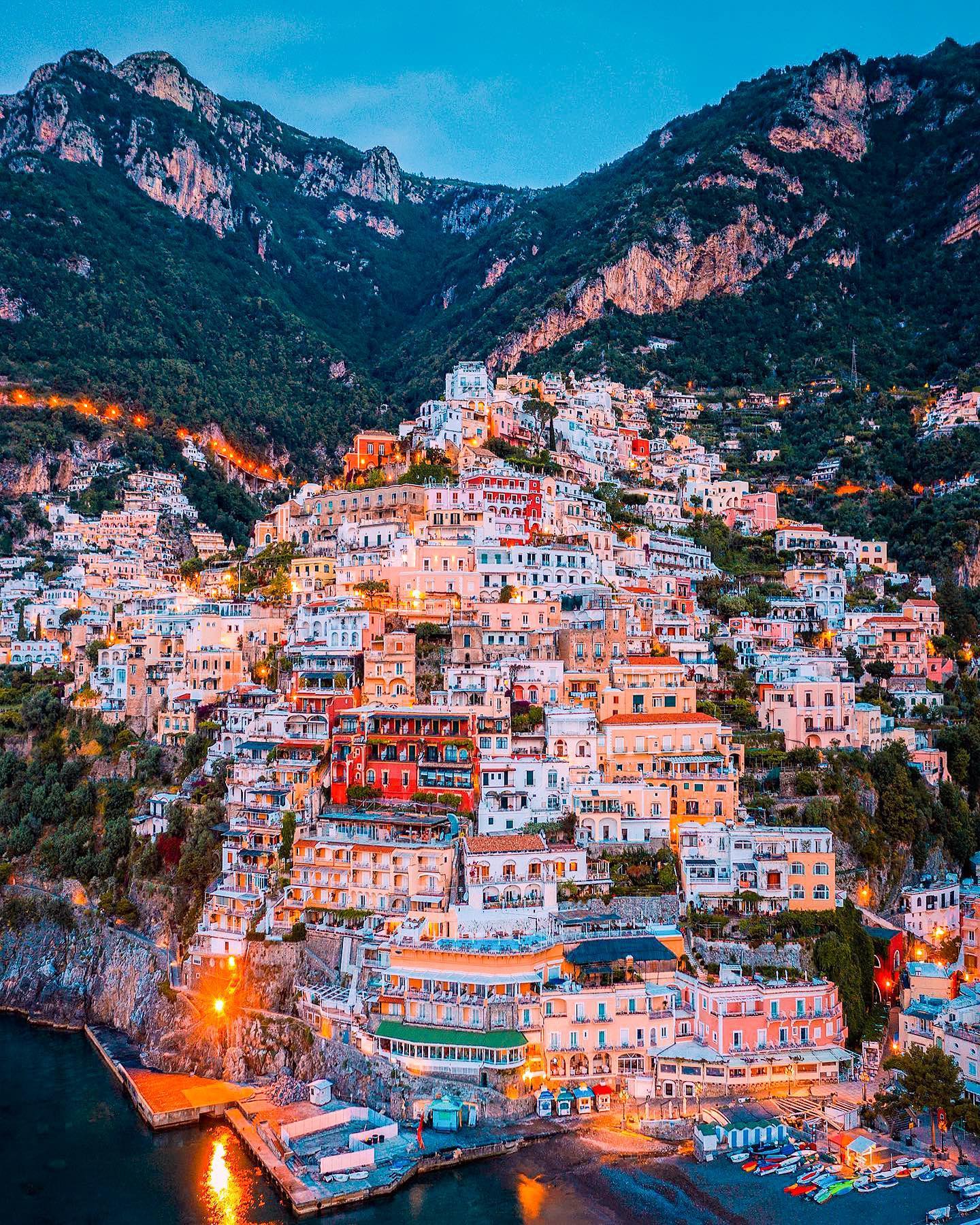
Italy’s coastal towns are a masterclass in the beauty that can arise from layering history, nature, and human ingenuity. The aerial views highlight how Italian coastal towns stand out as gems of Mediterranean architecture. The towns are seen from above, showcasing vibrant buildings fighting off sea erosion and vivid cliffside gardens. The architectural designs vary from town to town, each with a unique color palette. Each Italian coastal town has its own unique energy, and Italy’s coastal towns are one of the most distinctive and picturesque centers of the Mediterranean.
Italy's Architectural Elegance on Display
Italy’s coastal towns are not just any collection of buildings, they are vibrant architectural masterpieces. They have been shaped and molded by centuries of history and human ingenuity. Each town is a labyrinth of narrow winding streets lined with colorful buildings. Buildings in the towns such as a town in Cinque Terre have a warm, earthy look due to paint colours inspired by the landscapes. The town of Cinque Terre, for example, features buildings painted in vivid colors of yellow, green, orange, and pink, These vibrant hues reflect the beautiful mixture of Italian Mediterranean and French influences in the area. The buildings often have flat roofs with cantilevered terraces or balconies. These architectural elements are ornate and eye-catching in their designs. The towns are a perfect blend of simplicity and grandeur. Pastel-hued houses cascade down to the sea. Each town has its own unique energy and personality. There is a general charm in the way the towns are designed in these narrow alleys. Coastal towns' buildings are designed to withstand the wind, sun, and salt water of the Mediterranean. The buildings are designed with large windows and balconies. Many buildings have shutters to provide shade and privacy. The architecture stands out from other coastal towns. The buildings and shapes serve as a visual feast, because of the use of bright paints to coat the buildings. The towns such as Cinque Terre, and Positano, near Amalfi, also have another unique characteristic that adds to the unique charm of the coast towns, the gardens. These coastal towns have lush gardens right on the cliffs nestled between their houses. The gardens are filled with beautiful flowers from all sorts of blooms.
The Rise of Italy's Coastal Innovation
These coastal towns are popular with tourists, but the towns did not always have the fame they have now. Urban planners and architects had to innovate to keep up with the arrival of mass tourism. The old town houses and alleys are a combination of ingenuity and creativity of the people. Coastal towns are a perfect blend of traditional and new designs. To keep up with tourism, new roads, car parks, and restaurants have been built with minimal impact on the design of the old houses. They stand out as examples of sustainable tourism, showing how they have preserved their historic town centres in the midst of rising tourist arrivals. The coastal towns are unique in a way that they highlight the importance of creativity and innovation. The coastal towns are a testament to the survival of towns amidst the ravages of sea erosion, high tourist density and urbanization. They have a perfect blend of traditional and new designs. The new designs include rooftop terraces and dining areas in previously underutilized spaces. The towns are case studies in how they have preserved their historic town centres in the midst of rising tourist numbers.
The Warmth of Colourful Facades
The designs of these coastal towns have another unique aspect. The buildings are painted in vibrant hues. Coasts towns are a perfect blend of traditional and new designs. The coast towns are not just any collection of buildings, they are vibrant architectural masterpieces, historic town centres, and notable landmarks. The coastal towns are vibrant architectural masterpieces. The buildings are vibrant from the paint used and the colors they have. This is unique to Italian coast towns. Practical reasons why coastal towns are built in this way are:
- Floating beach clubs with beautiful views to attract tourists
- New hotels and restaurants
- Art galleries and museums
Secret gardens of lush greenery
There is a lot of vegetation in Coastal Italy. Italians are aware of the need to preserve the natural heritage, hence the towns are well-lush with gardens. Italian coastal towns are not just any collection of buildings, they are vibrant architectural masterpieces. They have been shaped and molded by centuries of history and human ingenuity. The towns are home to beautiful beaches, cliffs, and lush coastal greenery.
Preserving the Scenic Italian Coastline
Italy's coastal towns offer a beautiful, natural landscape preserved at a high standard. Coastal towns are not just built on cliffs. They are built on cliffs because sea erosion has been a continuous phenomenon in the Italian peninsula. Coastal towns have lush gardens on cliffs that help in the preservation of the lands. The gardens on cliffs nestled between houses add to the beauty of the towns. The coastal towns are unique in a way that their towns have a character of their own and are a perfect blend of traditional and new designs. This scenic coastline is a must-see. The design and structure of the buildings lends to preserving the Italian coastline. The towns are a perfect blend of traditional and new designs. The towns are a mixture of simplicity and grandeur. These structures have a perfect blend of traditional and new designs. While enjoying the architecture, nature, and historic town centres, one can enjoy the beauty of Italy. This is not just a destination; it is a lifestyle.
Savor the World's Most Scenic Drive (and towns)
Exploring the architecture of Italian coastal towns is best done on foot, but there are other ways to enjoy the architecture and ocean views. Coastal towns are more than just a combination of buildings, alleys, and gardens. One can enjoy the views by driving through the towns. There are a lot of winding roads. Driving through these towns is an enjoyable experience. One can also take the ferry to enjoy the towns while having lunch. The towns are unique in a way that they highlight the importance of creativity and innovation. While enjoying the architecture and nature, one will appreciate the beauty of Italy. Visiting Italy's coastal towns is more than just a holiday. It is an adventure. Enjoying the architecture and the coast towns is a unique way to appreciate the beauty of Italy. While on holiday, one can enjoy the beauty of the cliffs, beaches, and gardens. For a complete experience, one should book a holiday in Italy. This is not just a destination; it is a lifestyle.
The Romance of Italian Coastal Towns
Italy’s coastal towns are a testament to the beauty that arises from layering history, nature, and human ingenuity. As you navigate the labyrinth of narrow streets and alleys, and pause to appreciate the colorful facades, you may find the towns lift you up from the daily grind, The towns offer a great way to disconnect from your daily hustle and bustle and enjoy the beauty of Italian towns. It is a blend of the old and the new, nature and creativity. While enjoying the architectural elegance, the Mediterranean Sea, and the lush gardens you will have an unforgettable experience. The towns offer time away from the city with beautiful natural settings. They are home to beautiful beaches, cliffs, gardens, lush coastal greenery, and great hotels.
Watch the Reel
Questions readers ask
What makes the architecture of Italy’s coastal towns so distinctive when viewed from above?
The architecture of Italy’s coastal towns is incredibly vibrant, with buildings painted in a mix of yellows, oranges, and pinks that resemble a watercolor painting. This, combined with the unique designs and the way buildings are nestled into the landscape, creates a visually stunning display that sets these towns apart from other coastal areas.
How have Italy’s coastal towns adapted to the influx of tourism?
Italy’s coastal towns have innovated to accommodate tourism without compromising their historic charm. This includes creating new roads, car parks, and restaurants while ensuring that these additions do not disrupt the original design and layout of the old houses and alleys.
What are some of the unique architectural features of Italian coastal towns?
The buildings in these towns often have flat roofs with cantilevered terraces or balconies, and many have large windows and shutters for shade and privacy. The use of bright, vibrant colors, and the incorporation of lush cliffside gardens, add to the towns’ charm. The towns also feature narrow, winding alleys that create a sense of intimacy and discovery.
Why do the buildings in Italian coastal towns have such vibrant colors?
The vibrant colors of the buildings in coastal towns like Cinque Terre are inspired by the surrounding landscapes. These hues not only reflect the natural beauty of the area but also add to the towns’ unique character. The colors are a blend of Italian and Mediterranean influences, creating a visual feast that is both charming and distinctive.
What role do gardens play in the architecture of Italy’s coastal towns?
Gardens in Italy’s coastal towns are not just decorative; they are integral to the towns’ design. The gardens, often found on cliffs, add a lush, verdant element to the landscape. They enhance the beauty of the towns and provide a tranquil contrast to the vibrant buildings and the bustling streets.
How do the towns like Cinque Terre and Positano stand out from other coastal towns?
Cinque Terre and Positano stand out because of their unique architectural styles and vibrant color palettes. The towns' buildings are designed to withstand the Mediterranean climate, featuring large windows, balconies, and shutters. The towns also have lush cliffside gardens that add to their picturesque quality, making them some of the most distinctive and beautiful coastal towns in the Mediterranean.
Related deep dives
Similar reads based on topic and creator.



Recent articles
Fresh deep dives from the latest Reels we unpacked.




Comments
Be the first to comment.