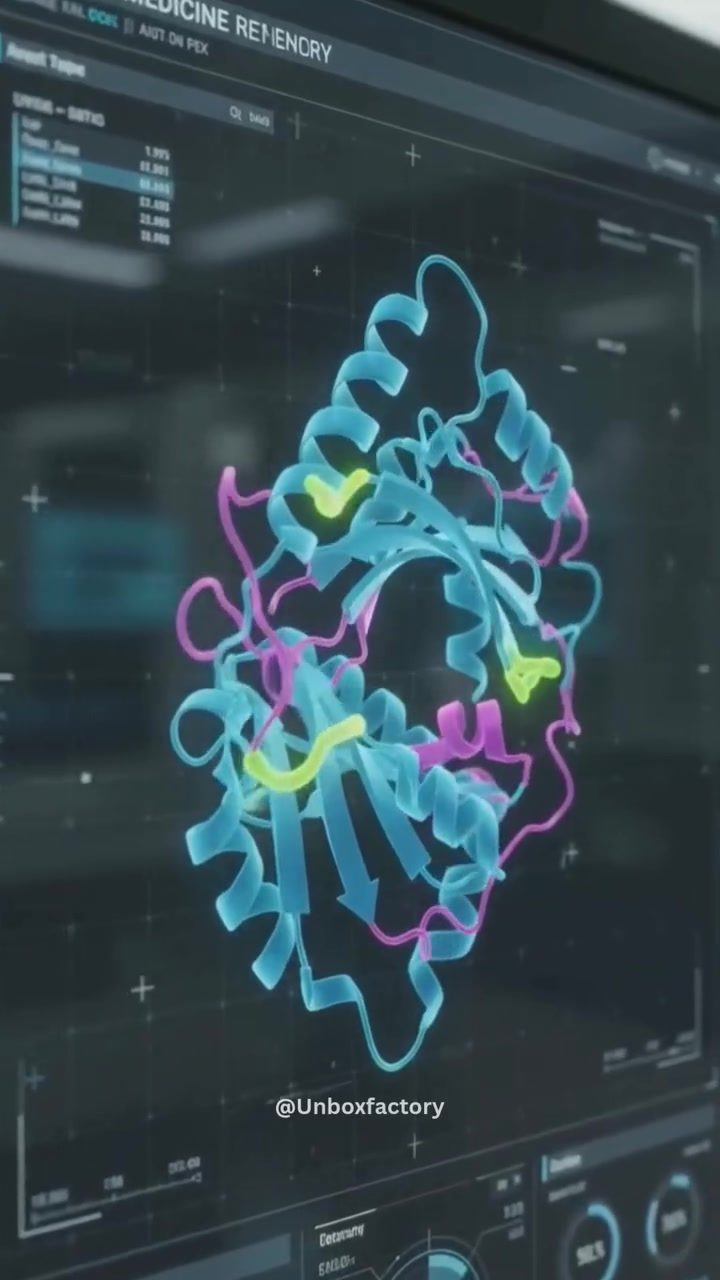
Insilico's AI Drug Discovery Breakthrough
Drug development is a complex process often taking years of conventional laboratory work, but recent advances in artificial intelligence have significantly accelerated this timeline. Insilico Medicine, a trailblazer in AI-driven drug discovery, showcases how technology can transform this field.
Context / Why this matters
The bottleneck in traditional drug discovery is the time-consuming process of screening and optimizing molecular structures. Every step in the process, from identifying potential drug candidates to synthesizing and testing them, can take years. AI offers a paradigm shift by leveraging computational power to predict and optimize molecular structures efficiently.
Traditional Drug Discovery vs. AI-Driven Process
Traditional Drug Discovery
Traditional drug discovery is a meticulous, labor-intensive process. Researchers start by identifying a potential drug target, often a protein involved in a disease process. They then screen vast libraries of compounds to find those that bind to the target. This step alone can take years, as researchers conduct numerous experiments to determine which compounds are most effective.
Following the initial screening, the most promising compounds undergo further optimization to enhance their efficacy and reduce side effects. Each cycle of optimization involves synthesizing new compounds and testing them in laboratory assays and animal models, a process that can take several more years. Once a compound shows promise, it enters clinical trials, a multi-phase process that can take up to a decade to complete.
AI-Driven Drug Discovery
Insilico Medicine's approach contrasts sharply with traditional methods. The company used AI to design a new drug molecule, INS018_055, specifically targeting idiopathic pulmonary fibrosis (IPF). This progressive and fatal lung condition has limited treatment options, making it a critical area for drug development. The AI system analyzed millions of molecular structures to predict which compounds would bind effectively to the disease target. This predictive capability allowed the researchers to optimize candidates computationally, significantly reducing the need for iterative laboratory screening.
The Power of Computational Optimization
One of the standout features of Insilico Medicine's approach is the computational optimization of molecular structures. Traditional methods rely on trial and error, synthesizing and testing numerous compounds to find the most effective one. In contrast, AI can simulate these interactions in a virtual environment, predicting how different molecular structures will behave.
By analyzing large datasets, AI can identify patterns and relationships that might not be apparent through conventional methods. This capability allows researchers to optimize drug candidates more quickly and efficiently, reducing the time and resources required for drug development.
The Journey of INS018_055
The drug molecule INS018_055, designed to target idiopathic pulmonary fibrosis, is a testament to the efficacy of AI in drug discovery. The process from design to successful human trials took just 18 months, a remarkable achievement given that traditional methods typically require more than four years. This molecule's journey highlights the potential of AI to revolutionize drug development.
Phase One: Design and Initial Testing
The initial phase involved using AI to design the drug molecule from scratch. The AI system analyzed millions of molecular structures to predict which compounds would bind effectively to the disease target. This predictive capability allowed the researchers to optimize candidates computationally before any synthesis was attempted.
Phase Two: Clinical Trials
The molecule passed Phase 2 clinical trials with positive results in 2025, making it the first AI-originated drug candidate to reach this stage with confirmed efficacy data. This success underscores the potential of AI to accelerate drug discovery and significantly reduce the time and resources required for clinical trials.
Success Factors in AI-Driven Drug Discovery
Data Analysis and Predictive Modeling
The success of AI in drug discovery hinges on its ability to analyze vast amounts of data and predict molecular interactions with high accuracy. This capability allows researchers to identify potential drug candidates more quickly and efficiently, reducing the time and resources required for drug development.
Computational Optimization
Computational optimization is another critical factor in the success of AI-driven drug discovery. By simulating molecular interactions in a virtual environment, researchers can optimize drug candidates more effectively, reducing the need for iterative laboratory screening. This approach not only accelerates the drug development process but also enhances the efficacy and safety of the resulting compounds.
Iterative Process
The iterative process in traditional drug discovery is a bottleneck that AI can significantly reduce. By leveraging computational power, AI can compress the iterative process into months of computation, allowing researchers to identify and optimize drug candidates more quickly.
Practical Tips for Leveraging AI in Drug Discovery
Integrate AI into Existing Workflows
Integrating AI into existing drug discovery workflows can enhance efficiency and accelerate the development process. Researchers can use AI to analyze large datasets, predict molecular interactions, and optimize drug candidates more effectively.
Utilize Predictive Modeling
Predictive modeling is a powerful tool in AI-driven drug discovery. By leveraging predictive models, researchers can identify potential drug candidates more quickly and accurately, reducing the time and resources required for drug development.
Emphasize Computational Optimization
Computational optimization is a key factor in the success of AI-driven drug discovery. By simulating molecular interactions in a virtual environment, researchers can optimize drug candidates more effectively, reducing the need for iterative laboratory screening.
Important Takeaways
AI Accelerates Drug Discovery
AI has the potential to significantly accelerate drug discovery by compressing the iterative process into months of computation. This capability allows researchers to identify and optimize drug candidates more quickly, reducing the time and resources required for drug development.
Data Analysis and Predictive Modeling are Critical
The success of AI in drug discovery hinges on its ability to analyze large datasets and predict molecular interactions with high accuracy. This capability allows researchers to identify potential drug candidates more quickly and efficiently, enhancing the overall drug development process.
Computational Optimization Enhances Efficiency
Computational optimization is a key factor in the success of AI-driven drug discovery. By simulating molecular interactions in a virtual environment, researchers can optimize drug candidates more effectively, reducing the need for iterative laboratory screening and enhancing the efficacy and safety of the resulting compounds.
Conclusion
AI-driven drug discovery represents a significant advancement in the field of medicine. By leveraging computational power and predictive modeling, researchers can accelerate the drug development process, reducing the time and resources required for traditional methods. Insilico Medicine's success with INS018_055 is a testament to the potential of AI in revolutionizing drug discovery, paving the way for more efficient and effective treatments for a wide range of diseases.
Watch the Reel
Questions readers ask
How does AI accelerate the drug discovery process?
AI speeds up drug discovery by using advanced algorithms to predict and optimize molecular structures. This computational approach reduces the need for extensive laboratory testing, allowing scientists to identify promising drug candidates more quickly.
What is the significance of Insilico Medicine's 18-month drug discovery timeline?
The 18-month timeline demonstrates a substantial reduction in the traditional drug discovery process, which can take several years. This acceleration is achieved through AI-driven methods, which predict and optimize molecular structures efficiently, bringing new medications to market faster.
How does AI predict molecular structures in drug discovery?
AI uses machine learning models to analyze vast amounts of data and identify patterns that can predict how different molecular structures will behave. This predictive capability allows researchers to focus on the most promising compounds early in the process.
What role does AI play in optimizing molecular structures?
AI optimizes molecular structures by simulating various chemical interactions and predicting which structures are most likely to be effective and safe. This optimization process helps refine drug candidates, reducing the number of compounds that need to be tested in laboratories.
How does AI impact the transition from laboratory to clinical trials?
AI streamlines the transition by identifying and validating potential drug candidates more efficiently. This means that only the most promising compounds progress to clinical trials, reducing the time and resources required in the early stages of drug development.
What are the benefits of AI-driven drug design over traditional methods?
AI-driven drug design offers several benefits, including faster identification of drug candidates, reduced reliance on time-consuming laboratory tests, and the ability to explore a broader range of molecular structures. These advantages make the drug discovery process more efficient and cost-effective.
How does Insilico Medicine differentiate itself in the field of AI drug discovery?
Insilico Medicine stands out by leveraging cutting-edge AI technologies to predict and optimize molecular structures, significantly reducing the time required for drug discovery. Their approach not only accelerates the development process but also enhances the likelihood of discovering effective and safe medications.
Related deep dives
Similar reads based on topic and creator.


Recent articles
Fresh deep dives from the latest Reels we unpacked.




Comments
Be the first to comment.