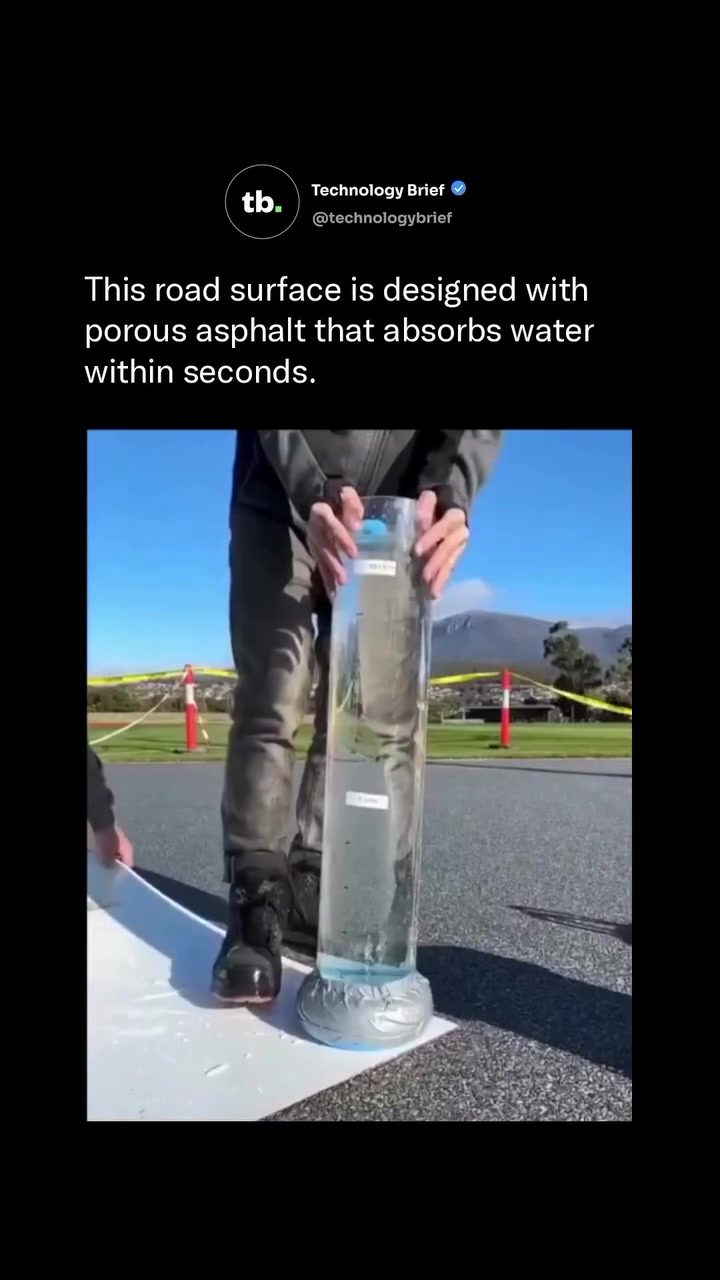
Porous Asphalt: The Water-Absorbing Road Surface
Porous asphalt is a revolutionary road surface material designed to absorb large volumes of water rapidly. This innovative technology is particularly effective in managing heavy rainfall, reducing runoff, and mitigating flood risks. The most advanced version of this material, known as Topmix Permeable, was developed by the UK company Tarmac.
Why This Matters
In urban environments, managing water runoff from heavy rainstorms is a critical challenge. Traditional road surfaces often lead to excessive pooling and runoff, which can cause flooding and other water-related issues. Porous asphalt addresses these problems by allowing water to pass through the surface quickly, reducing the risk of flooding and improving overall water management.
Main Discussion
How Porous Asphalt Works
Porous asphalt works by omitting the fine sand and small particles typically found in standard asphalt. This creates an open void space within the material, allowing water to pass through instead of pooling on the surface. This porous structure is what gives the material its exceptional water absorption capabilities.
Topmix Permeable: The Advanced Version
Developed by Tarmac, Topmix Permeable is the most advanced version of porous asphalt. It can absorb up to 1,000 liters of water per square meter per minute, which is fast enough to handle even the heaviest rainstorms with minimal runoff. This rapid absorption rate makes it an effective solution for urban areas prone to flooding.
Benefits Beyond Flood Control
While flood control is the primary benefit, porous asphalt offers several additional advantages:
- Reduced Road Spray: The porous surface helps to cut down on road spray, improving visibility and safety for drivers.
- Reduced Glare at Night: The open structure of the material can reduce glare from headlights, making nighttime driving safer.
- Improved Grip in Wet Conditions: The surface provides better traction in wet conditions, enhancing overall road safety.
Practical Tips
Optimal Deployment
Cities are still in the process of determining the best locations to deploy porous asphalt. It is particularly effective in areas prone to flooding, such as low-lying regions and urban centers with high water runoff.
Maintenance Considerations
While porous asphalt offers many benefits, it does come with some trade-offs. The open structure can weaken under heavy traffic, and dirt or grit can clog the voids over time, reducing its ability to absorb water. Regular maintenance, including sweeping and occasional cleaning, is essential to preserve its effectiveness.
Integration with Existing Infrastructure
Integrating porous asphalt into existing road networks requires careful planning. It may not be suitable for all types of roads, particularly those with very high traffic volumes. However, it can be a valuable addition to urban planning strategies where water management is a concern.
Important Takeaways
Porous asphalt, particularly the advanced Topmix Permeable version, is a cutting-edge solution for managing water runoff and reducing flood risks. Its ability to absorb large volumes of water quickly makes it an invaluable tool for urban planners and engineers. However, it also requires careful consideration of its durability and maintenance needs.
Conclusion
Porous asphalt represents a significant advancement in road surface technology, offering numerous benefits beyond just flood control. By understanding its advantages, limitations, and optimal deployment strategies, cities can leverage this material to improve water management and enhance overall urban infrastructure.
Watch the Reel
Questions readers ask
How does porous asphalt help in managing urban water issues?
Porous asphalt aids in urban water management by quickly absorbing large volumes of water, up to 1,000 liters per minute. This rapid absorption reduces surface runoff, which helps prevent flooding and related water damage in urban areas.
What is the difference between porous asphalt and traditional road surfaces?
Unlike traditional road surfaces, porous asphalt is designed with a permeable structure that allows water to pass through it. This means it can absorb and drain water rapidly, reducing the risk of water pooling and runoff that is often seen with conventional asphalt.
Is porous asphalt effective in heavy rainfall conditions?
Yes, porous asphalt is particularly effective in managing heavy rainfall. Its ability to absorb large volumes of water quickly makes it an excellent solution for areas prone to heavy rainstorms, reducing the risk of flooding and improving overall water management.
What are the safety benefits of using porous asphalt?
Porous asphalt enhances safety by reducing water pooling on road surfaces, which can help prevent hydroplaning and improve tire grip. Additionally, it reduces glare from reflective surfaces, making driving conditions safer, especially at night.
Can porous asphalt be used in all urban environments?
Porous asphalt is well-suited for many urban environments, particularly those with significant rainfall and challenges with water runoff. However, its implementation may require considerations for maintenance to ensure that the porous structure remains effective over time.
How does porous asphalt contribute to road longevity?
By reducing the amount of water that pools on the surface, porous asphalt helps to minimize the damage caused by freeze-thaw cycles and other water-related deterioration. This can extend the lifespan of the road surface, making it a durable solution for urban road infrastructure.
What are some specific benefits of using Topmix Permeable asphalt?
Topmix Permeable, developed by Tarmac, is a leading example of porous asphalt. It offers enhanced water absorption capabilities and is designed to handle heavy rainfall effectively, providing a durable and long-lasting solution for water management in urban settings.
Related deep dives
Similar reads based on topic and creator.

Recent articles
Fresh deep dives from the latest Reels we unpacked.




Comments
Be the first to comment.