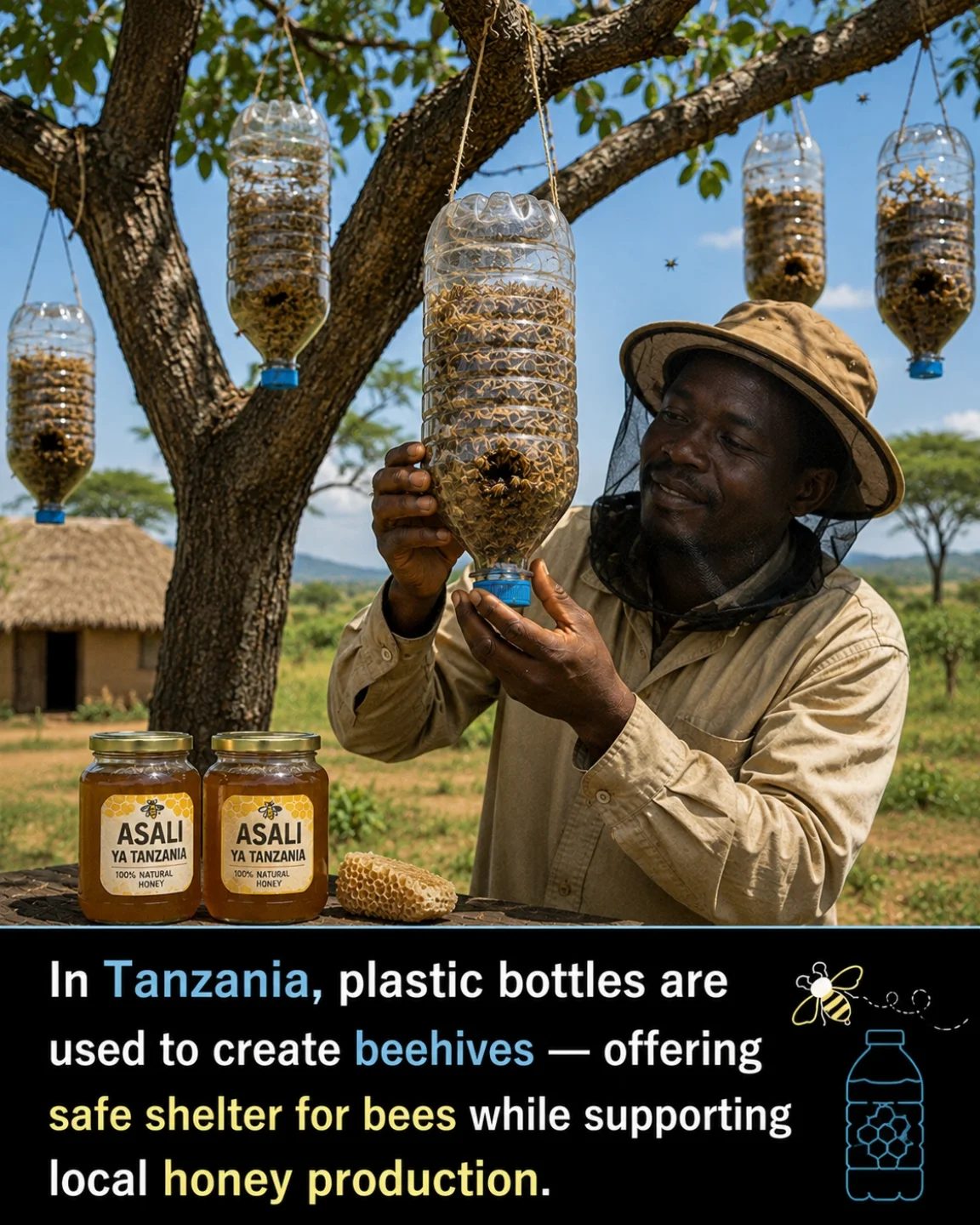
Sustainable Beekeeping with ASALI
Beekeeping in Tanzania is taking a turn for the sustainable with ASALI, a brand that repurposes plastic bottles to create beehives. This eco-friendly approach not only provides a safe shelter for bees but also supports local honey production, offering a unique solution to environmental and economic challenges.
Context / Why this matters
Beekeeping plays a crucial role in ecosystems and economies worldwide. Bees are essential pollinators, contributing to agricultural productivity and biodiversity. In Tanzania, beekeeping has traditionally been a vital source of income and food, with honey being a staple in local diets. However, the increasing use of plastic waste poses a significant threat to the environment, particularly in rural areas. ASALI's innovative use of recycled plastic bottles to create beehives addresses both the environmental issue of plastic waste and the importance of sustainable beekeeping practices.
Main discussion
The ASALI approach
ASALI's method of creating beehives from repurposed plastic bottles is both innovative and practical. The process involves cutting and shaping plastic bottles into structures that mimic traditional beehives. These repurposed containers are then stacked and secured to form a sturdy, weather-resistant shelter for bees.
The key to this method's success lies in its simplicity and cost-effectiveness. Plastic bottles are readily available and can be easily transformed into functional beehives, making this approach accessible to local communities. Additionally, the lightweight and durable nature of plastic makes these beehives easy to transport and maintain, further enhancing their practicality.
Benefits of sustainable beekeeping
The use of recycled materials in beekeeping offers several benefits, both for the environment and the local economy.
Environmental impact
By repurposing plastic bottles, ASALI reduces the amount of plastic waste that ends up in landfills and the environment. This not only helps to mitigate the environmental impact of plastic pollution but also promotes a circular economy where waste materials are reused in a meaningful way. The eco-friendly nature of these beehives aligns with global sustainability goals, making them an attractive option for environmentally conscious consumers.
Economic benefits
Sustainable beekeeping practices support local economies by providing a source of income and promoting agricultural productivity. The production of 100% natural honey creates a marketable product that can be sold locally and exported, generating revenue for beekeepers and supporting rural communities. Additionally, the use of recycled materials reduces the costs associated with traditional beekeeping, making it a more affordable and accessible option for local farmers.
Supporting local honey production
In Tanzania, the production of 100% natural honey is a significant part of the local economy. ASALI's beehives not only support this industry by providing a safe and sustainable shelter for bees but also ensure the production of high-quality honey. The natural and ecological conditions in Tanzania, combined with the innovative design of ASALI's beehives, contribute to the production of premium honey that is sought after both locally and internationally.
Practical tips
Starting with sustainable beekeeping
If you're interested in sustainable beekeeping, here are some practical tips to get you started:
-
Source recycled materials: Start by collecting plastic bottles and other recyclable materials that can be repurposed into beehives. Ensure that the materials are clean and safe for the bees.
-
Design your beehives: Use simple tools to cut and shape the plastic bottles into the desired form. Stack and secure the pieces to create a sturdy structure.
-
Place your beehives: Choose a location that provides the right environment for bees, such as a rural setting with traditional huts and natural vegetation.
-
Maintain your hives: Regularly check on your beehives to ensure they are safe and well-maintained. This includes monitoring for pests and diseases, and ensuring the bees have access to food and water.
-
Harvest your honey: Follow best practices for harvesting honey to ensure it is of high quality and safe for consumption. This includes using clean equipment and minimizing disturbances to the bees.
Important takeaways
ASALI’s innovative approach to beekeeping in Tanzania offers a sustainable solution to environmental and economic challenges. By repurposing plastic bottles into beehives, ASALI creates a safe shelter for bees, supports local honey production, and promotes a more eco-friendly approach to beekeeping. This method not only benefits the environment by reducing plastic waste but also supports local economies by providing a valuable and marketable product.
Conclusion
Sustainable beekeeping is more than just a practice; it’s a commitment to preserving the environment and supporting local communities. ASALI's use of recycled materials to create beehives showcases how innovation can lead to practical and meaningful solutions. By adopting similar practices, individuals and communities can contribute to a more sustainable future, ensuring that beekeeping remains a vital part of agricultural and environmental ecosystems.
Watch the Reel
Questions readers ask
What are ASALI beehives made from?
ASALI beehives are made from repurposed plastic bottles. This innovative design helps reduce plastic waste while providing a functional and eco-friendly habitat for bees.
How does ASALI's approach benefit local communities in Tanzania?
ASALI's sustainable beekeeping practice supports local honey production, which serves as a vital source of income and food for many Tanzanians. By promoting green beekeeping practices, ASALI helps stimulate local economies and ensures the sustainability of this traditional livelihood.
What are the environmental benefits of using plastic bottle beehives?
Using repurposed plastic bottles for beehives offers a solution to plastic waste reduction, particularly in rural areas where waste management can be challenging. This eco-friendly approach helps minimize environmental degradation while fostering sustainable beekeeping practices.
How do ASALI beehives contribute to biodiversity and agricultural productivity?
ASALI beehives support local bee populations, which are essential for pollinating crops and maintaining biodiversity. By creating a safe habitat for bees, ASALI's sustainable beekeeping practice contributes to the health of ecosystems and agricultural productivity.
Can I purchase ASALI beehives for personal use?
As of now, ASALI beehives are primarily designed to support local communities in Tanzania. However, if you're interested in sustainable beekeeping practices or supporting ASALI's mission, you can reach out to the brand directly to inquire about purchasing options or ways to support their initiatives.
How does ASALI's approach to beekeeping differ from traditional methods?
ASALI's approach to beekeeping differs from traditional methods by utilizing repurposed plastic bottles to create beehives. This innovative and eco-friendly design helps to reduce plastic waste, promote sustainability, and support local honey production, providing a unique solution to environmental and economic challenges.
Related deep dives
Similar reads based on topic and creator.




Recent articles
Fresh deep dives from the latest Reels we unpacked.




Comments
Be the first to comment.