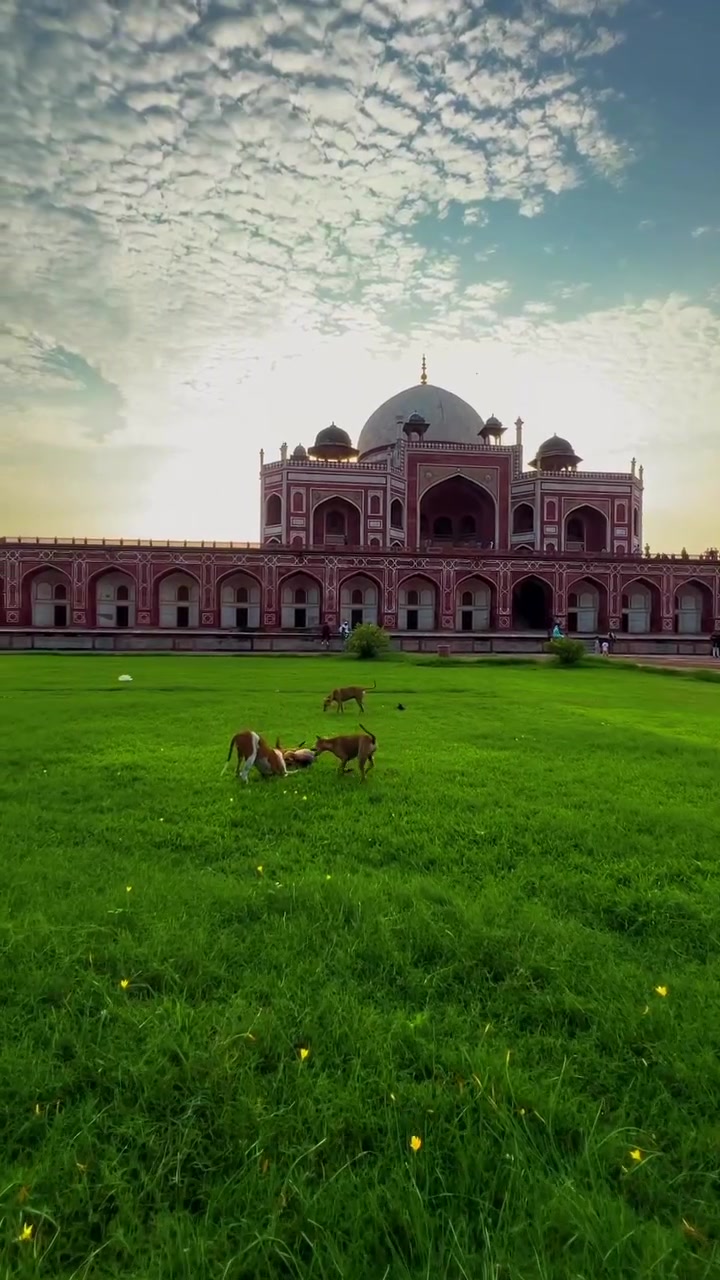
Humayun's Tomb stands majestically in Delhi, India, a historic landmark that has endured for centuries and was memorably captured at sunset. The tomb showcases its architectural beauty with cows grazing on the lawn in front of it, changing light conditions cast a unique reflection in the still waters and more.
Elegance in Mughal Architecture
Humayun’s Tomb is a testament to the grandeur of the Mughal Empire, built between 1565 and 1572. The tomb is the first garden-tomb on the Indian subcontinent and stands as a fine example of Mughal architecture, blending a range of Persian and Indian architectural styles. The tomb is unique as it is constructed entirely of red sandstone and white marble. The tomb is a UNESCO World Heritage Site and holds significant historical and cultural value. Commissioned by Humayun's first wife, Bega Begum, the building is a central structure in an extensive garden. The main structure is surrounded by a vast, water-absorbing sandstone paving. The tomb itself is a double-storied structure, capped by a beautiful octagonal tower with a marble cupola. Humayun’s tomb was built first; however, the waterworks and gardens were improvised over the next few years. Though not a mosque, the tomb includes a mosque designed by Mirak Miraki, the architect of Humayun’s Tomb. Humayun's Tomb features intricate latticework, an extensive use of red sandstone and white marble, and a unique central dome. Mirak Miraki crafted the tomb with intricate detail, including inlaid geometric patterns on the interior and exterior of the structure and an inner octagon surrounded by vaulted chambers.
The Cultural Icon of a Changing Delhi
Delhi, the capital of India, is a city of many layers; Humayun's Tomb is a cultural icon in its historical fabric. Located in the Nizamuddin East area of Delhi, the tomb complex is nestled in a bustling city, yet within its walls, visitors find a serene and peaceful atmosphere. The historical site stands amidst rapidly changing cityscapes and evolving cultural phenomena. The tomb sits near other significant historical landmarks, such as the Qutub Minar and the India Gate. While these represent different eras of Delhi's history, Humayun's Tomb stands as a testament to the city's Mughal past. Laying between the ancient and modern skylines, Humayun's Tomb's existence is far from an isolated monument, as it is surrounded by educational institutions, residential quarters, and parks. The tomb is a beloved landmark among locals, often used as a landmark for other nearby attractions in Delhi. Humayun's Tomb is also a site of traditional and contemporary cultural practices. Devotees visit the shrine of Nizamuddin Auliya, a revered Sufi saint whose tomb is within the complex. This practice of visiting the tomb has deep roots and continues to the present day. The tomb gives a peak into the historical, cultural, and architectural heritage of Delhi.
The Architecture of Humayun's Tomb at Sunset
Humayun's Tomb showcases a unique reflection in the pool, showcasing the tomb's intricate latticework. The structure is illuminated by the setting sun, creating a dramatic interplay of light and shadow. The combination of the tomb’s intricate design and the serene pool makes for a visually appealing scene that is particularly notable. The tomb is composed of a central water tank that reflects the tomb's structure. At sunset, the sunset adds a mystical quality to the tomb, particularly when silhouettes of clouds and crows dot the scene. The carefully constructed pools around the tomb add to the architectural marvel. The pool is hydraulically designed to collect rainwater. This water tank was a food system meant to support the needs of visitors to the site. This water tank is equipped with a water channel to redirect excess water. Natural foliage and greenery surround the water tanks, adding an immersive view of the serenity surrounding the tomb.
A Living Monument
Humayun's Tomb is a living monument, visited daily by tourists and worshippers; however, the tomb is not just a historical site for visitors. The tomb is famous for its tranquil ambiance and gardens. After the sun sets, the local birds call at night, and visitors enjoy the evening breeze. Visitors can wander through the vast complex, taking in the unique blend of Mughal and Indian architectural influences. Humayun’s Tomb is still a living testament to the historical architectural marvels of the Mughal period. Humayun's Tomb is one of the more accessible tourist attractions for locals and visitors. This site offers a different experience at sunrise and sunset. Visitors should allow a minimum of 2–3 hours to stay, wander and enjoy the natural surroundings.
How to Photograph the Sunset at Humayun's Tomb
Planning a visit to the tomb should be a rich experience. The following pointers should guide your visit: *k Spend the Later Afternoon: Arrive around sunset to capture the serene and sublime atmosphere as the sun sets. Consider packing a light jacket or sweater, as temperatures can drop quite a bit once the sun goes down. k * Find the Perfect Angle: A popular spot for photography is from the top of the steps that curve around the pool. This vantage point offers a perfect balance of the architecture, the pool’s reflecting the sunset, and the greenery. k * Look for Movement: The ever-changing lighting and water movement give the tomb a unique reflection. The mix of shadows and reflections adds depth and dimension to the shots.
-
- Try High Contrast: The design of the tomb contrasts beautifully against the vivid sunset colors. Use the high contrast to capture the intricate beauty of the tomb, especially in the latticework and floral patterns. k * Respect its Peaceful Atmosphere: Visiting Humayun’s Tomb is a chance to soak in the majesty of the past. It's easy to get lost in the moment; the atmosphere is serene and peaceful, and visitors shouldn’t interrupt others.
Sunny Overlay Keeps Historic Hues
Humayun's Tomb is a timeless architectural treasure with its intricate latticework, serene pools, and historical significance. Visitors should keep in mind its peaceful atmosphere and the mystery that surrounds the tomb.
Watch the Reel
Questions readers ask
How was Humayun's Tomb constructed, and what makes its architecture unique?
Humayun's Tomb was built between 1565 and 1572 using red sandstone and white marble, making it unique in its construction materials. Its architecture is a blend of Persian and Indian styles, featuring a double-storied structure with a central octagonal tower and a marble cupola. The intricate latticework and geometric patterns add to its distinctiveness. It is also the first garden-tomb on the Indian subcontinent.
Why is Humayun's Tomb considered a UNESCO World Heritage Site?
Humayun's Tomb is a UNESCO World Heritage Site due to its significant historical and cultural value. It is a fine example of Mughal architecture and showcases the grandeur of the Mughal Empire. The tomb's unique design and historical significance make it a protected site under UNESCO's guidelines.
Can visitors explore the interior of Humayun's Tomb, and what can they expect to see?
Yes, visitors can explore the interior of Humayun's Tomb. Inside, they can expect to see intricate inlaid geometric patterns, vaulted chambers, and a serene atmosphere. The tomb's design includes an inner octagon surrounded by these chambers, offering a glimpse into the architectural brilliance of the Mughal era.
What is the significance of the surrounding gardens and waterworks at Humayun's Tomb?
The gardens and waterworks at Humayun's Tomb add to its overall aesthetic and historical significance. The water-absorbing sandstone paving and the serene pool in front of the tomb create a tranquil environment. These elements were improvised over the years, enhancing the tomb's beauty and providing a peaceful respite from the bustling city.
How does Humayun's Tomb fit into the modern landscape of Delhi?
Humayun's Tomb is nestled in the Nizamuddin East area of Delhi, surrounded by educational institutions, residential quarters, and parks. It stands as a cultural icon amidst the city's rapidly changing skylines, serving as a landmark for other nearby attractions. Despite the modern developments around it, the tomb retains its historical and cultural significance, offering visitors a serene atmosphere within the bustling city.
Is there a specific way to experience Humayun's Tomb, such as during a particular time of day?
While Humayun's Tomb can be visited at any time of day, experiencing it at sunset is particularly special. The setting sun casts a golden glow over the tomb, creating a dramatic interplay of light and shadow. This unique reflection in the pool highlights the tomb's intricate latticework, making it a breathtaking sight to behold.
Are there any cultural practices or traditions associated with visiting Humayun's Tomb?
Yes, visiting Humayun's Tomb is also a cultural experience. Many devotees visit the shrine of Nizamuddin Auliya, a revered Sufi saint whose tomb is within the complex. This tradition continues to this day, adding to the tomb's significance as a site of both historical and contemporary cultural practices.
Related deep dives
Similar reads based on topic and creator.




Recent articles
Fresh deep dives from the latest Reels we unpacked.




Comments
Be the first to comment.