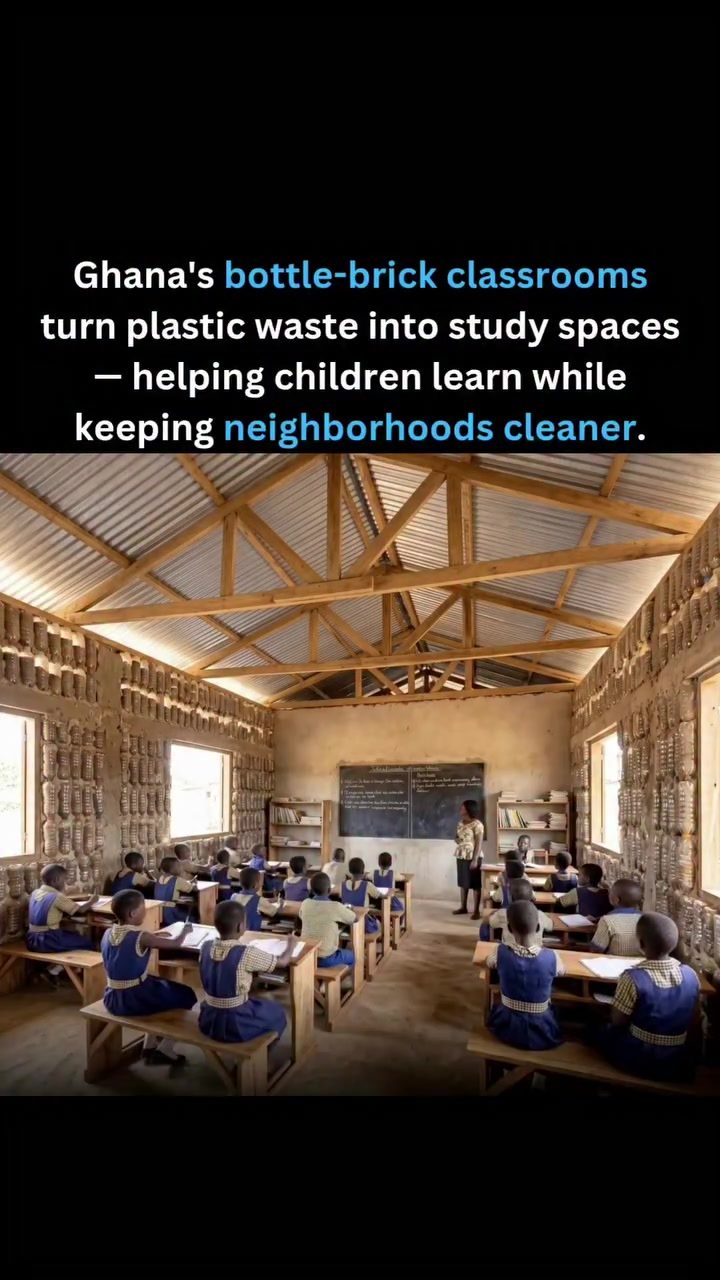
Bottle Brick Classrooms: A Sustainable Solution for Education and Waste Management
Plastic waste is a global issue, but some communities are turning this problem into a solution. In Ghana, bottle brick classrooms provide a unique approach to tackling plastic waste while creating educational spaces for children and cleaning up neighborhoods. This initiative not only helps reduce plastic waste but also provides learning spaces for children.
Why This Matters
Sustainability in education and waste management is a critical goal for many communities worldwide. Bottle brick classrooms in Ghana demonstrate a practical, community-driven approach to achieving these goals. By using plastic waste to create educational spaces, this initiative addresses multiple challenges simultaneously.
Bottle Brick Classrooms in Ghana
What Are Bottle Bricks?
Bottle bricks are a creative and eco-friendly building material. They are made by filling empty plastic bottles with earth, creating sturdy and durable bricks that can be used for construction and building traditional classrooms. This process not only repurposes plastic waste but also creates strong building materials that can withstand the test of time.
The Construction Process
The construction of bottle brick classrooms involves a few simple steps. First, plastic bottles are collected and filled with earth. These filled bottles are then stacked and secured with mortar or other binding materials to form walls. The process is straightforward and can be easily replicated in various locations.
One of the key benefits of this construction method is its simplicity. Anyone can learn to create bottle bricks, making it an accessible solution for communities with limited resources. The process involves gathering plastic bottles and earth, both of which are abundantly available in many communities. This makes it a sustainable and cost-effective building method.
Community Impact
Bottle brick classrooms have a significant impact on local communities. They provide much-needed educational spaces and help keep neighborhoods cleaner by repurposing plastic waste.
Children in these classrooms benefit from a safe and clean learning environment. The classrooms are sturdy and well-constructed, ensuring that children have a comfortable and secure place to learn. This initiative also helps to reduce the amount of plastic waste in the community, making it a cleaner and healthier environment for everyone.
Practical Tips for Building Bottle Brick Classrooms
Collecting Materials
To start building a bottle brick classroom, you'll need to collect empty plastic bottles and earth. You can gather these materials from local communities, schools, or even households. Encourage community participation by organizing collection drives and involving local residents in the process.
Filling the Bottles
Once you have collected the bottles, the next step is to fill them with earth. Ensure that the bottles are tightly packed with earth to create sturdy bricks. You can use a variety of earth types, depending on what is available in your area. The key is to ensure that the earth is well-compacted to create strong and durable bricks.
Stacking and Securing
After the bottles are filled, they can be stacked to form the walls of the classroom. Use mortar or other binding materials to secure the bottles in place. This step is crucial for ensuring the stability and durability of the structure.
Community Involvement
Encourage community involvement in the construction process. This not only helps to gather more resources and labor but also fosters a sense of ownership and pride in the community. Involve local residents, especially children and parents, in the construction process to create a stronger bond with the project.
Important Takeaways
Bottle brick classrooms in Ghana serve as a model for sustainable and community-driven solutions to plastic waste management and education. Here are some key takeaways from this initiative:
- Resourcefulness: The initiative demonstrates how communities can repurpose readily available materials to create functional and sustainable solutions.
- Community Involvement: Involving the community in the construction process fosters a sense of ownership and pride, making the project more likely to succeed.
- Dual Benefits: Bottle brick classrooms address multiple challenges, including plastic waste management and the need for educational spaces.
Conclusion
Bottle brick classrooms provide a unique and practical solution to the challenges of plastic waste and the need for educational spaces. By repurposing plastic waste to create sturdy building materials, communities in Ghana are demonstrating a sustainable and community-driven approach to tackling these issues. This initiative serves as a model for other communities looking to address similar challenges and create a cleaner, more sustainable future.
Watch the Reel
Questions readers ask
What are bottle brick classrooms and where are they found?
Bottle brick classrooms are learning spaces constructed using plastic bottle bricks filled with plastic waste. These classrooms are found in Ghana, where they are used to address both plastic waste and infrastructure needs.
How are bottle bricks made and used in construction?
Bottle bricks are created by packing plastic waste into used plastic bottles, which are then sealed and used as building blocks. These bricks are stacked and bound together with mud or cement to form walls, making them a viable construction material.
What are the benefits of using plastic bottle bricks for building classrooms?
Using plastic bottle bricks to build classrooms helps in reducing plastic waste by recycling and repurposing it. These bricks also provide a cost-effective and sustainable building material, creating durable structures and promoting community development.
How does the Ghana bottle brick classroom project help the community?
The Ghana classroom project transforms neighborhoods by cleaning up plastic waste and creating learning spaces for children. It also empowers local communities by involving them in the construction process, fostering a sense of ownership and pride.
What challenges does the bottle brick classroom initiative address?
This initiative tackles multiple challenges, including plastic waste management, infrastructure development, and the need for learning spaces. By addressing these issues simultaneously, it offers a holistic approach to community development and sustainability.
How can other communities implement similar bottle brick projects?
Other communities can implement similar projects by organizing local recycling efforts to collect and clean plastic waste. They can then train community members in bottle brick construction and collaborate with local schools or organizations to build new learning spaces.
Related deep dives
Similar reads based on topic and creator.




Recent articles
Fresh deep dives from the latest Reels we unpacked.




Comments
Be the first to comment.