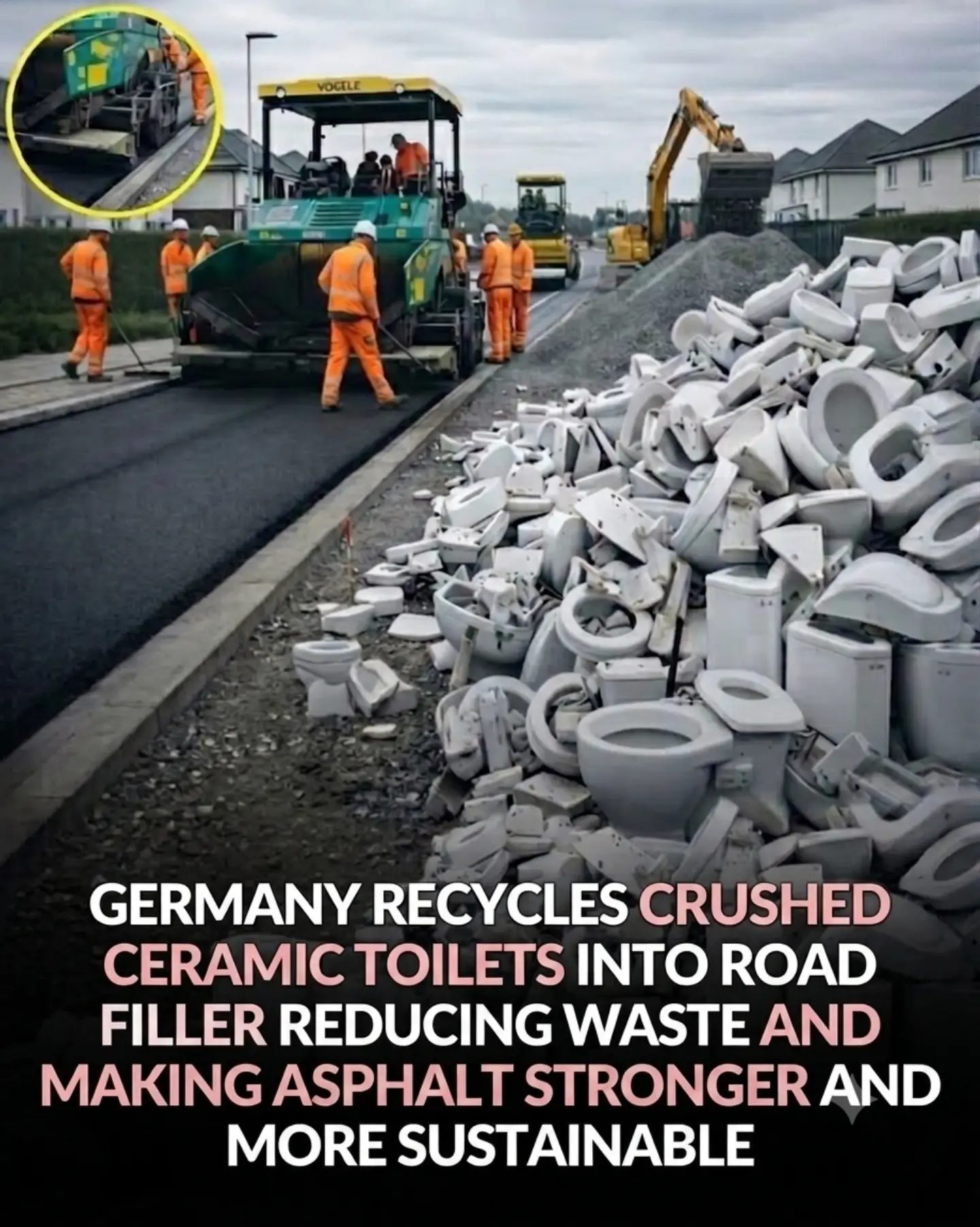
Road Construction and Recycling
Road construction is a critical aspect of infrastructure development, and recent innovations have focused on sustainability and waste reduction. In Germany, a unique approach to road construction involves recycling crushed ceramic toilets into road filler, a process that not only reduces waste but also enhances the durability and sustainability of the asphalt.
Why This Matters
The integration of recycled materials in road construction is a significant step towards sustainable infrastructure development. Traditional road construction methods often rely on virgin materials, which can be resource-intensive and environmentally taxing. By incorporating recycled materials like crushed ceramic toilets, construction projects can significantly reduce their environmental footprint. Additionally, the resulting asphalt is stronger and more durable, providing long-term benefits for road users and reducing maintenance costs.
The Process of Recycling Ceramic Toilets into Road Filler
Collection and Crushing
The process begins with the collection of ceramic toilets that are no longer in use. These toilets, which are typically made from durable ceramic materials, are then crushed into a fine aggregate. This crushing process ensures that the material is suitable for use as a filler in asphalt mixtures. The crushed ceramic toilets are then ready to be mixed with other road construction materials.
Mixing with Asphalt
Once the ceramic toilets are crushed, they are mixed with traditional asphalt materials. The resulting mixture is then used in road construction, providing a stable and durable base for the road surface. The VÖGELE paver, a specialized road construction equipment, is often used in this process to ensure precision and efficiency in laying the asphalt.
Benefits of Using Recycled Ceramic Toilets
The use of crushed ceramic toilets as a filler in asphalt offers several benefits. Firstly, it reduces the amount of waste sent to landfills, contributing to a cleaner and more sustainable environment. Secondly, the resulting asphalt is stronger and more durable, which means it can withstand heavy traffic and harsh weather conditions more effectively. This durability translates to longer-lasting roads, reducing the need for frequent repairs and maintenance.
Practical Tips for Sustainable Road Construction
Assessing the Suitability of Recycled Materials
Before incorporating recycled materials into road construction, it is essential to assess their suitability. This involves testing the material's strength, durability, and compatibility with traditional road construction materials. Conducting these tests ensures that the recycled materials will perform well in the final asphalt mixture.
Proper Mixing Techniques
Proper mixing techniques are crucial for achieving a strong and durable asphalt mixture. This involves carefully measuring and combining the recycled materials with traditional asphalt materials. The goal is to create a homogeneous mixture that provides a stable base for the road surface. Using specialized equipment like the VÖGELE paver can also help ensure precision and efficiency in laying the asphalt.
Regular Monitoring and Maintenance
Regular monitoring and maintenance are essential for ensuring the longevity of roads constructed with recycled materials. This involves inspecting the road surface for signs of wear and tear and addressing any issues promptly. By maintaining the road, you can extend its lifespan and reduce the need for costly repairs.
Important Takeaways
Integrating recycled materials into road construction is a sustainable and practical approach to infrastructure development. By using crushed ceramic toilets as a filler in asphalt, construction projects can reduce waste, enhance durability, and create a more environmentally friendly road network. This approach offers long-term benefits for road users and the environment, making it a valuable addition to modern road construction practices.
Conclusion
The use of recycled materials, such as crushed ceramic toilets, in road construction is a promising trend in sustainable infrastructure development. This innovative approach not only reduces waste but also enhances the durability and longevity of roads. By incorporating recycled materials and employing proper construction techniques, road construction projects can contribute to a cleaner and more sustainable future. As technology and practices continue to evolve, the integration of recycled materials will play an increasingly important role in shaping the roads of tomorrow.
Watch the Reel
Questions readers ask
How does recycling toilets contribute to sustainable road construction in Germany?
Recycling toilets in Germany involves crushing old ceramic toilets and using them as road filler. This process reduces waste sent to landfills and creates a durable material for road construction, making it a key component of sustainable infrastructure development in Germany.
What are the benefits of using recycled ceramic toilets in road construction?
Using recycled ceramic toilets in road construction enhances the durability and longevity of road surfaces. Additionally, this method reduces the demand for virgin materials, lowers environmental impact, and contributes to waste reduction.
How does the recycling of toilets for road construction work in Germany?
The process involves collecting old ceramic toilets, crushing them into a fine aggregate, and then mixing this aggregate into the asphalt used for road construction. This creates a stronger, more durable road surface while diverting waste from landfills.
What is the impact of using recycled toilet road filler on the durability of roads?
Roads constructed with recycled toilet road filler exhibit improved strength and durability, which in turn reduces maintenance and extends the lifespan of the road. This makes it a valuable addition to green road construction efforts in Germany.
Are there any other eco-friendly materials used in road construction in Germany?
Yes, Germany is exploring various eco-friendly materials for road construction, including recycled glass, rubber from old tires, and even recycled plastic. These materials, like crushed ceramic toilets, help reduce waste and create more sustainable road surfaces.
How does the use of recycled toilet road filler align with Germany’s environmental goals?
The use of recycled toilet road filler aligns with Germany's environmental goals by reducing waste and promoting the use of recycled materials. This approach helps conserve natural resources, lower CO2 emissions, and build a more eco-friendly infrastructure.
What are the challenges associated with recycling toilets for road construction?
While the benefits are numerous, challenges include the logistics of collecting and processing old toilets and ensuring the quality and consistency of the recycled material. However, advancements in recycling technology are making this process more efficient and cost-effective.
Related deep dives
Similar reads based on topic and creator.

Recent articles
Fresh deep dives from the latest Reels we unpacked.




Comments
Be the first to comment.