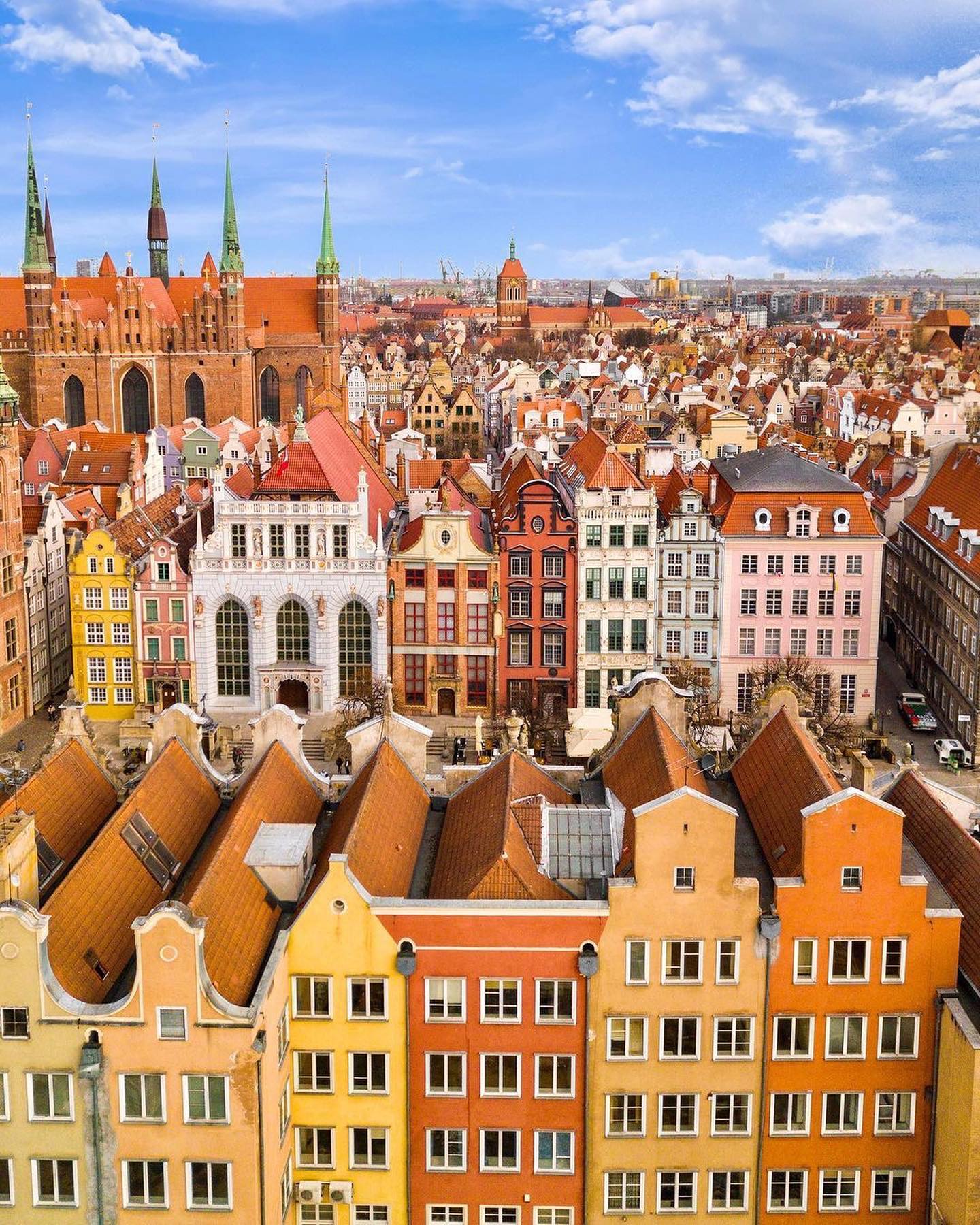
Gdańsk, Poland, is a tapestry of vibrant colors and historic charm. Photographer Mario's Bentos's aerials and street-level shots capture the city's signature red-tiled roofs and cobblestone streets. The city's design and architecture reflect centuries of history and European influence — giving it a distinct beauty.
Charm of Old streets and Royal Promenades
Gdańsk is a city of rich history and architectural beauty, stitched into the fabric of modern Poland. The Old Town (Stare Miasto) is the heart of Gdańsk, showcasing Gothic, Baroque, and Renaissance buildings, mostly constructed in red brick. It’s one of the oldest cities in Poland, known for its colorful buildings, historical landmarks, and a famous long street, the Royal Promenade, which once featured the residences of Polish kings. One of the city’s highlights is a vertical yellow brick landmark known as the Long Market (Długi Targ). Along this historic promenade, you’ll find Artus Court, a 14th-century Gothic building, and the famous Neptune's Fountain, a popular meeting point. The city's layout has been shaped by its maritime history, with the Motława River and numerous canals crisscrossing the Old Town, adding a watery dimension to its architectural charm. On the other hand, the Royal Promenade, which runs along the river, was once the place where Polish Kings would promenade in the 17th and 18th centuries. The aerial shots include various red-tiled roofs that cover the city and are characteristic of Gdańsk’s architecture. These roofs contrast beautifully with the muted hues of the brick buildings, creating a visually striking landscape. The roofs are more than just functional elements; they are part of the city's identity, reflecting its rich history and architectural traditions.
Exceptional Surfaces of Historical Mix
Gdańsk lies at the confluence of several cultural and historical currents. The city’s architecture and urban layout mirror its rich past, shaped by Polish, German, and Dutch influences. Gdańsk was part of the Hanseatic League, a medieval trade confederation that included cities like Lübeck, Riga, and Bristol. This historical context has imbued Gdańsk’s streets with a timeless, almost medieval allure. One of the distinguishing features of Gdańsk is its mix of grandeur and everyday life. The city's skyline offers a unique harmony of ornate architecture and ordinary life elements. The frames of photos that capture the red-tiled roofs and cobblestone streets seamlessly blend into broader cityscapes, emphasizing the city's timeless charm. These vibrant, detailed photographs highlight the city’s unique beauty, showcasing a tapestry of history and modern life. The juxtaposition of old-world charm and contemporary life is particularly evident in Gdańsk. The city's landmarks, like Artus Court and Neptune's Fountain, coexist harmoniously with modern amenities. The contrast is striking and visually appealing, making Gdansk a vibrant mix of history and modernity.
Moment in Frame: Red Rooflines and Cobblestone Chronicles
Cityscape Canvas of Red and Brick as a whole
The aerial and street-level shots in the photos reveal a cityscape dominated by red-tiled roofs and red brick buildings. These architectural elements are not just functional; they define the visual identity of Gdańsk. The red roofs and brick buildings create a cohesive and aesthetically pleasing ensemble. These roofs are more than just functional elements; they are part of the city's identity, reflecting its rich history and architectural traditions. The prominent red roofs in Gdańsk are part of a broader aesthetic, creating a sense of continuity and harmony across the city. The cobblestone streets add another layer of character to the city. Winding through the heart of Gdańsk, these streets evoke a sense of timelessness and authenticity. They are a testament to the city’s enduring charm, contrasting sharply with the modern elements that have been integrated into the urban fabric.
The Revitalized Streets and Promenade
Gdańsk stands as a testament to resilience and revitalization. The city’s tumultuous history, marked by periods of destruction and reconstruction, has shaped its unique character, blending the old with the new. This revitalization is evident in the cityscape, where modern structures coexist with historic landmarks. The city’s streetscape is even more vibrant, with a mix of cobbled stone paths and bustling pedestrian avenues. The Long Market (Długi Targ), running from the Neptune’s fountain to the Green Gate, is especially atmospheric, highlighting the grandeur of Europe’s rich history. Gdańsk’s architecture and urban plan are a captivating tapestry of old and new, showcasing the city’s endurance and resilience over time.
A love story of Gdańsk and its waterways
The city's relationship with its waterways, equally a source of trade, a defensive fortifications, and an aesthetic feature, adds another layer of charm to Gdańsk. The Motława River and its numerous canals form the city’s backbone, crisscrossing the Old Town. They are integral to the city’s character, providing a reflective surface that complements the colorful buildings and red-tiled roofs. The numerous bridges that span these waterways offer picturesque views and are often gathering places for locals and tourists - the famous, and very grand, Long Bridge is a perfect example. The waterways play a significant role in the city’s beauty and charm. They are not just functional elements but essential parts of the city’s identity. The canals and the Motława River are integral to Gdańsk’s cultural landscape.
An Invitation to discover vibrant Gdańsk
Gdańsk is a city that rewards exploration. Here are some key spots to consider if you plan a visit:
- Old Town (Stare Miasto): The heart of Gdańsk, featuring Gothic, Baroque, and Renaissance architecture. Explore the Long Market (Długi Targ) for its historical landmarks, including Neptune's Fountain and Artus Court.
- Motława River and Canals: Take a leisurely boat ride or stroll along the riverbanks to enjoy the city’s waterfront charm.
- Red-tiled Roofs: Look for vantage points offering panoramic views, such as the St. Mary's Church tower, to capture the iconic red-tiled roofs and cobblestone streets.
- Royal Promenade: Experience the legacy of Polish monarchy as you stroll down the famous street, with the brick and stonework architecture of Old Gdansk Royal Promenade: Walk along this historic street and admire the architecture that reflects its royal past.
Step into Gdańsk’s Visual Narrative
There is a timeless quality to Gdańsk's visual narrative, which invites the viewer to immerse themselves in its rich history. Whether it's the intricate designs of the red-tiled roofs or the cobblestone streets, every element of the city's landscape tells a story. The interplay of historical landmarks and modern amenities creates a unique atmosphere that combines nostalgia and innovation. As viewers step into the city, they are not just witnessing a place; they are stepping into a living, breathing narrative that spans centuries.
Watch the Reel
Questions readers ask
What makes Gdańsk's architecture so unique compared to other Polish cities?
Gdańsk’s architecture is unique due to its blend of Gothic, Baroque, and Renaissance styles, predominantly built in red brick. This is a result of its historical influences from Poland, Germany, and the Netherlands, as well as its past as part of the Hanseatic League. The city’s red-tiled roofs and cobblestone streets create a distinctive visual appeal that sets it apart from other Polish cities.
How has Gdańsk's maritime history influenced its urban layout?
Gdańsk’s maritime history has significantly shaped its urban layout. The Motława River and numerous canals crisscross the Old Town, adding a watery dimension to the city’s architectural charm. The Royal Promenade, which runs along the river, was once a place where Polish kings would promenade, highlighting the city’s regal past and maritime significance.
What are some must-see historical landmarks in Gdańsk's Old Town?
Gdańsk's Old Town is home to several must-see historical landmarks. Prominent among them are the 14th-century Gothic building known as Artus Court and the famous Neptune's Fountain. These landmarks, along with the iconic Long Market, offer a glimpse into the city's rich history and architectural beauty.
How does the city of Gdańsk blend old-world charm with modern life?
Gdańsk seamlessly blends old-world charm with modern life through its architecture and urban design. Historic landmarks like Artus Court and Neptune's Fountain coexist harmoniously with modern amenities. This juxtaposition creates a vibrant mix of history and modernity, making the city visually appealing and culturally rich.
What role did the Hanseatic League play in shaping Gdańsk's architecture and culture?
Being part of the Hanseatic League, a medieval trade confederation, significantly influenced Gdańsk’s architecture and culture. This historical context has given the city’s streets a timeless, almost medieval allure. The city’s design reflects the grandeur and trade prosperity of the Hanseatic era, contributing to its unique architectural identity.
Can visitors still see the residences of Polish kings in Gdańsk?
While the residences of Polish kings are no longer standing, the Royal Promenade, which once featured these residences, still offers a glimpse into the city’s regal past. Today, this historic promenade is a popular spot for visitors, showcasing the city’s rich history and architectural beauty.
What kind of photos can visitors expect to capture in Gdańsk?
Visitors to Gdańsk can expect to capture a mix of historic and modern scenes. The city’s vibrant colors, red-tiled roofs, and cobblestone streets provide a picturesque backdrop. Photographs often blend the grandeur of Gothic and Baroque architecture with the everyday life of the city, creating a unique and visually striking tapestry of history and modernity.
Related deep dives
Similar reads based on topic and creator.



Recent articles
Fresh deep dives from the latest Reels we unpacked.



Comments
Be the first to comment.